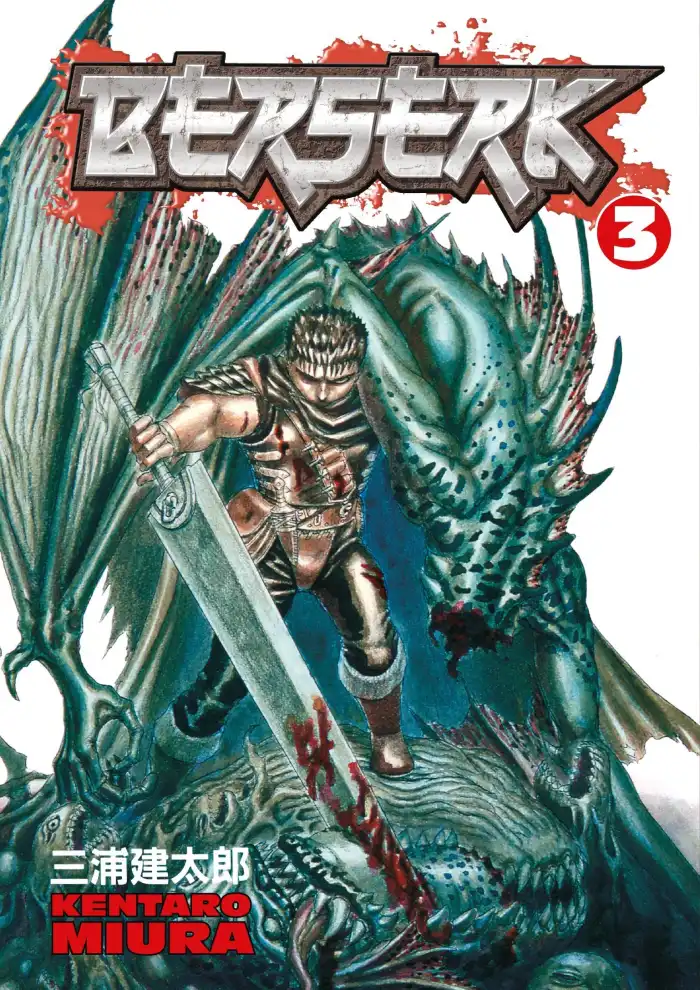
Branded
Pushing himself to the limits of human endurance, Guts also uses his cunning and deception to strike a fatal wound on the demon-tainted Count. The nobleman cries out in mortal terror, and the behelit opens a doorway to Hell, drawing in the Count, Guts, Puck, and Theresia to stand before the demon lords known as the Godhand. They offer the Count a chance to forestall death by fully committing himself—body and soul—to demonhood, but doing so will require him to purposefully choose to destroy his last vestiges of humanity and mark his own daughter, Theresia, with a brand for demonic sacrifice. One member of the Godhand is known to Guts, who uses all his willpower, strength, and hatred in an attempt to kill the demon. Everyone is held in a tense stalemate as the ruined souls of Hell come to collect the damned.
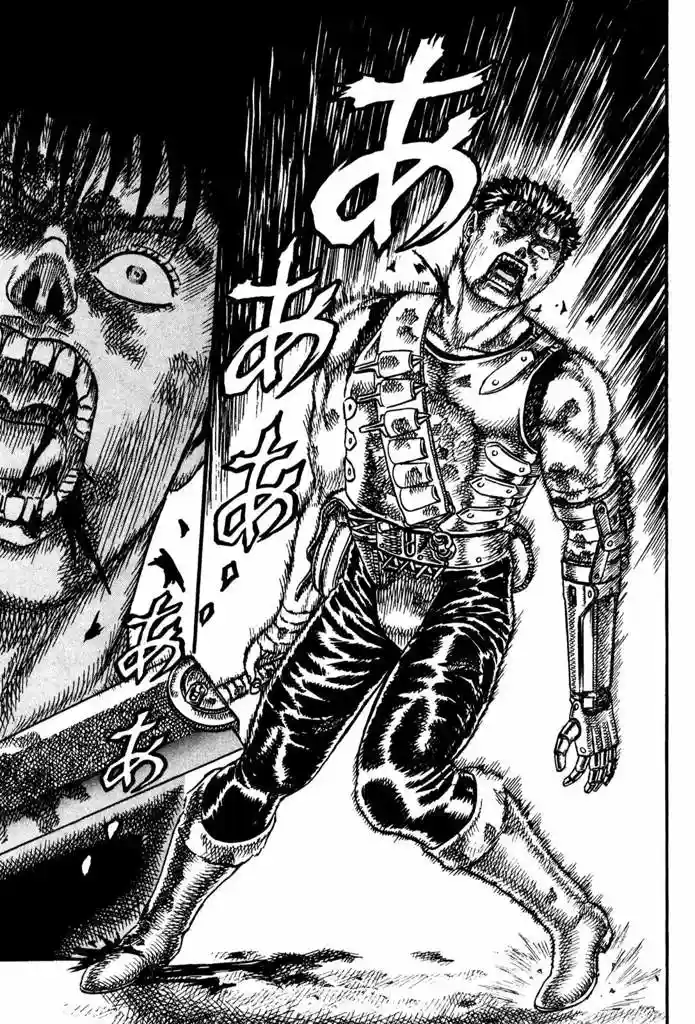
The Fate of Those Caught Up with Demonkind
All of the grotesque and horror elements are fully embraced, and it appears the only characters with anything resembling a moral compass, like Puck and Theresia, are also helpless. Guts, hateful, destructive, and motivated by a history of betrayal and torment, may seem to be doing the right thing but is doing it for the wrong reasons. He uses the Count’s innocent daughter as a human shield, delights in viciously butchering his enemy, and continues to show contempt in what he sees as the weakness in other people. It is not until the later parts of this volume that the audience begins to see the lifetime of pain that has brought Guts to this point.
As the audience sees flashes of Guts’ history, the revelations about how the Count ended up in this situation are also made plain by the Godhand using the truth about the Count and his wife as a scourge against Theresia and her father, trying to psychologically break them. In this, the true iniquity of the Godhand is revealed. It is not enough that they are powerful, disdainful, and possibly impervious to harm. They could easily conquer and obliterate the Count or anyone else, it seems. What they want is to force someone into participating in their own degradation, much like The Party in 1984. It is not enough to kill Winston and Julia; they must come to love their own repression and submit to it. The demons of the Godhand operate along the same lines, and as such, reveal themselves to be the most morally repugnant characters in a manga series already overflowing with ethically questionable individuals.
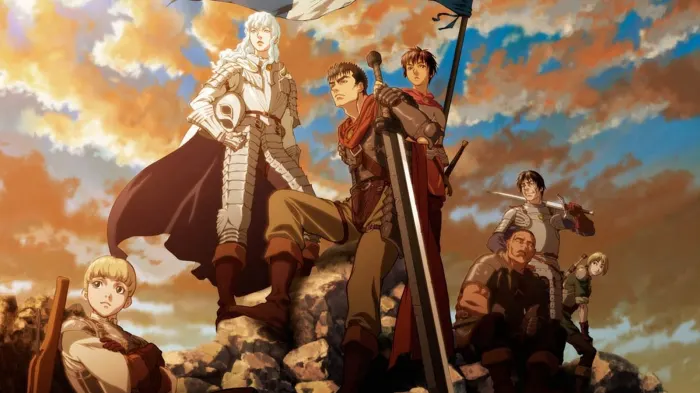
Here Comes A Golden Age
When the conflict with the Count and the Godhand concludes, it also ends The Guardians of Desire arc, but the volume is not finished. From there, it goes all the way back to the beginning, for Guts at any rate, and the reader sees the earliest years of his life and the largely pitiless world of jobbing warfare into which he is born and begrudgingly raised. If anything, the heartbreaking circumstances make it easier to understand Guts even if the audience does not condone the man he becomes. This last chapter is the start of The Golden Age chapters that promise to give greater context to the hints and flashes that readers saw about the world and Guts’ place in it, and his monomaniacal and likely doomed quest to take revenge on Griffith and the demon lords of the Godhand.
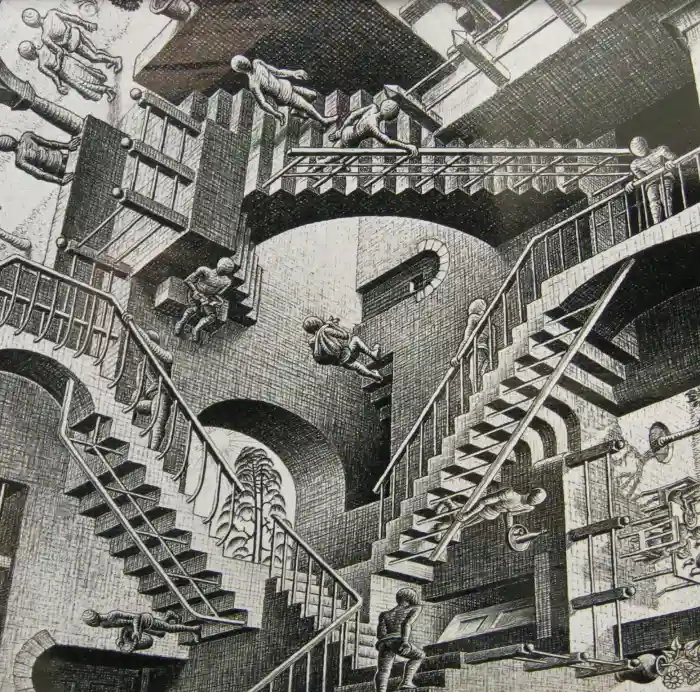
Non-Euclidian Hellscape
Miura’s art remains strong and reinforces the style he built in the previous chapters. In addition to the physical repulsiveness and grotesquery, when the scenes shift to the realm of the Godhand, it takes on a surreal quality that calls to mind M. C. Escher, Hieronymus Bosch, and how the City of R’lyeh is described in H. P. Lovecraft’s “The Call of Cthulhu.” With aspects like perspective and gravity no longer reliable, the art puts the readers off balance as much as the human characters who have stumbled into it. At a certain level, though, the story needs this spectacle and bewilderment because there is quite a bit more talking and exposition in these chapters than there has been previously.
The Real Berserk Starts Here
This third volume of Berserk is a significant hinge. Horror, characterization, wider scope of the story, and tone are all solidified and given depth. By building onto what came before, these chapters move the series from being a pulpy, dark fantasy story into an even grander and darker narrative reminiscent of Classical and contemporary tragic stories where flawed but brave protagonists knowingly put themselves into nearly-hopeless conflict with vile and unknowable forces looking to annihilate them.
Source
Miura, Kentaro. Berserk, vol. 3. Translated by Jason DeAngelis. Dark Horse, 2004.
© 2025 Seth Tomko