Foretell Your Doom
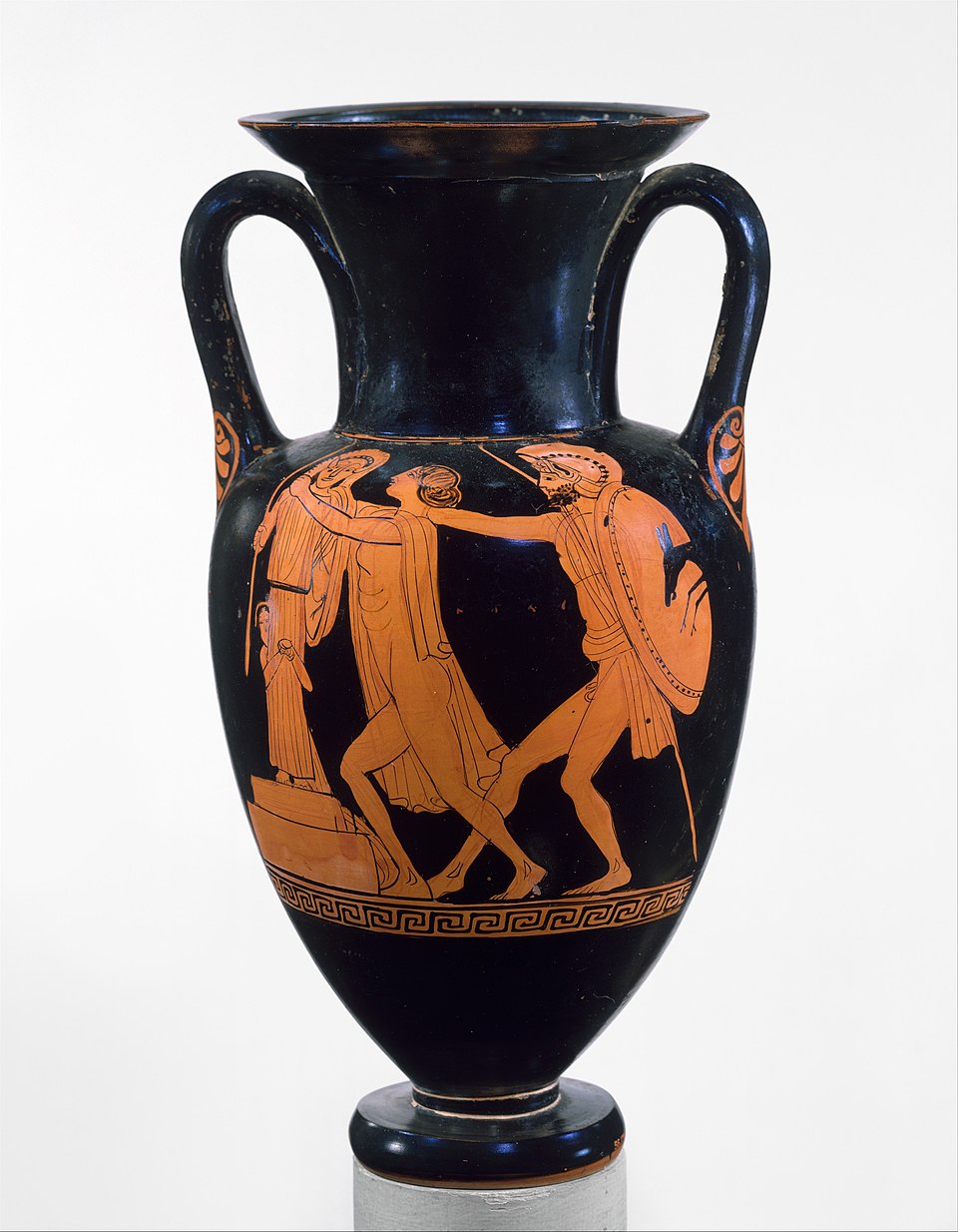
Agamemnon by Aeschylus revolves around the occasion of the titular character’s return from the Trojan War. The character that becomes the most sympathetic is Agamemnon’s war prize, the prophetess Cassandra. By appealing to the cultural knowledge of his audience and by having other characters empathize for her suffering, Aeschylus sets up Cassandra as the character for whom it is easiest to have compassion.
According to scholars in the Classical field, it is presumed the audience of Aeschylus would have know the shared stories of their culture such as myths about the gods and goddesses, hero cycles like those pertaining to Hercules or Theseus, and tales concerning the exploits of warriors who fought in the Trojan War. It could be expected that the events in Agamemnon come as no surprise to the audience, so the author's goal isn't to create plot twists. The playwright mirrors the viewers’ foreknowledge in the character of Cassandra who is cursed to see the future but cannot change it just as the audience cannot alter the events of the play. This sharing in knowledge binds the audience to Cassandra since they are in the same omniscient yet powerless position; she becomes a stand-in for the audience at least as much as the chorus is. This shared perspective leads the viewers to feel for Cassandra’s situation because they know of the oncoming doom as well as she does.
Ancient Greece also had a strong sense of hospitality and the relationship between a guest and host. Ostensibly, this continued in the golden age of Athens during which Aeschylus actively wrote. It would not be a stretch to presume he played upon his audiences’ sense of hospitality, possibly even piety, by introducing Cassandra in her sacred regalia as a stranger in a strange land. Cassandra’s social powerlessness compliments her inability to change her fate, and it appeals to the traditional audience’s customs of hospitality.
Perhaps the most important messages of sympathy come from the Leader and Chorus. The most democratic of devices, the chorus represents the spirit of the community. It is brilliant and manipulative strokes for Aeschylus to have the whole weight of society sympathize with Cassandra. In Roberts Fagles translation one of the first things the Leader does is disagree with the queen, Clytaemnestra, and say in line 1069, “I pity her. I will be gentle.” Once Cassandra has given the prophecy of her own death, she musters the courage to approach the palace where she knows she will be killed. In lines 1319 to 1319 the Leader says, “So much pain, poor girl, and so much truth, / you’ve told us so much.” He suggests she flee her fate if she can, but she refuses. The last words Cassandra hears are the Leader’s lines 1343 and 1344, “Poor creature, you / and the end you see so clearly. I pity you.” The Leader and his Chorus empathize with Cassandra. Time and time again, the Leader expressed compassion for her and her plight, symbolically voicing the sympathy the audience has for her, too.
It is the skill of Aeschylus that maximizes pity for Cassandra. He plays upon the shared knowledge and customs of his audience, making them co-prophets as it were with Cassandra’s heartbreaking vision of her future. It is the Leader and his Chorus and their ringing endorsement of compassion for Cassandra which is the most powerful. Not only do they represent the voice of the populace within the play, but by that time, they represent the voice of audience as well that, like them, must sit by and watch the events unfold as Aeschylus shows them.
Source
Aeschylus. Agamemnon. The Oresteia. Trans. Robert Fagles. New York: Penguin, 1966.