Swords and Sorcery
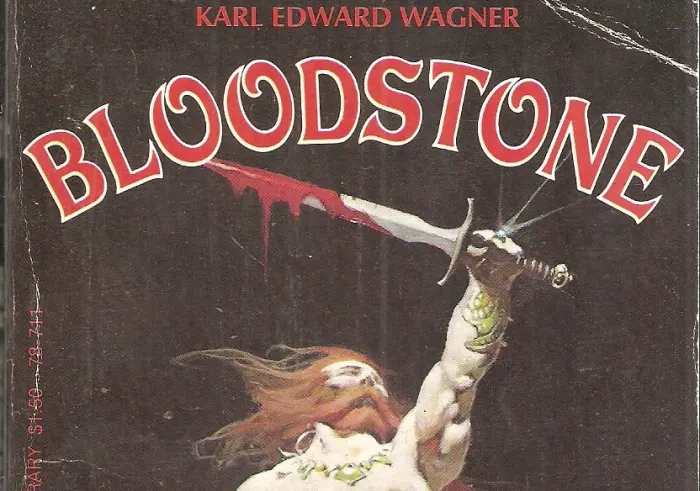
The mystic swordsman and immortal wanderer, Kane, comes upon a curious ring as part of the spoils in a caravan raid. Prompted by his intuition, he visits the tower of a demon to consult ancient manuscripts and confirms his hunch; the ring is part of a larger, powerful artifact—Bloodstone—brought to the planet ages ago and thought to be lost in an inhospitable swamp. Kane convinces a regional nobleman named Dribeck to fund a small expedition to the Swamp of Kranor-Rill where Kane hopes to find a lost city and the rumored superhuman weapons that he will share with Dribeck. The mystic swordsman, however, is playing a long, devious game, for he has also approached a rival lord, Malchion, with promises of weapons and knowledge of Dribeck’s intentions and movements. The expedition headed by Kane encounters the monstrous, toad-like Rillyti, savage descendants of the ancient people believed to have constructed Bloodstone. Discovering the ancient artifact, Kane commences with his campaign of treachery and warfare with designs on seizing even greater, inhuman power for himself.
Diffuse Protagonist
Though ostensibly about the mystic swordsman, the novel focuses on the actions of three central characters: Kane, Dribeck, and Teres, the heir to Lord Malchion. They are all distinct, with their own goals and motives, but what they have in common is that to some degree, they are all abnormal or outsiders. Kane, an eternal wanderer, cannot form strong bonds or deep companionship, so he seeks adventure and conflict to give him a sense of vitality. Dribeck needs to secure his rule against threats within and without the city-state of Selonari, but he would prefer a life of quiet scholarship and reading, which seems soft and wasteful to his roughneck people. Teres, a woman in a patriarchal society of warrior machismo, craves the approval of her father and her people, which she believes she can earn by aggression and skill in combat. The paths of these main characters cross and recross over the story, making the novel both plot-driven and character-driven.

Anti-Heroic Fantasy
While Kane is a protagonist, he is not a hero. While none of the characters are paragons of virtue, Kane is villainous, and for stretches at a time, he is openly antagonistic to the other characters. In many ways, Bloodstone, like a substantial portion of Wagner’s writing, reads like a prototype of grimdark fantasy. Likely, this atmospheric development stems from the author’s background in horror writing and belief that Kane was more like a Gothic or Byronic hero than a fantasy protagonist. Having protagonists other than Kane, though, with different personalities and different motivations, keeps the novel from falling into the trap of one-note nihilism that can often appear in grimdark fantasy.
Wagner also keeps the story moving at a brisk pace. While some sentences can get a bit wordy, each scene is remarkably concise and either advances the plot or lets readers discover something about the characters. Extraneous material is parred away, and almost nothing goes to waste. The economy of the language and plotting is a welcome rarity in the genre. Likewise, readers do not need to have read any other stories in this loose series. Bloodstone tells a complete story that can be read as a standalone and at a reasonable page count. The only drawback here is that, to some readers, the ending might not have as much closure as some people might prefer.

Alien Sorcery
Bloodstone is a strong bit of dark fantasy writing. It will certainly appeal to readers of sword and sorcery, like anyone who enjoys tales of Conan from Robert E. Howard, Michael Moorcock’s Elric stories, or the adventures of Fafhrd and the Gray Mouser by Fritz Leiber. Additionally, this novel should also warrant the attention of any readers who are fans of Joe Abercrombie’s novels.
Source
Wagner, Karl Edward. Bloodstone. Baen, 1991.
© 2024 Seth Tomko