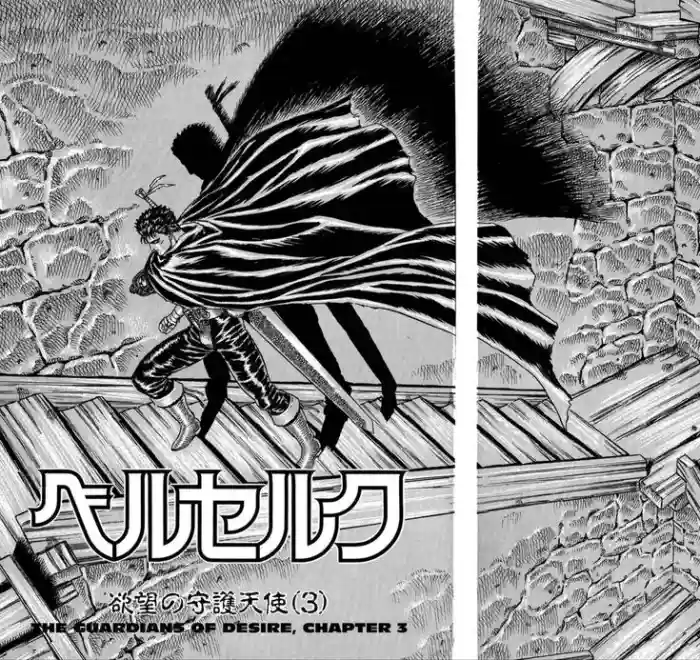
The Guardians of Desire
Following on from the end of the first volume of Berserk, Guts learns about the Behelit and the corruption and depravity of the local Count. Hoping that Guts will take vengeance for him by proxy, the disfigured beggar Vargas tells the black swordsman about a secret entrance to the castle. Planning on confronting on the demon-tainted nobleman in his own time and for his own reasons, Guts also takes the Behelit from Vargas in payment. He is then forced to contend with a horrifically transfigured Lord Zondark and other minions of the Count. Meanwhile a captured Puck learns of the Count’s captive daughter, Theresia, and the terrible events involving heretics and human sacrifice from seven years ago. Even his sword-skill and relentless hatred might not be enough for Guts to triumph over the inhuman Count in the center of his lair.
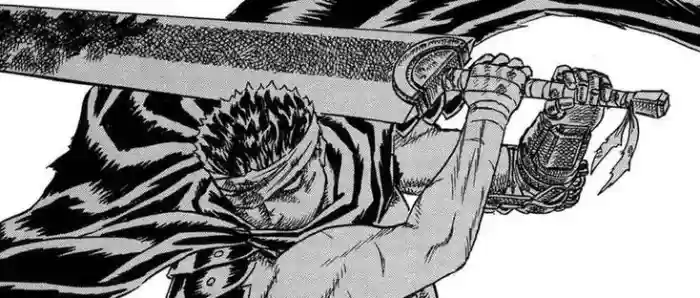
Calling on the Devil
This second volume of Berserk does take some time to give some background information about the setting and hint at previous events and tragedies that must have befallen Guts. Such efforts give context to what some of the characters are doing and their motivations. The action remains violent and severe with the detailed artwork making sure the audience sees and understands the weight and severity of it. Additionally, there is an increase in the unnatural imagery and body horror. What befalls characters like Zondark and Vargas is gruesome beyond what is seen in mainstream comics that tread similar ground like Al Ewing’s Immortal Hulk and the run on Animal Man by Jeff Lemire and Traveler Foreman.
Some of the disturbing imagery is tied to thematic elements of the story. The people in leadership positions—the Count among others—appear more inhuman and malicious, and the higher up one is on the social scale the worse it gets, all the way to the “divine” figures. The visual metaphor is not difficult to grasp. Individuals in positions of power prey on people’s needs to enhance themselves and make others into their slaves. In the already ugly world of Berserk, they are even more physically and morally repulsive.
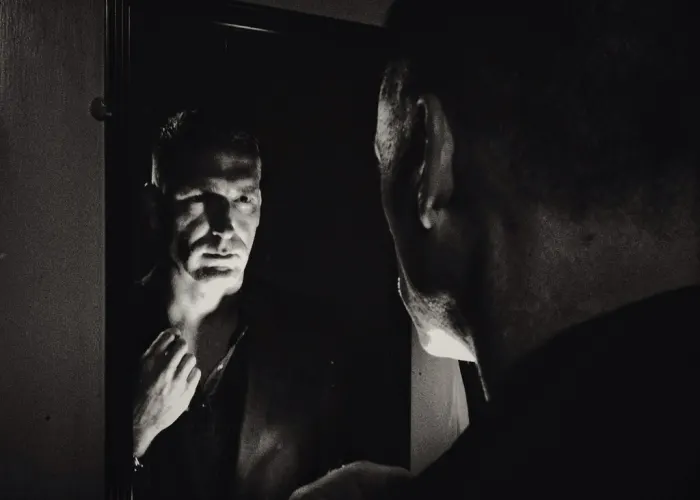
The Man in the Mirror
Much like the audience, Guts is revolted by what he sees, but he is also disgusted by neediness and weakness as he sees in Vargas and others. The loathing he has for people victimized by demons is almost certainly a projection of his self-hatred for having been too weak to protect himself from having been maimed and marked with the Brand. The audience does not know the particulars yet, but his physical condition and aspects of his personality support such an inference about his backstory. Puck essentially comes to this conclusion, too. It is possible that Guts lacks the self-awareness to understand he is projecting his feelings, but his negative emotions of hatred and antipathy do fuel his physical and mental endurance to withstand the demons.
Vigorous Onslaught
The second volume is a solid continuation of the series. It continues with a single story and promises more of the same plotline to follow, so this one lacks the episodic quality of the first volume. Some of the panels can seem overstuffed, but the artwork is as grotesque and detailed as anyone could want. Any readers looking to see a solid dark fantasy story and watch the development of Berserk into a leader in the genre will want to read this second volume.
Source
Miura, Kentaro. Berserk, vol. 2. Translated by Jason DeAngelis. Dark Horse, 2004.
© 2025 Seth Tomko