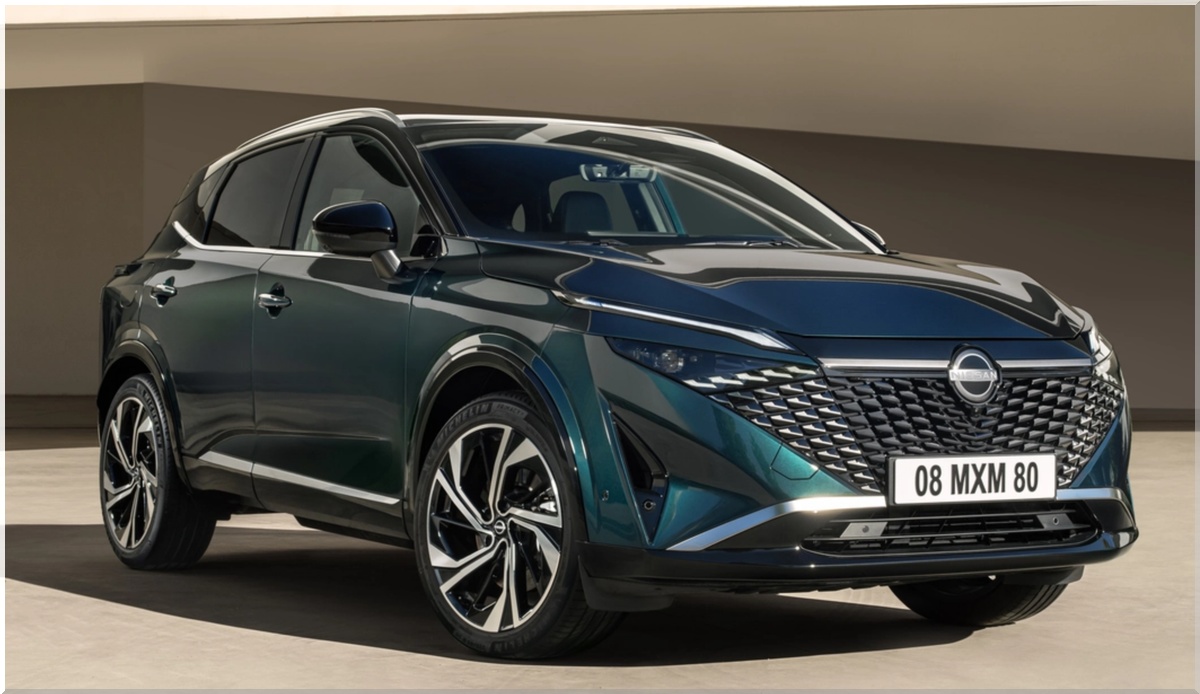
The 2025 Nissan Qashqai e-POWER represents a significant shift in how we think about hybrid technology. While most competitors use a system where both the engine and motor drive the wheels, Nissan takes a different path. The 1.5-liter turbocharged three-cylinder engine never touches the pavement. Instead, it acts as a dedicated generator to feed a lithium-ion battery and a 140 kW electric motor.
This results in a driving experience that feels almost identical to a battery-electric vehicle. You get instant torque, smooth linear acceleration, and none of the rubber-band sensation found in some CVT-equipped rivals. For the 2025 model year, Nissan refined the system further, cutting cabin noise and improving real-world fuel economy.
Engineering the e-POWER Advantage
Clarity matters when discussing powertrains. Most HEV (Hybrid Electric Vehicle) systems juggle two power sources. The Nissan Qashqai e-POWER simplifies this. The front wheels receive power only from the electric motor. This motor delivers 188 hp (140 kW) and 243 lb-ft (330 Nm) of torque.
Because the engine runs at optimized RPMs to generate electricity, it stays quiet. Nissan claims a noise reduction of 5.6 dB compared to the previous version. Data shows the 2025 Qashqai hits 55 mpg (approx. 4.3 L/100km) on the highway during independent testing.
Key Performance Specs:
- Total Output: 188 hp
- Torque: 243 lb-ft
- 0-60 mph: Approximately 7.9 seconds
- Fuel Tank: 14.5 gallons (55 liters)
- Estimated Range: Up to 745 miles (1200 km)
Interior Quality and Tech Upgrades
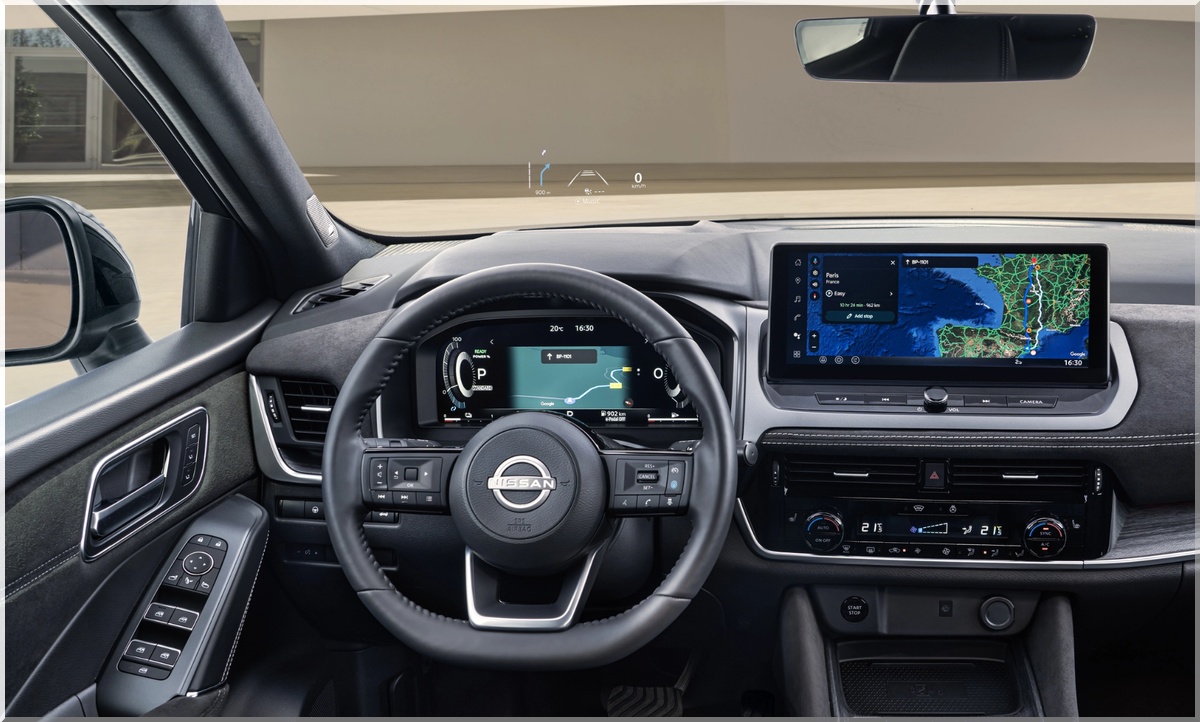
The 2025 facelift brings more than just a sharper grille. Inside, Nissan added premium materials like Alcantara on the dashboard and door panels in higher trims. The N-Design and Tekna+ grades offer a convincing premium feel that rivals some luxury brands.
Connectivity is a major focus. The 12.3-inch touchscreen now features Google built-in. This means Google Maps, Google Assistant, and the Google Play Store run natively on the head unit. You don't need to plug in your phone for high-end navigation. Physical buttons for climate control remain, which is a win for user experience and safety.
Linear Tune and Acoustic Comfort
Engineers optimized the Linear Tune feature for the 2025 model. This software ensures the engine speed matches the road speed. It prevents the disconnect between sound and acceleration typical of hybrid SUVs. By aligning the combustion cycle with driver input, Nissan reduces the cognitive load on the driver.
Cabin quietness is a priority. The 1.5-liter engine features variable compression technology. This allows it to switch between high efficiency and high power instantly. In urban settings, the engine remains off for up to 64% of the drive time. This maximizes EV mode duration without requiring a charging cable.
Design Refinements and Aerodynamics
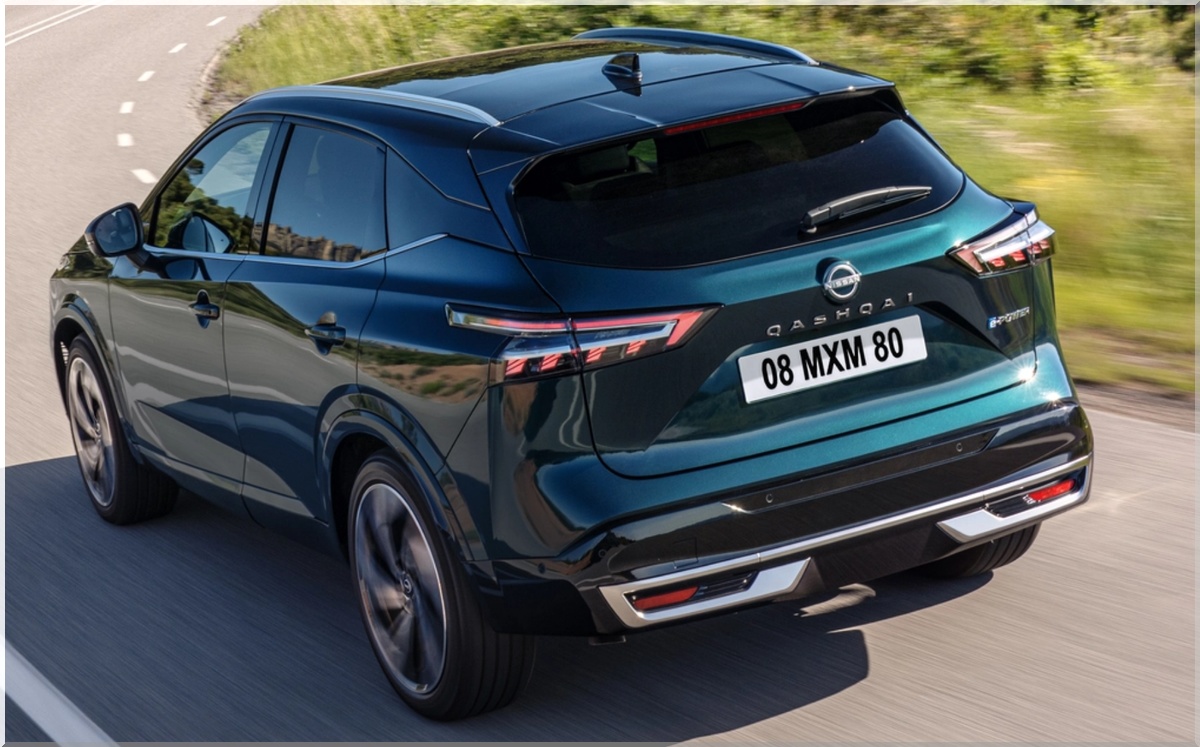
The 2025 Qashqai features a redesigned front fascia inspired by ancient Japanese armor. The three-dimensional grille elements improve airflow to the cooling system. New LED headlamps provide a wider beam pattern for safer night driving. These changes reduce the coefficient of drag, which directly aids highway fuel efficiency.
New 20-inch alloy wheels are available on the N-Design grade. Nissan also added three new paint colors: Pearl White, Pearl Black, and Ocean Deep. The black roof option provides a contrast that makes the SUV appear lower and more athletic.
Cargo Space and Daily Utility
Practicality remains a core strength for this crossover. The 2025 Qashqai e-POWER offers 17.8 cubic feet (504 liters) of boot space. This expands to over 53 cubic feet (1500 liters) with the rear seats folded. The Divide-N-Hide cargo system allows for 16 different configurations to secure groceries or sports gear.
Nissan placed USB-C ports in both the front and rear rows. The wireless charging pad now supports 15W fast charging. These small details improve the customer experience for families on long trips.
The Science of e-Pedal Step
Nissan utilizes behavioral economics through its e-Pedal Step technology. By allowing drivers to accelerate and decelerate using only the accelerator, it simplifies the driving task. This creates a nudging effect, encouraging smoother driving habits that naturally increase energy recuperation.
The system provides 0.2g of deceleration when you lift off the pedal. This is enough to handle most traffic scenarios without touching the brake. It makes stop-and-go commuting significantly less stressful for the operator.
Google Built-In Integration
The shift to Google Automotive Services is a major UX design win. Users can sign in with their personal Google Account to sync destinations and preferences. The Google Assistant can control vehicle functions like temperature or seat heating via voice commands.
Over-the-air (OTA) updates ensure the infotainment system stays current. You no longer need to visit a dealership for map updates or software patches. This reduces the Total Cost of Ownership (TCO) and keeps the vehicle's resale value high.
Long-Term Reliability and Maintenance
The e-POWER system has fewer moving parts than a traditional mechanical AWD or complex multi-clutch hybrid. There is no traditional gearbox to wear out. The 1.5-liter generator operates under less stress because it is not connected to the wheels.
Nissan offers a five-year/60,000-mile warranty on the EV drivetrain components. Independent data shows that series hybrid systems often have lower long-term maintenance costs. This makes the Qashqai a smart choice for buyers keeping their cars for five years or more.
Market Positioning and Pricing
The 2025 Nissan Qashqai e-POWER starts at approximately $46,900 for the Acenta Premium trim. While this is higher than a base petrol model, the fuel savings and drive quality justify the premium for many. The top-tier Tekna+ reaches roughly $58,200.
Nissan currently sells this model in Europe, Australia, and Japan. While the Qashqai name isn't on U.S. shores right now, this e-POWER technology is confirmed for the 2026 Nissan Rogue in North America.
Driving Dynamics: Pure and Predictable
On the road, the Qashqai e-POWER feels composed. It uses McPherson struts up front and a multi-link rear suspension for hybrid models. This setup handles the extra weight of the 2.1 kWh battery without feeling leaden.
The e-Pedal Step feature allows for one-pedal driving in city traffic. It won't bring the car to a full stop like a Leaf, but it handles most of the deceleration. This reduces brake wear and increases energy recovery. Steering is light and accurate, though it lacks the feedback found in a Mazda CX-5.
Safety and Driver Assistance
Nissan’s ProPILOT Assist remains one of the most intuitive systems on the market. It combines adaptive cruise control with lane-keep assist to reduce driver fatigue on long hauls. The 2025 update includes an improved 3D Around View Monitor. A new "invisible hood" feature helps drivers see exactly where the front wheels are placed, which is helpful in tight parking garages.
Standard safety tech includes:
- Autonomous Emergency Braking (Pedestrian and Cyclist detection)
- Blind-Spot Intervention
- Rear Cross-Traffic Alert with auto-braking
- Traffic Sign Recognition
Final Verdict
The 2025 Nissan Qashqai e-POWER is a technical triumph. It delivers diesel-like range with electric-car smoothness. It solves the "charging anxiety" problem for buyers who aren't ready for a full EV but want more than a standard hybrid.
If you value interior tech, refined acoustics, and instant power, the Qashqai is a top-tier choice. It isn't the cheapest in its class, but the low CO2 emissions and high MPG make it a pragmatic long-term investment.
Latest publications: