There are meditation practices that train the mind. And then there are practices that train the heart. Loving-kindness meditation belongs in the second category — and it is, by almost any measure, the most consistently transformative heart practice in the Western contemplative toolkit.
Not because it produces pleasant feelings during formal sessions — though it often does. But because, practiced consistently over weeks and months, it gradually changes the default orientation from which you encounter every person, every interaction, and every moment of your own inner life.
This guide gives you the complete understanding, the full practice, and the honest picture of what sustained loving-kindness cultivation produces.
What Loving-Kindness Meditation Actually Trains
Loving-kindness meditation — Metta Bhavana in the Pali language of early Buddhism — is not a relaxation technique or a way of generating positive thoughts. It is a systematic training of a specific human capacity: the ability to wish others well genuinely — not because you should, not because it makes you look spiritual, but because you actually care about their wellbeing.
The training works through deliberate, repeated rehearsal. By systematically and repeatedly directing phrases of genuine goodwill toward an expanding circle of beings — yourself, loved ones, neutral people, difficult people, and finally all beings — you gradually reshape the default orientation of the mind from self-focused preoccupation toward genuine care.
The key insight: you don't need to feel loving-kindness for the training to work. The capacity develops through sincere repetition of the intention, not through forced emotional performance. The feeling follows consistent practice — it is not a prerequisite for it.
Meditation for Empathy: Why Loving-Kindness Develops Genuine Connection
Meditation for empathy research consistently places loving-kindness at the center of empathy development — and the neurological evidence explains why.
Regular loving-kindness practice produces measurable increases in gray matter density in the insula and anterior cingulate cortex — brain regions specifically associated with empathy, the perception of others' internal states, and emotional regulation. These are structural changes in brain tissue, not merely functional activity patterns, indicating that sustained practice genuinely reshapes the neural architecture of empathic capacity.
Behaviorally, the changes are equally striking. Northeastern University research documented that loving-kindness practitioners were significantly more likely to offer their seat to someone in obvious pain — evidence that the compassionate orientation cultivated in formal practice translates into actual behavioral change in ordinary life situations.
Practitioners consistently describe a specific shift emerging after months of daily practice: strangers feel less strange. Difficult people become more comprehensible. The invisible interior lives of the people around them — previously ignored or assumed hostile — begin to feel more real and more genuinely interesting.
Guided Meditation for Anxiety: How Loving-Kindness Calms the Anxious Mind
Guided meditation for anxiety and loving-kindness practice work together through a mechanism that is both intuitive and research-supported: anxiety is fundamentally a contraction — of the self around perceived threat, of attention around potential danger, of the heart against a world that feels unsafe.
Loving-kindness systematically opens this contraction. When the heart is genuinely practicing warmth and goodwill — toward yourself and others — the contracted, threatened, isolated state that anxiety requires becomes physiologically and neurologically difficult to maintain simultaneously.
This doesn't remove anxiety's triggers or resolve its underlying patterns overnight. What it does is change the baseline orientation from which perceived threats are met — and over months of consistent practice, this changed orientation gradually reduces both the frequency and intensity of anxiety responses.
Practical application for anxiety: Begin loving-kindness sessions with extended self-directed practice. The self-compassion dimension of loving-kindness — "May I be safe. May I be at ease" — directly counters the self-attacking quality that anxiety generates. For practitioners with significant anxiety, making the self-directed phase the longest and most careful portion of the practice is the most therapeutically relevant adaptation.
Meditation for Depression: Loving-Kindness as the Core Intervention
Meditation for depression and loving-kindness practice have a particularly strong and specific relationship — because depression's most destructive feature is the chronic self-criticism that loving-kindness practice directly addresses.
Depression's internal voice is relentlessly harsh — declaring the practitioner inadequate, worthless, undeserving. This voice is experienced as truth rather than as symptom, which is what makes it so clinically significant.
Loving-kindness practice doesn't argue with this voice or try to replace it with positive affirmations. Instead, it creates an alternative inner experience — genuine warmth directed toward yourself, practiced daily, gradually building a new relational pattern with your own experience that the critical voice no longer completely dominates.
The depression-adapted approach: Don't force the self-directed phase when depression makes it genuinely inaccessible. Begin with a beloved person — a friend, a pet, a child. Generate warmth toward this easy recipient first. Then, gently, include yourself in that circle of care: "May I also receive this warmth. May I also be held with care." This indirect approach consistently bypasses the depression-generated blockage against self-directed warmth more effectively than direct effort.
Meditation Class: Loving-Kindness in Community Practice
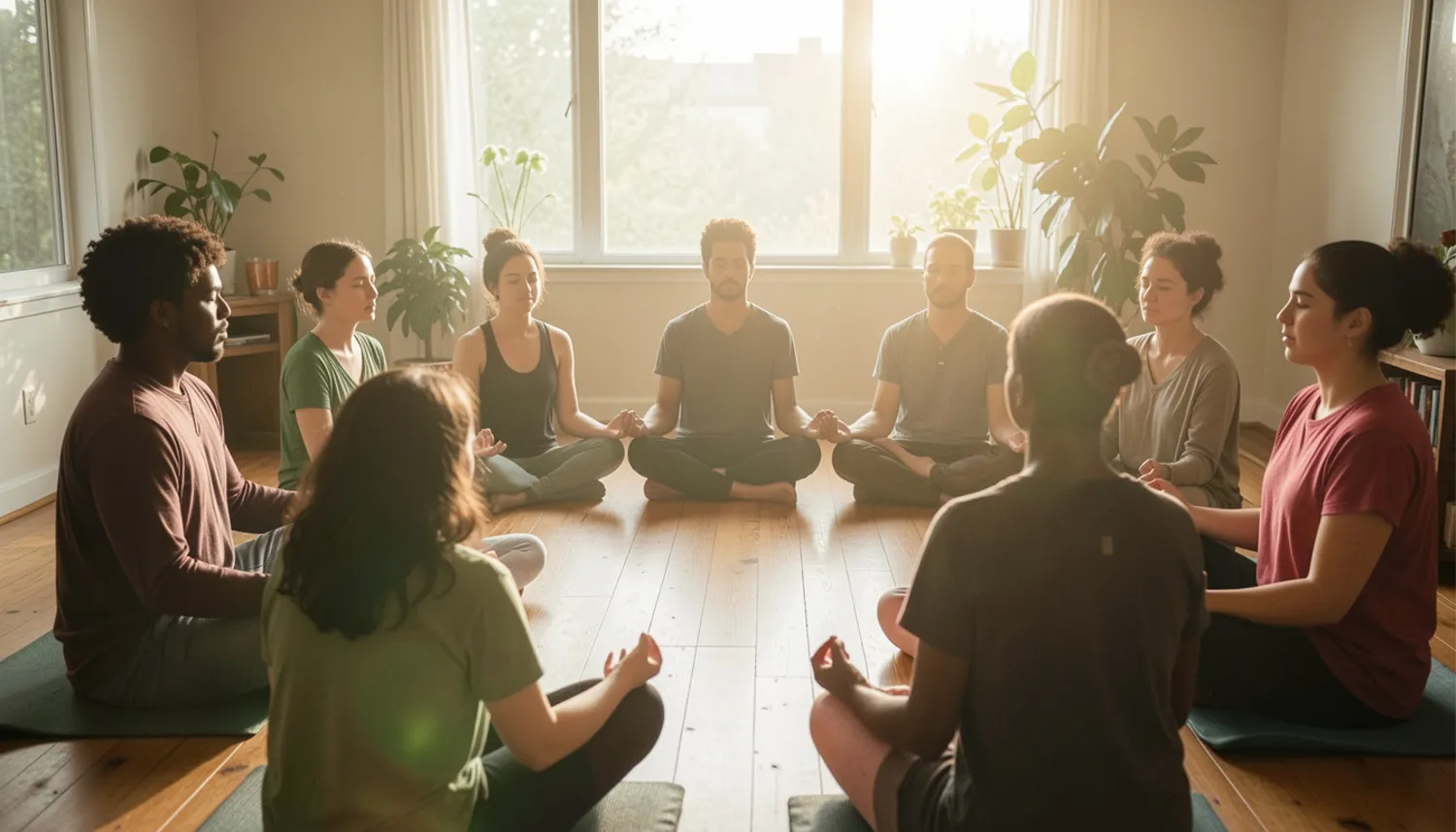
Meditation class settings provide unique dimensions of loving-kindness practice that solo home practice cannot replicate. Practicing genuine goodwill alongside others who are doing the same creates a collective field of warmth that most practitioners describe as amplifying the practice significantly — reaching emotional states in group settings that home practice builds toward but less consistently achieves.
For practitioners who find self-directed loving-kindness genuinely difficult — particularly those with depression or significant self-criticism — group class practice often provides the first authentic experience of the practice that home practice has been building toward. The teacher's guidance and the collective energy of the group create conditions in which genuine warmth becomes accessible before it becomes available in solo sessions.
When choosing a class specifically to develop loving-kindness practice, assess whether the teacher's own instruction carries evident warmth — whether their presence in guiding the practice reflects personal familiarity with what they're teaching. The quality of warmth in the guidance is the quality of warmth the practice will develop in practitioners.
The Complete Loving-Kindness Practice Session
Settling (3 minutes): Comfortable seated position. Close your eyes. Three slow complete breaths — releasing tension with each exhale. Allow your breathing to settle into its natural rhythm.
Yourself (5–6 minutes): One hand over your heart. Bring to mind yourself — as a young child, or simply as you are right now. Recognize: this person simply wants to be happy and free from suffering.
Silently, with genuine sincerity: "May I be happy. May I be healthy. May I be safe. May I live with ease and peace."
A Loved One (4–5 minutes): Someone you love easily. Feel the natural warmth. Direct the phrases toward them.
A Neutral Person (3–4 minutes): Someone you see regularly but feel nothing toward. Their humanity, recognized: "May you be happy. May you be free from suffering."
A Difficult Person (4 minutes): Begin with someone only mildly difficult. Recognize their suffering without excusing their behavior. "May you be happy. May you find peace."
All Beings (3 minutes): "May all beings be happy. May all beings be free from suffering. May all beings live with ease."
Closing (2 minutes): Rest quietly. Notice what has shifted since you began.
Conclusion
Loving-kindness meditation is one of the most genuinely transformative practices available to any practitioner willing to engage it with sincerity and consistency. Not because it produces extraordinary experiences, but because it gradually — breath by breath, session by session, week by week — changes the fundamental orientation from which you encounter yourself and everyone you meet.
Begin with five minutes directed toward yourself. That single gesture is the beginning of everything else. Explore loving-kindness programs at Z Meditation — visit zmeditation.com for expert-guided heart-opening practice.
Frequently Asked Questions
1. How quickly does loving-kindness meditation produce noticeable changes?
Mood improvements often appear within days. More significant changes in empathy, self-compassion, and relationship quality typically develop over 4–8 weeks of consistent daily practice.
2. What if I genuinely can't feel warmth toward myself?
Completely common, especially early in practice and for practitioners with depression or strong self-critical habits. Begin with a beloved person first, generate genuine warmth, then gently include yourself. The capacity develops through consistent practice, not forced performance.
3. How long should a daily loving-kindness session be?
10–20 minutes for a full five-phase session. Even 5 minutes of self-directed practice daily produces meaningful benefits. The best session length is the one you'll actually maintain consistently.
4. Can loving-kindness be practiced informally throughout the day?
Yes — and informal practice is equally important. Directing genuine goodwill toward strangers, wishing the person who frustrates you well before responding, replacing self-criticism with a phrase of self-kindness — these accumulate significantly over time.
5. Is loving-kindness meditation compatible with secular, non-spiritual practice?
Completely. Its benefits are psychological, relational, and neurological — entirely independent of religious or spiritual orientation.