In a culture that equates productivity with worth and treats silence as awkward, the cultivation of genuine inner stillness is a quietly radical act. Meditation for stillness is not a technique for quieting the mind — it's a practice for discovering that the mind has a natural quiet, always present beneath its activity, that has never actually been disturbed by the thoughts and emotions passing through it.
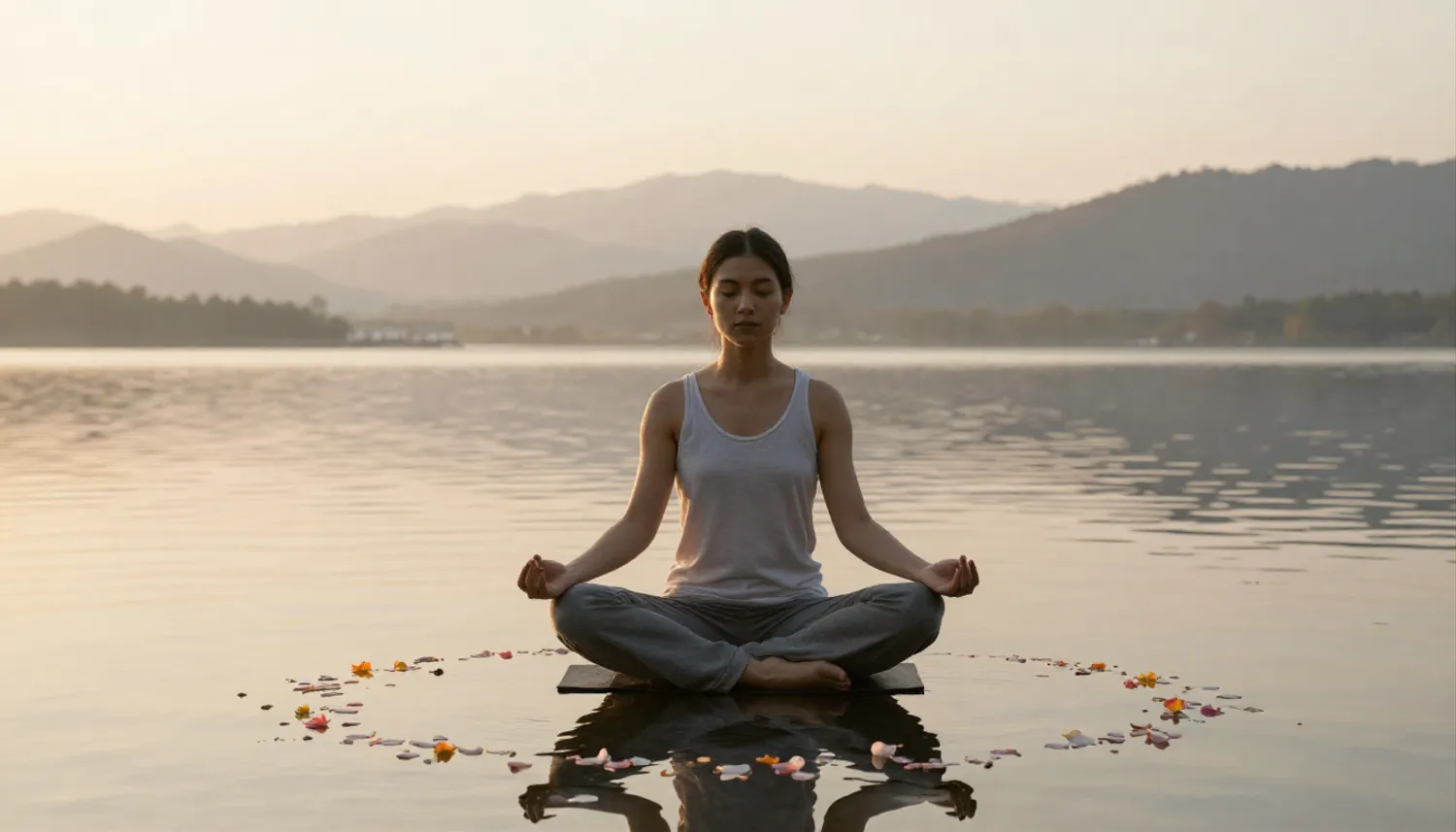
This discovery — which sounds philosophical when described but is experiential and unmistakable when accessed — is one of the most significant gifts that consistent meditation practice offers. This guide shows you exactly how to cultivate it.
The Critical Distinction: Achieving Stillness vs. Discovering It
Most beginners approach stillness practice as an achievement problem — how do I get my mind to be quiet? — and spend months or years trying to force mental silence and failing.
The contemplative traditions are unanimous on a different understanding: genuine stillness is not produced by effort. It is revealed by the release of effort — by the gradual discovery that beneath the incessant movement of thoughts, beneath the emotional weather, beneath the narrative commentary that ordinarily fills awareness, there is a natural quiet that practice doesn't create but uncovers.
This shift — from trying to achieve stillness to releasing into the stillness already present — is the most important transition in stillness practice. And it cannot be forced or rushed. It happens through consistent, sincere practice over weeks and months — through the gradual loosening of the mind's grip on its habitual activity and the discovery, in the spaces between, of what remains.
Core Stillness Practices: From Foundation to Depth
Open Awareness: The Primary Stillness Practice
Sit comfortably. Close your eyes. Rather than attending to any particular object — breath, sensation, a specific thought — allow awareness to rest lightly and openly on everything at once. Sounds arising and passing. Physical sensations present and changing. The subtle sense of simply being present.
When thoughts arise — as they will, constantly — don't engage with their content. Don't suppress them either. Simply allow them to arise and pass through the open space of awareness, like clouds moving through a clear sky. You are the sky. The thoughts are weather. The sky doesn't need to do anything about the weather.
Maintain this open, non-engaged awareness for 20–30 minutes. Don't evaluate the session by how few thoughts arise — evaluate it by the quality of non-engagement when thoughts do arise.
The Still Point Between Breaths
A more refined stillness practice: at the natural pause between exhale and inhale — the moment when one breath is complete and the next hasn't begun — rest your attention completely. That still point between breaths is a moment of genuine bodily and mental pause. Extended gradually through practice, it becomes a gateway to the deeper stillness that underlies all breath activity.
Practice for 15–20 minutes. As the weeks pass, the still point gradually becomes more accessible — not just between breaths, but as a quality permeating the practice.
Meditation for Peace and Happiness: What Stillness Reveals
Meditation for peace and happiness develops naturally from sustained stillness practice — not as a separate outcome to pursue, but as the natural consequence of the mind's relationship to its own underlying nature changing.
What practitioners consistently describe discovering through sustained stillness practice: beneath the fluctuating surface of thought and emotion — the good days and bad days, the pleasant and unpleasant experiences, the successes and failures — there is a quality of okayness that doesn't require conditions. A stillness that isn't the absence of experience but the nature of awareness itself.
This is what the traditions mean when they describe meditation as a path to genuine, lasting peace: not the peace of circumstances cooperating, but the peace of recognizing what you are beneath circumstances — an aware, open presence that has never been actually disturbed by what passes through it.
Daily stillness practice — sustained consistently over months and years — progressively reveals this recognition. The peace that results is stable, growing, and genuinely independent of external conditions in ways that practitioners describe as among the most significant discoveries of their lives.
Meditation for Letting Go of the Past: Stillness Enables Release
Meditation for letting go of the past becomes most genuinely effective from the ground of stillness practice rather than from direct effort to release. Here's why:
Letting go — genuine release of past holding rather than forced suppression — requires a quality of inner spaciousness. The past maintains its grip through the mind's habitual engagement with its content — the rumination, the replaying, the ongoing mental investment in what cannot be changed.
Stillness practice gradually reduces this habitual engagement. As the mind's grip on thought-content loosens — as the practitioner develops the capacity to allow thoughts to arise and pass without automatic identification — the past's content also begins to arise and pass rather than lodging indefinitely in consciousness.
This is not forceful letting go. It is the natural release that occurs when the mental mechanism maintaining the past's grip — constant unconscious engagement — is progressively loosened through consistent stillness practice.
Meditations for Letting Go: Specific Stillness-Based Release Practices
Meditations for letting go combined with stillness practice produce the most complete and lasting release available through meditation.
The spacious holding practice:
Begin with 10–15 minutes of open awareness stillness practice. Allow the mind to settle into its natural quiet.
Then, from that stillness, gently bring to mind whatever you're carrying — a regret, a resentment, an attachment, a loss. Don't engage with its story. Simply hold it in the spacious stillness you've cultivated — like holding a stone in a large, still lake. Notice how the spaciousness of awareness can hold even difficult content without being disturbed by it.
Then, with a slow complete exhale: allow the content to sink — not suppressed, but released — into the stillness. Breathe. Notice what remains.
Practice for 20–25 minutes. Return to this practice whenever carrying something that needs releasing.
Guided Meditation Loving Kindness: Opening the Heart Within Stillness
Guided meditation loving kindness and stillness practice create their deepest effects in combination — a daily practice that many experienced practitioners consider the most complete available.
The sequence: begin with 15–20 minutes of open awareness stillness, allowing the mind to settle into its natural quiet and spaciousness. Then transition, from that ground of stillness, into 15–20 minutes of loving-kindness — directing the phrases first toward yourself, then outward through the traditional progression.
The quality of loving-kindness practice that emerges from a ground of genuine stillness is qualitatively different from practice begun directly — warmer, less mechanical, more genuinely felt. The stillness provides the spacious openness from which warmth arises most naturally; the loving-kindness provides the relational warmth that prevents stillness from becoming cold or detached.
Together, they represent what many traditions describe as the most complete form of daily practice: the cultivation of both clarity and warmth, insight and compassion, stillness and love.
Conclusion
Meditation for stillness is not about achieving a particular state or eliminating the mind's natural activity. It is about discovering — gradually, through consistent practice — what has always been present beneath the activity: a natural quiet, a fundamental okayness, a spacious awareness that has never been disturbed by what passes through it.
That discovery is available to every sincere practitioner. It arrives on its own timeline, through its own process. Your task is simply to show up for the practice, consistently, and allow the discovery to unfold. Explore expert stillness practice guidance at Z Meditation — visit zmeditation.com/the-work/ for complete stillness and peace programs.
Frequently Asked Questions
1. How do I know if I'm practicing stillness correctly?
If you're consistently returning attention to open, non-engaged awareness when thoughts arise — rather than fighting them, following them, or becoming frustrated — you're practicing correctly. Progress is not measured by the absence of thought.
2. How long before genuine stillness becomes accessible?
Most practitioners access brief genuine moments of stillness within the first few sessions. Extending and deepening those moments takes months of consistent daily practice.
3. Is meditation for stillness the same as transcendental meditation?
They share the goal of accessing underlying stillness but use different methods. TM uses mantra as the practice vehicle; open awareness stillness practice uses non-directed awareness. Both can access genuine stillness.
4. Can I combine stillness practice with my existing breath awareness practice?
Yes — and the combination is often highly effective. Begin sessions with 10 minutes of breath awareness to settle, then transition into open awareness stillness for the remaining time.
5. What's the relationship between stillness and enlightenment?
Most traditions describe enlightenment as the permanent recognition of the stillness that's always present — what stillness practice progressively reveals. In this sense, daily stillness practice is among the most direct paths available toward genuine awakening.