Speech is so constant in daily life that most people never notice how much energy it consumes. Not just the act of talking, but the continuous background process of preparing what to say, managing how it lands, monitoring how others are responding, and adjusting accordingly. A silent meditation retreat removes this entirely, and the effect in the first few hours is almost always the same: a strange, slightly unsettling spaciousness where the social mind suddenly has nothing to do. By the second day, that spaciousness starts to feel less strange and more like relief.
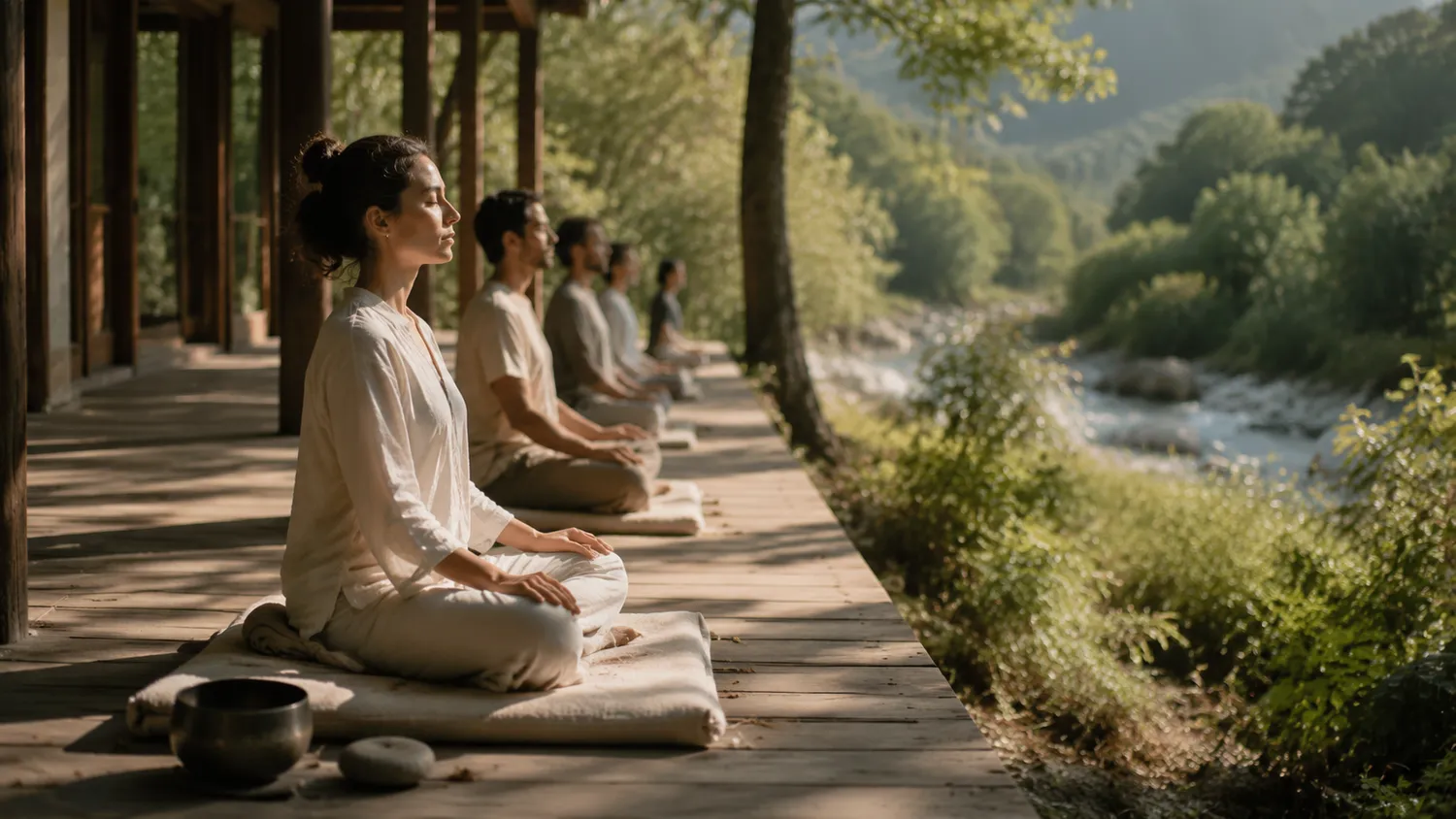
The silence in a well-run retreat isn't just the absence of conversation. It extends to eye contact, to gesture, to the way people move through shared spaces. Meals are taken quietly. Transitions between sessions happen without small talk. The cumulative effect is a radical reduction in social performance — the ongoing management of how one appears to others — which turns out to be one of the most exhausting things human beings do without realizing it. When that performance stops, something underneath it becomes visible. This is where the actual work of a silent retreat begins.
The daily structure typically alternates between sitting meditation and walking meditation, with rest periods and an evening teaching or dharma talk. The rhythm is deliberate. Sitting builds concentration and interior stillness. Walking keeps the body from stiffening and brings the same quality of attention into movement, which turns out to be more challenging and more rewarding than most beginners expect. By midweek in a longer retreat, many participants describe a quality of presence in simple activities — eating, walking to the bathroom, washing hands — that they've never experienced in ordinary life.
What surprises most first-timers isn't the silence itself but what the silence reveals. Without external noise to absorb attention, whatever has been accumulating internally becomes audible. Old memories surface. Emotions that were managed rather than felt come forward. This isn't comfortable, but it's also not something to be feared. A well-facilitated retreat provides enough structure and teacher access to ensure that whatever comes up can be met with guidance rather than left to overwhelm. The container holds the experience even when the experience is difficult.
People return from silent retreats changed in ways that are hard to articulate to those who haven't been. The changes tend to be subtle rather than dramatic — a slower reactivity, a greater tolerance for discomfort, a quality of listening that wasn't there before. These shifts don't always last without continued practice, which is why most serious retreat attendees build a regular sitting practice around their retreat experiences rather than treating the retreat as a standalone event.
For those interested in experiencing a silent retreat without traveling far, options are more accessible than most people realize. Retreat centers offering silent practice have expanded significantly across the country in recent years, making this kind of experience genuinely within reach for most people. For anyone ready to begin that search, silent meditation retreat near me is a practical starting point for finding a program that fits both location and experience level.