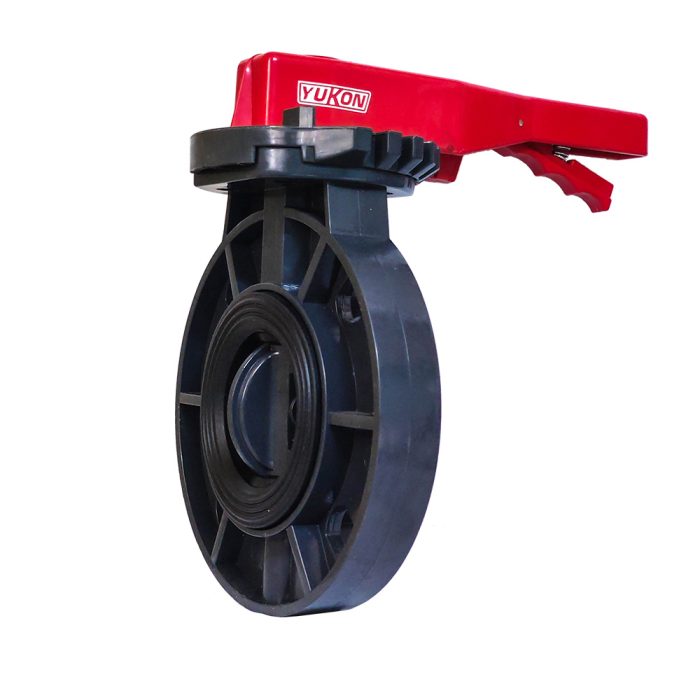
Water treatment plants are essential for providing clean and safe water for communities and industries. These complex facilities utilize various processes to remove impurities and ensure the water meets stringent quality standards. One seemingly simple, yet crucial component in this process is the valve, and specifically, the UPVC butterfly valve. These valves play a significant role in controlling the flow of water and various treatment chemicals throughout the plant, contributing to its efficient and reliable operation.
UPVC, or Unplasticized Polyvinyl Chloride, is a popular material choice for valves in water treatment due to its inherent properties. It's highly resistant to corrosion and chemical attack, making it ideal for handling the diverse range of substances encountered in water treatment, from raw water to treated water, and even the chemicals used for disinfection and flocculation. This resistance is paramount for ensuring the longevity and integrity of the valves, preventing leaks and contamination that could compromise water quality.
Butterfly valves, in general, are known for their compact design and ease of operation. They consist of a circular disc (the "butterfly") that rotates within the valve body. When the disc is turned parallel to the flow, the valve is open, allowing water to pass through. When the disc is rotated perpendicular to the flow, the valve is closed, effectively stopping the water flow. This simple mechanism provides effective flow control with minimal effort, making butterfly valves a practical choice for various applications within a water treatment plant.
In water treatment, UPVC butterfly valves are used in several key areas:
- Raw Water Intake: At the very beginning of the treatment process, these valves control the flow of raw water entering the plant. They can be used to regulate the intake volume and isolate the intake point for maintenance or repairs.
- Chemical Dosing: Precise chemical dosing is crucial for effective water treatment. UPVC butterfly valves are used to control the flow of coagulants, flocculants, disinfectants, and other treatment chemicals. Their ability to provide precise flow control ensures that the correct amount of chemicals is added at each stage, optimizing the treatment process and minimizing chemical usage.
- Filtration Systems: After the coagulation and flocculation stages, the water is typically passed through filters to remove suspended particles. UPVC butterfly valves are used to control the flow of water to and from the filters, allowing for backwashing and maintenance operations. They also play a role in isolating individual filter units for cleaning or repair without disrupting the overall treatment process.
- Treated Water Distribution: Once the water has been treated and is ready for distribution, UPVC butterfly valves are used to control the flow into storage tanks or distribution networks. They help regulate the outflow and ensure a consistent supply of treated water.
- Isolation and Maintenance: Throughout the water treatment plant, UPVC butterfly valves are strategically placed to isolate different sections of the system. This allows for maintenance and repair work to be carried out without having to shut down the entire plant. Their ease of operation and reliable sealing capabilities make them ideal for this purpose.
Beyond their material properties and functionality, UPVC butterfly valves offer several other advantages in water treatment:
- Cost-Effectiveness: Compared to other types of valves, UPVC butterfly valves are generally more affordable, making them a budget-friendly option for water treatment plants.
- Lightweight: UPVC is a relatively lightweight material, making these valves easier to handle and install. This can reduce installation time and costs.
- Ease of Maintenance: The simple design of butterfly valves makes them easy to maintain. Regular inspections and occasional replacement of seals are typically all that is required.
- Long Service Life: When properly installed and maintained, UPVC butterfly valves can provide a long and reliable service life in water treatment applications.
In conclusion, UPVC butterfly valves are indispensable components in modern water treatment plants. Their corrosion resistance, chemical compatibility, ease of operation, and cost-effectiveness make them a preferred choice for controlling the flow of water and treatment chemicals. From raw water intake to treated water distribution, these valves play a crucial role in ensuring the efficient and reliable operation of the plant, ultimately contributing to the delivery of safe and clean water. Their importance in the water treatment process cannot be overstated.