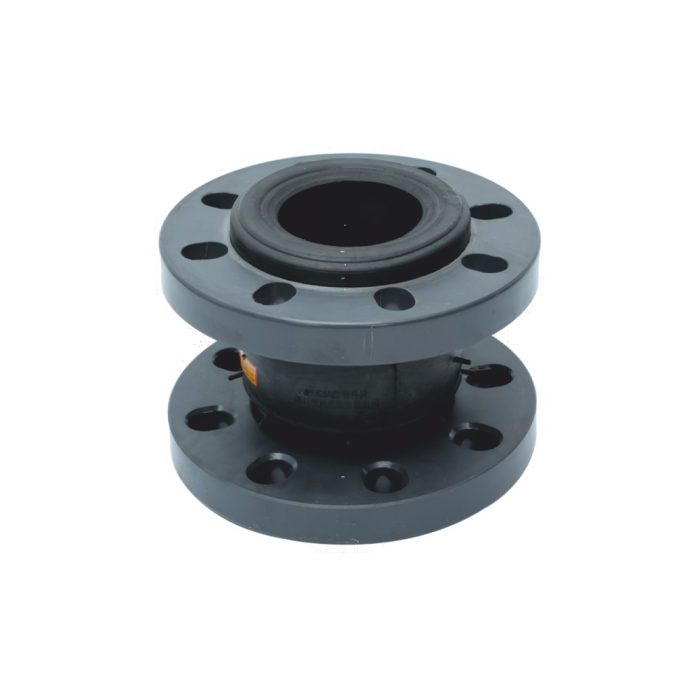
In modern piping and industrial systems, the need for flexibility, vibration absorption, and pressure control has become more important than ever. Among the most reliable solutions available today, the rubber expansion joint stands out for its ability to handle movement, reduce stress, and extend the lifespan of pipelines. Whether used in HVAC systems, chemical plants, water treatment facilities, or industrial machinery, rubber expansion joints offer unmatched performance across a wide range of applications.
This complete guide will help you understand the types, materials, and performance advantages of using a rubber expansion joint in critical systems.
What Is a Rubber Expansion Joint?
A rubber expansion joint is a flexible connector designed to absorb movement, vibration, and thermal expansion in piping systems. It typically consists of natural or synthetic rubber reinforced with layers of fabric, metal rings, or wire. Its unique elasticity allows it to handle torsional, angular, and lateral movements while relieving stress on pumps, pipes, and mechanical equipment.
Rubber expansion joints are essential in systems where temperature changes, mechanical vibrations, pressure variations, or misalignments are common.
Types of Rubber Expansion Joints
Rubber expansion joints are available in several configurations depending on the required flexibility, pressure rating, and movement compensation. Here are the most widely used types:
Single Arch Rubber Expansion Joint
This is the most common type, designed with a single flexible arch.
Benefits:
- High flexibility
- Excellent vibration absorption
- Suitable for general industrial and HVAC applications
Double Arch Rubber Expansion Joint
This type has two arches to provide greater movement capability.
Benefits:
- Handles large axial, lateral, and angular movements
- Ideal for pipelines with significant misalignment or thermal expansion
Triple Arch or Multiple Arch Rubber Expansion Joint
Designed for systems requiring extreme flexibility.
Benefits:
- Highest movement absorption
- Best for heavy-duty industrial environments
Flanged Rubber Expansion Joint
Comes with flanges on both ends for strong, leak-proof installation.
Benefits:
- Easy to install
- High pressure resistance
- Suitable for chemical, water treatment, and HVAC systems
Spherical or Spool-Type Rubber Expansion Joint
Features a spherical design for multi-directional movement.
Benefits:
- Enhanced flexibility
- Longer service life due to even stress distribution
Each type of rubber expansion joint is designed for specific applications, ensuring optimal performance based on system requirements.
Materials Used in Rubber Expansion Joints
The performance and lifespan of a rubber expansion joint depend heavily on the materials used. Different rubber compounds offer various levels of resistance to chemicals, temperature, abrasion, and pressure.
EPDM (Ethylene Propylene Diene Monomer)
- Excellent heat and weather resistance
- Ideal for hot water, steam, and outdoor applications
- Great UV and ozone resistance
Neoprene
- Good chemical and oil resistance
- Suitable for industrial water, refrigerants, and petroleum-based fluids
- Strong environmental durability
Nitrile (NBR)
- Excellent resistance to oils and fuels
- Commonly used in fuel and lubricant handling pipelines
atural Rubber
- High flexibility and tensile strength
- Best for low-temperature water-based systems
- Not recommended for harsh chemicals
Viton or Fluorocarbon Rubber
- Superior chemical resistance
- Ideal for aggressive acids, solvents, and high-temperature applications
- Used in chemical plants and specialized industrial environments
The correct material selection is critical for ensuring the rubber expansion joint performs reliably under specific operating conditions.
Performance Insights: Why Rubber Expansion Joints Are Essential
Rubber expansion joints provide multiple performance benefits that significantly enhance the reliability and efficiency of piping systems.
Absorbs Vibration & Noise
One of the biggest advantages of using a rubber expansion joint is its ability to isolate vibrations from pumps, compressors, and machinery. This reduces wear and protects the entire system from mechanical fatigue.
Handles Thermal Expansion & Contraction
Pipelines expand and contract with temperature changes. Rubber expansion joints absorb this movement, preventing cracks, stress, and joint failure.
Compensates for Misalignment
Piping systems often have minor misalignments due to installation limitations.
A rubber expansion joint adjusts to these gaps, ensuring smooth flow and reduced stress on equipment.
Reduces Pressure Surges & Water Hammer
Sudden pressure changes can damage pipes. Rubber expansion joints act as shock absorbers, stabilizing the system.
Enhances System Longevity
By reducing stress, absorbing vibration, and resisting corrosion, a rubber expansion joint extends the life of pumps, pipes, and mechanical components.
Conclusion
Rubber expansion joints have become a crucial component in modern piping design due to their ability to handle movement, resist chemical exposure, and enhance system reliability. With multiple types, material options, and performance benefits, choosing the right rubber expansion joint ensures long-term durability and improved efficiency across HVAC, water treatment, chemical processing, and industrial applications.