Understanding the complexities of mental health disorders can be challenging, particularly when differentiating between similar conditions. Factitious disorder vs malingering are two such conditions that often confuse both professionals and laypersons. This article aims to shed light on these disorders, highlighting their key differences, diagnostic challenges, and implications for treatment and management.
Understanding Factitious Disorder
Definition and Characteristics
Factitious disorder, formerly known as Munchausen syndrome, is a mental condition where an individual deliberately produces or exaggerates symptoms of illness in themselves or others. The primary motivation is to assume the sick role and gain medical professionals' attention, sympathy, or care.
Common Symptoms
Individuals with factitious disorder might:
- Falsify medical history
- Manipulate test results
- Self-inflict injuries
- Undergo unnecessary medical procedures
Psychological Factors
The underlying psychological factors often include a need for attention, a desire to be seen as ill or injured, and a history of trauma or neglect. Factitious disorder is typically linked to deeper emotional issues that need addressing through therapy.
Diagnostic Criteria
Diagnosing factitious disorder requires careful assessment. Key criteria include:
- Deliberate fabrication of symptoms
- Evidence of deceptive behavior
- Absence of external incentives (e.g., financial gain, avoiding work)
Exploring Malingering
Definition and Characteristics
Malingering is not classified as a mental illness but is a behavior pattern where an individual consciously fakes or exaggerates symptoms for external benefits. These benefits can include financial compensation, avoiding work or military service, or obtaining drugs.
Common Symptoms
Signs of malingering may include:
- Inconsistent medical history
- Symptoms that do not align with diagnostic tests
- Sudden improvement once the desired outcome is achieved
- Refusal to cooperate with diagnostic procedures
Psychological and Social Factors
Malingering is often driven by external motivations rather than psychological needs. Unlike factitious disorder, the primary goal is to gain something tangible.
Diagnostic Criteria
Diagnosing malingering involves:
- Identifying a clear external incentive
- Recognizing inconsistent or exaggerated symptom presentation
- Observing a lack of cooperation with medical evaluation
Key Differences Between Factitious Disorder and Malingering
Motivation
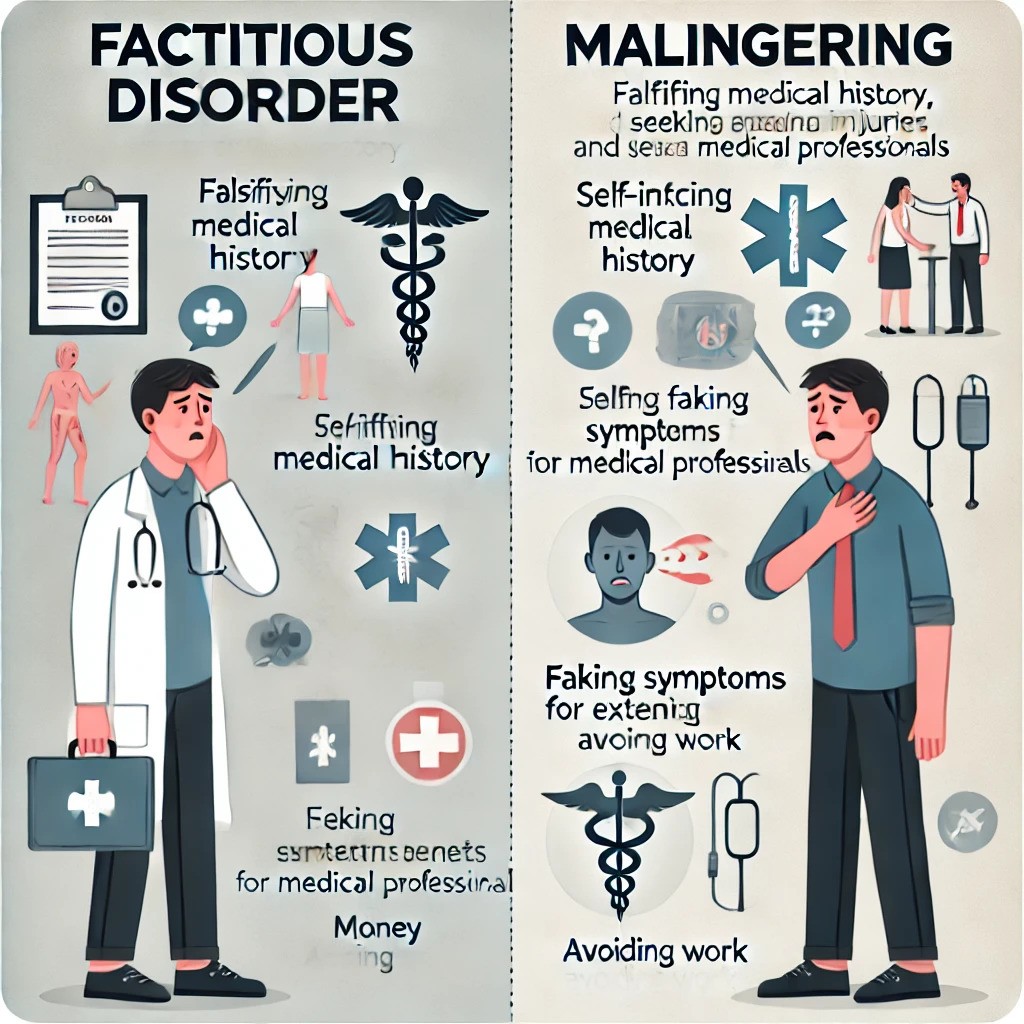
- Factitious Disorder: Motivated by psychological needs, such as the desire for attention or care.
- Malingering: Driven by external incentives, such as financial gain or avoiding responsibilities.
Behavior Patterns
- Factitious Disorder: Patients willingly undergo painful or risky procedures to maintain the sick role.
- Malingering: Individuals often resist diagnostic procedures that could disprove their claims.
Recognition and Admission
- Factitious Disorder: Patients rarely admit to fabricating symptoms and often switch doctors to avoid detection.
- Malingering: Malingerers might drop their act once the external incentive is obtained or denied.
Diagnostic Challenges
Overlapping Symptoms
Both conditions involve symptom fabrication, making it difficult to distinguish between them without thorough investigation.
Ethical Considerations
Accusing someone of malingering or factitious disorder can be sensitive and requires careful ethical considerations. Misdiagnosis can lead to unnecessary treatments or denial of necessary care.
Comprehensive Assessment
A comprehensive assessment by a multidisciplinary team is crucial. This includes:
- Detailed patient history
- Psychological evaluation
- Collaboration between medical professionals
Diagnostic Tools and Techniques
Clinical Interviews
Conducting detailed interviews to understand the patient’s history and motivations.
Psychological Testing
Using standardized psychological tests to identify underlying mental health issues.
Medical Evaluation
Performing thorough medical evaluations to rule out genuine medical conditions.
Treatment and Management
Factitious Disorder
- Psychotherapy: Addressing underlying psychological issues through cognitive-behavioral therapy (CBT) or other therapeutic approaches.
- Medical Monitoring: Careful monitoring to prevent unnecessary medical interventions.
- Support Systems: Building a support system for the patient, including family therapy if needed.
Malingering
- Addressing External Incentives: Removing or mitigating the external incentives that drive the behavior.
- Legal and Ethical Considerations: Ensuring ethical management and avoiding unnecessary confrontation.
Implications for Healthcare Professionals
Building Trust
Establishing a trusting relationship with patients is essential for accurate diagnosis and effective treatment.
Continuous Education
Healthcare professionals should stay informed about the latest diagnostic criteria and treatment approaches for these conditions.
Multidisciplinary Approach
Collaborating with psychiatrists, psychologists, and other specialists ensures comprehensive care.
Conclusion
Understanding the distinctions between factitious disorder vs malingering is crucial for accurate diagnosis and effective treatment. While both conditions involve symptom fabrication, their underlying motivations and implications differ significantly. By recognizing these differences and employing a multidisciplinary approach, healthcare professionals can better manage these complex cases, ultimately improving patient outcomes and ensuring ethical care.