Introduction
Structural engineering plays a crucial role in the design and construction of infrastructure projects. It ensures that structures such as bridges, tunnels, dams, and buildings are safe, durable, and capable of withstanding environmental stresses. However, the field is fraught with challenges that require innovative solutions. This blog explores the common challenges faced in structural engineering for infrastructure projects and the effective strategies to address them.
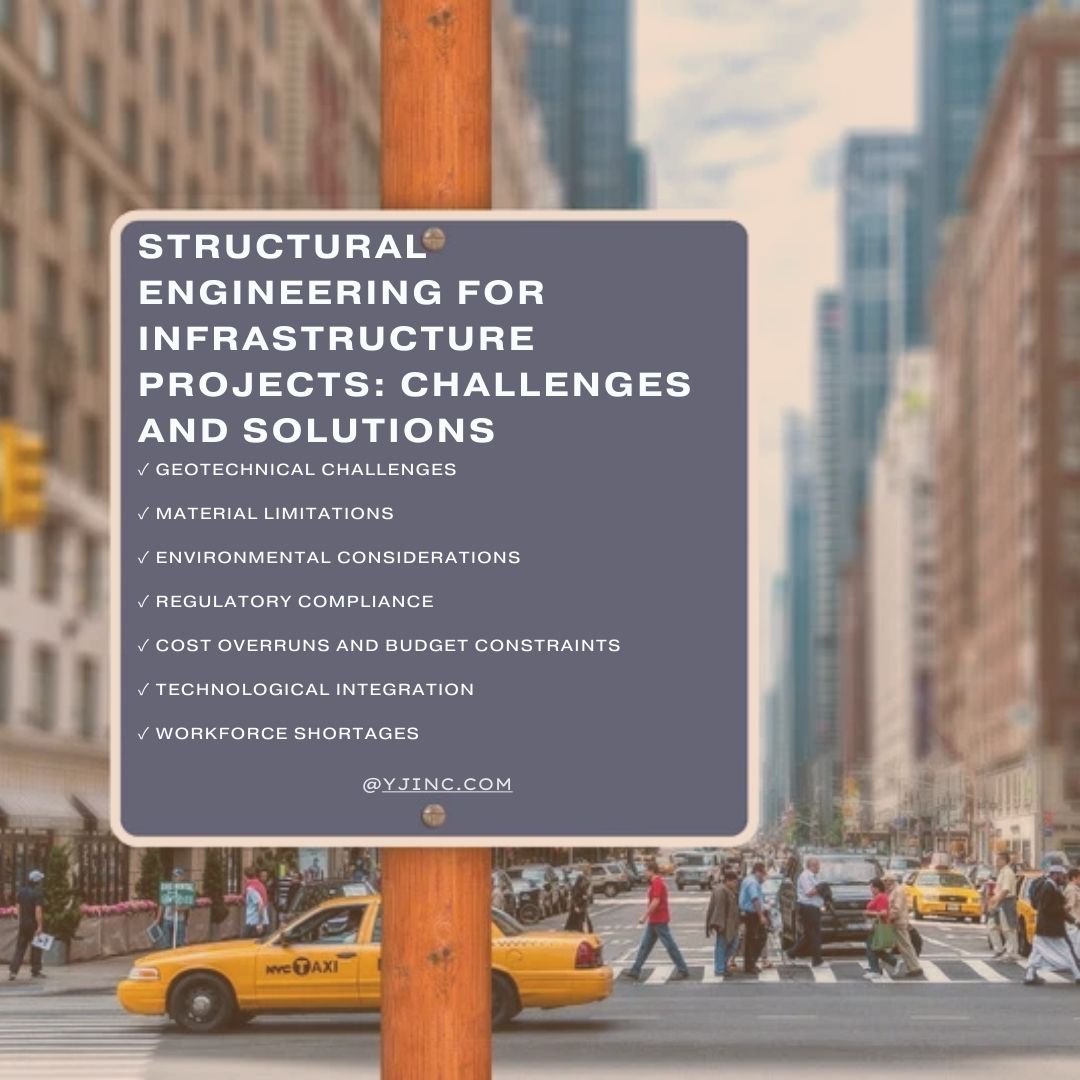
1. Geotechnical Challenges
Challenge:
Soil conditions greatly influence the stability and integrity of infrastructure projects. Poor soil quality can lead to foundation failures and structural damage.
Solution:
Conducting thorough geotechnical investigations is essential. This includes soil testing and analysis to determine bearing capacity, settlement potential, and the need for soil stabilization techniques. Structural engineers must collaborate with geotechnical experts to ensure proper design and construction methods are applied.
2. Material Limitations
Challenge:
Selecting appropriate materials that meet strength, durability, and cost-effectiveness is a significant challenge in structural engineering. The materials used must also comply with safety standards.
Solution:
Innovative materials, such as high-performance concrete and advanced composites, can enhance structural performance. Engineers should keep abreast of new material technologies and sustainability practices to select the most suitable options for their projects.
3. Environmental Considerations
Challenge:
Infrastructure projects often face environmental impacts such as earthquakes, floods, and climate change, which can compromise structural integrity.
Solution:
Implementing resilient design principles is vital. This includes using adaptive strategies, like flexible structures that can absorb seismic forces, and designing drainage systems to prevent flooding. Structural engineers should also consider environmental impact assessments during the planning phase.
4. Regulatory Compliance
Challenge:
Infrastructure projects must adhere to a myriad of local, state, and federal regulations, which can complicate the design and construction process.
Solution:
Staying informed about the latest codes and standards is crucial. Engaging with regulatory agencies early in the design process can facilitate compliance and avoid costly delays. Structural engineering firms should incorporate regulatory reviews in their project management workflows.
5. Cost Overruns and Budget Constraints
Challenge:
Projects often exceed their initial budgets due to unforeseen challenges, design changes, or material costs.
Solution:
Effective project management and risk assessment techniques can mitigate cost overruns. Utilizing advanced software for structural engineering analysis can improve accuracy in estimating costs and timelines. Additionally, adopting value engineering principles can identify cost-saving opportunities without compromising quality.
6. Technological Integration
Challenge:
The rapid advancement of technology presents both opportunities and challenges for structural engineering. Integrating new tools and techniques can be difficult, especially for traditional firms.
Solution:
Embracing Building Information Modeling (BIM) and other digital tools can enhance collaboration and streamline project workflows. Continuous training and professional development for engineers will also help in adapting to technological changes and innovations.
7. Workforce Shortages
Challenge:
The engineering sector often faces a shortage of skilled labor, which can hinder project progress and quality.
Solution:
Investing in training programs and internships can help attract new talent to the field. Structural engineering firms should also promote diversity and inclusivity to widen the pool of potential engineers, ensuring a robust workforce for future projects.
Conclusion
Structural engineering is integral to the success of infrastructure projects. By understanding the challenges and implementing effective solutions, engineers can enhance the safety, efficiency, and sustainability of their designs. As the field continues to evolve, ongoing innovation and adaptation will be crucial for overcoming future obstacles in structural engineering.