In the world of enterprise finance, gaining a solid understanding of how businesses manage and track their financial operations is more important than ever. As companies embrace digital transformation, tools like SAP FICO are becoming essential to maintaining control, transparency, and efficiency in financial processes. Whether you're just stepping into finance, accounting, or IT, learning SAP FICO can be your gateway to a rewarding professional path. This blog serves as a simplified, step-by-step introduction to SAP FICO, helping new learners understand its core concepts, components, and how to start using it effectively. SAP FICO Online Training provides a flexible and in-depth way to learn financial accounting and controlling through real-time SAP tools, perfect for beginners and professionals alike.
What is SAP FICO All About?
SAP FICO stands for Financial Accounting (FI) and Controlling (CO) two vital modules within the SAP ERP system. Together, they help companies handle both their external financial reporting and internal cost management processes.
- Financial Accounting (FI): Focuses on recording business transactions and preparing financial statements such as balance sheets and profit & loss reports.
- Controlling (CO): Helps monitor and control internal costs, analyze performance, and manage budgeting and profitability.
In essence, FI shows the financial picture to stakeholders and regulators, while CO equips management with the data they need to make better decisions.
Why Should You Learn SAP FICO?
SAP FICO is widely adopted by organizations around the world because it brings accuracy, structure, and visibility to their financial systems. Some compelling reasons to learn it include:
- It simplifies complex financial transactions and processes.
- It integrates seamlessly with other SAP modules like MM (Materials Management) and SD (Sales and Distribution).
- It provides real-time data for strategic decision-making.
- It’s a high-demand skill in industries ranging from manufacturing to finance, retail, and IT.
Mastering SAP FICO opens doors to roles such as SAP consultant, business analyst, or financial systems manager.
A Step-by-Step Approach to Learning SAP FICO
Here’s how you can begin your SAP FICO journey with clarity and confidence:
Step 1: Familiarize Yourself with SAP’s Ecosystem
Before focusing on the FICO module, it’s essential to grasp the bigger picture:
- SAP is one of the world’s leading ERP software providers, helping companies manage business functions across departments.
- ERP modules like HCM, MM, SD, and FICO work together to create a fully integrated system.
- Learn how to use the SAP GUI (Graphical User Interface) to navigate, access menus, and execute transactions.
This foundational knowledge helps you understand how FICO fits into the broader enterprise framework.
Step 2: Learn the Core of Financial Accounting (FI)
The FI module takes care of everything related to financial documentation and compliance. Here are the primary areas you’ll work with:
- General Ledger (G/L): Where all financial transactions are posted.
- Accounts Payable (AP): Managing amounts owed to vendors and suppliers.
- Accounts Receivable (AR): Keeping track of incoming payments from customers.
- Asset Accounting (AA): Recording and managing fixed assets and their depreciation.
- Bank Accounting: Overseeing transactions and balances in bank accounts.
Getting familiar with these components will help you understand how businesses keep their books organized and audit-ready.
Step 3: Dive into the Controlling (CO) Module
While FI ensures legal and external compliance, CO focuses on internal planning and analysis. The CO module includes:
- Cost Elements: Categorizing income and expenses for tracking.
- Cost Centers: Departments or units where costs are incurred (e.g., HR, R&D).
- Profit Centers: Sections of a business responsible for revenue and profitability.
- Internal Orders: Monitoring specific activities or small projects.
- Activity-Based Costing: Assigning costs more accurately to services and products.
Understanding CO helps businesses analyze their internal performance and make informed decisions.
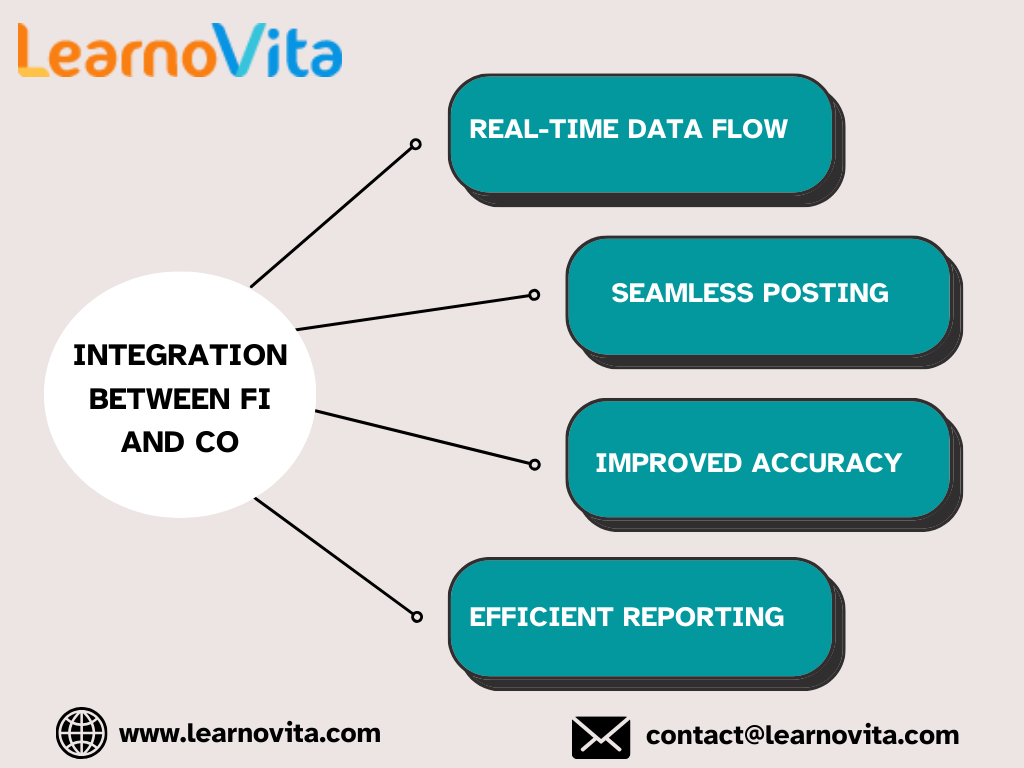
Step 4: Understand How FI and CO Work Together
The integration between FI and CO is a core strength of SAP:
- A sale recorded in the Sales module posts revenue to FI and updates profitability in CO.
- A payroll transaction affects FI’s G/L and allocates labor costs in CO.
- Inventory purchases reflect in both financial statements and cost center tracking.
This synergy ensures that data remains consistent across departments and functions. Our Best Training & Placement Program ensures hands-on learning and career support, guiding you from skill-building to securing your dream job.
Step 5: Practice Using Transaction Codes
SAP functions are performed using transaction codes, or T-codes, that let you access specific features or processes. Here are a few important ones:
- FB50: Enter general ledger postings
- F-02: Post journal entries
- F110: Execute automatic payments
- FS00: Create or modify G/L accounts
- KP06: Plan cost center budgets
- KE51: Create profit centers
Familiarity with T-codes enhances your speed and accuracy when using the SAP system.
Step 6: Learn the Basics of SAP Configuration
Once you're comfortable with transaction entry, you can explore SAP configuration, which involves setting up the system to match an organization's structure. This includes:
- Defining company codes, fiscal years, and chart of accounts.
- Configuring tax procedures, posting periods, and number ranges.
- Creating document types for various business processes.
This is especially relevant if you’re aspiring to become an SAP FICO consultant.
Step 7: Explore Financial and Management Reports
SAP FICO allows users to generate real-time, highly detailed reports that are essential for both compliance and strategic planning. Common reports include:
- Balance Sheet
- Profit and Loss Statement
- Trial Balance
- Customer and Vendor Reports
- Cost Center and Profit Center Reports
Learning how to read and generate these reports is key to becoming a proficient SAP user.
Step 8: Build Hands-On Experience and Consider Certification
The best way to learn SAP FICO is through practice. Here’s how to move forward:
- Use a training server or demo environment for hands-on practice.
- Enroll in an SAP FICO course, either online or through an authorized training center.
- Aim for SAP certification to validate your skills and improve your job prospects.
- Explore the newer SAP S/4HANA Finance for the latest functionalities and simplified architecture.
Final Thoughts
SAP FICO forms the backbone of financial management in many of the world’s largest organizations. While it may appear technical at first, breaking it down step-by-step makes it much easier to grasp. From understanding basic concepts to mastering transaction codes and system configuration, learning SAP FICO is both a practical and career-boosting move. If you’re ready to strengthen your skills and explore a new path in the world of enterprise finance, starting with SAP FICO could be the most rewarding step you take.