In an age where digital connectivity powers everything from banking to healthcare, cybersecurity has become a critical concern. With cyber threats on the rise, the need for professionals who can legally uncover system flaws and strengthen digital defenses has never been greater. Ethical hackers also known as white-hat hackers are skilled individuals who use hacking techniques for the right reasons: to prevent cyberattacks before they happen. If you’re intrigued by cybersecurity and want to explore how to ethically break into systems to improve them, this step-by-step guide is your starting point. Unlock cybersecurity skills with our Ethical Hacking Online Training, designed to teach real-world hacking techniques in a legal and structured way.

What Is Ethical Hacking?
Ethical hacking involves probing computer systems, applications, and networks with full permission to uncover potential vulnerabilities. These ethical hackers simulate the strategies and mindset of malicious actors, but they operate under strict legal and professional boundaries. Their mission is to detect loopholes that could be exploited and to report them so security can be improved. This proactive role helps organizations safeguard their data and infrastructure while staying compliant with industry standards.
The Importance of White-Hat Hacking
As cyber threats grow in frequency and complexity, ethical hackers play a pivotal role in risk prevention. Businesses, governments, and institutions are constantly under pressure to keep their digital assets secure. Ethical hackers provide a trusted service by exposing flaws before cybercriminals can exploit them. Their contributions help build safer digital systems, maintain user trust, and avoid costly breaches. Simply put, they’re the good guys working behind the scenes to make the internet more secure.
Step 1: Build Strong IT and Networking Knowledge
- Understand networking basics like IP addressing, DNS, and TCP/IP protocols.
- Get comfortable using and managing Linux and Windows systems.
- Learn how firewalls, routers, and switches operate in a secure network.
- Practice using command-line interfaces and explore system architecture.
Step 2: Understand Core Cybersecurity Concepts
- Study various attack types such as phishing, malware, and denial-of-service (DoS).
- Learn how security solutions like firewalls, antiviruses, and IDS/IPS systems function.
- Dive into the OWASP Top 10 list to understand web app vulnerabilities.
- Familiarize yourself with data encryption, hashing, and secure authentication techniques.
Step 3: Gain Programming and Scripting Proficiency
- Use Python for automation, scripting, and security tool development.
- Explore JavaScript to analyze web-based vulnerabilities like XSS.
- Learn SQL to understand and test for database injection attacks.
- Write Bash/Shell scripts to automate tasks and run Linux-based tools efficiently.
Practice in Safe, Legal Environments
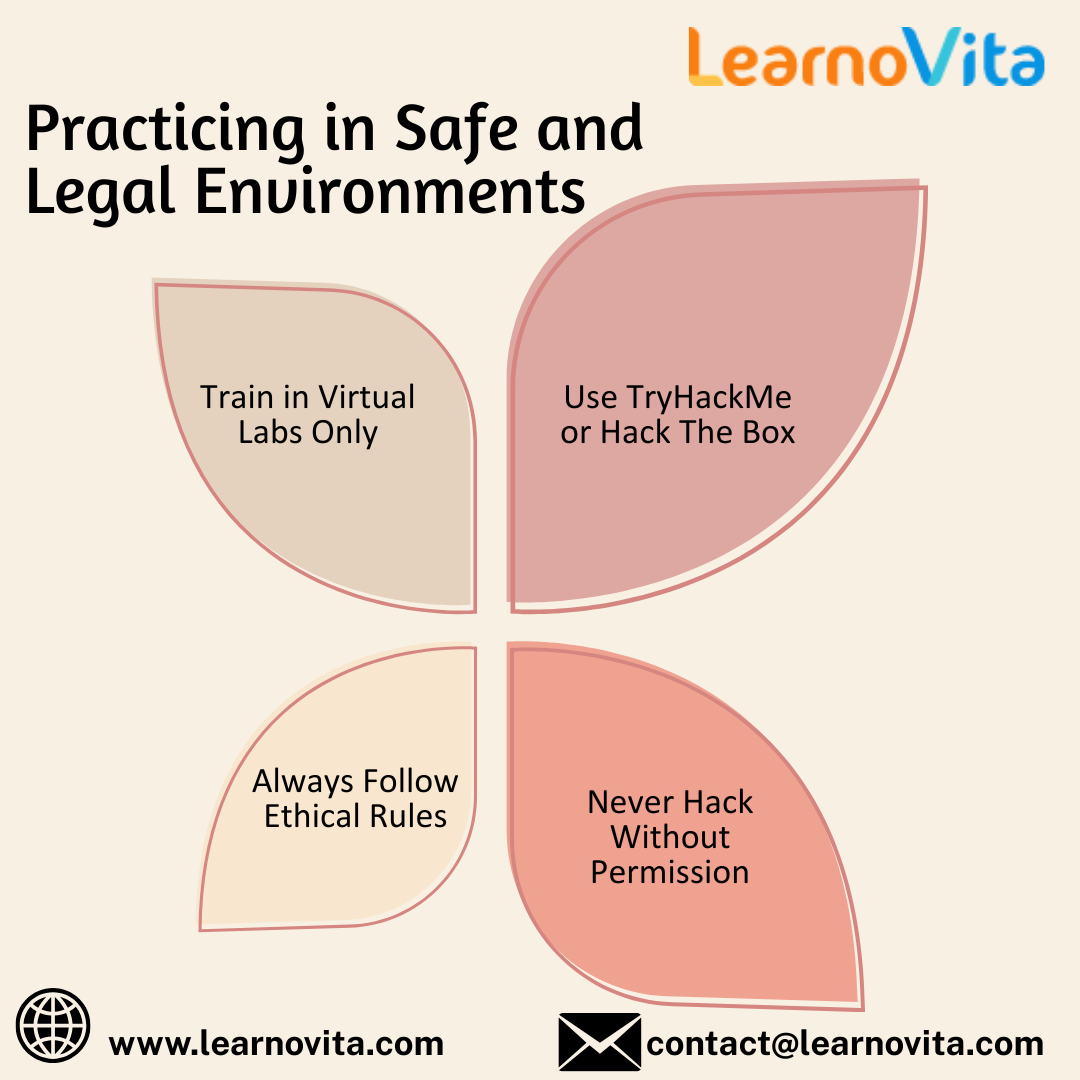
Before testing real systems, it’s vital to hone your skills in sandboxed, legal platforms designed for learning. Websites like TryHackMe, Hack The Box, and OverTheWire offer simulated penetration testing labs. These environments mirror real-world networks and vulnerabilities while ensuring you remain within legal boundaries. Practicing in these labs helps build your confidence and competence through trial, error, and success without risk to others. Our Best Training & Placement Program ensures hands-on learning and career support, guiding you from skill-building to securing your dream job.
Step 4: Explore Popular Hacking Tools
- Nmap – Scan for open ports and identify active services on networks.
- Wireshark – Capture and analyze network traffic in real time.
- Burp Suite – Intercept and manipulate web traffic to find hidden flaws.
- Metasploit – Use known exploits to simulate attacks and learn defense strategies.
- Nikto – Scan web servers for common vulnerabilities and misconfigurations.
Earn Industry-Recognized Certifications
To establish your credibility and gain employer trust, certifications are essential. Start with foundational credentials like CompTIA Security+, which introduces cybersecurity principles. Next, consider the Certified Ethical Hacker (CEH), which covers tools and tactics used in ethical hacking. For those seeking hands-on proof of skill, OSCP (Offensive Security Certified Professional) is an advanced and respected option. These certifications not only enhance your resume but also provide a structured path into the field.
Step 5: Stay Informed and Engage with the Community
- Keep up with cybersecurity blogs such as The Hacker News, ThreatPost, and KrebsOnSecurity.
- Join online communities like Reddit’s r/ethicalhacking and r/netsec.
- Follow YouTube creators, GitHub projects, and X/Twitter security threads.
- Track newly discovered vulnerabilities via CVE databases and exploit feeds.
Get Real-World Experience
Theory only goes so far; practical exposure is what turns learners into professionals. Apply your skills through internships, junior roles, or freelance projects. Bug bounty platforms like HackerOne and Bugcrowd let you legally test real applications and earn rewards for reporting vulnerabilities. These platforms provide real scenarios and are a great way to build a professional portfolio, gain recognition, and understand how businesses respond to threat reports.
Keep Learning, Keep Growing
The cybersecurity landscape is constantly shifting. New threats, technologies, and solutions emerge every day from AI-driven attacks to IoT security concerns. To thrive, ethical hackers must stay curious and continually sharpen their skills. Attend cybersecurity events, take advanced courses, compete in capture-the-flag (CTF) competitions, and contribute to security forums. Lifelong learning is not just helpful, it’s necessary in this field.
Conclusion
Ethical hacking offers a meaningful, exciting, and ever-evolving career path. It's a journey that begins with understanding systems and networks, mastering key tools, and thinking like a hacker but with a strong sense of ethics and legality. As an ethical hacker, you become part of a global effort to secure the digital world, prevent cybercrime, and protect people’s data. With dedication, practice, and the right mindset, anyone with passion can break into this field and start making a real difference.