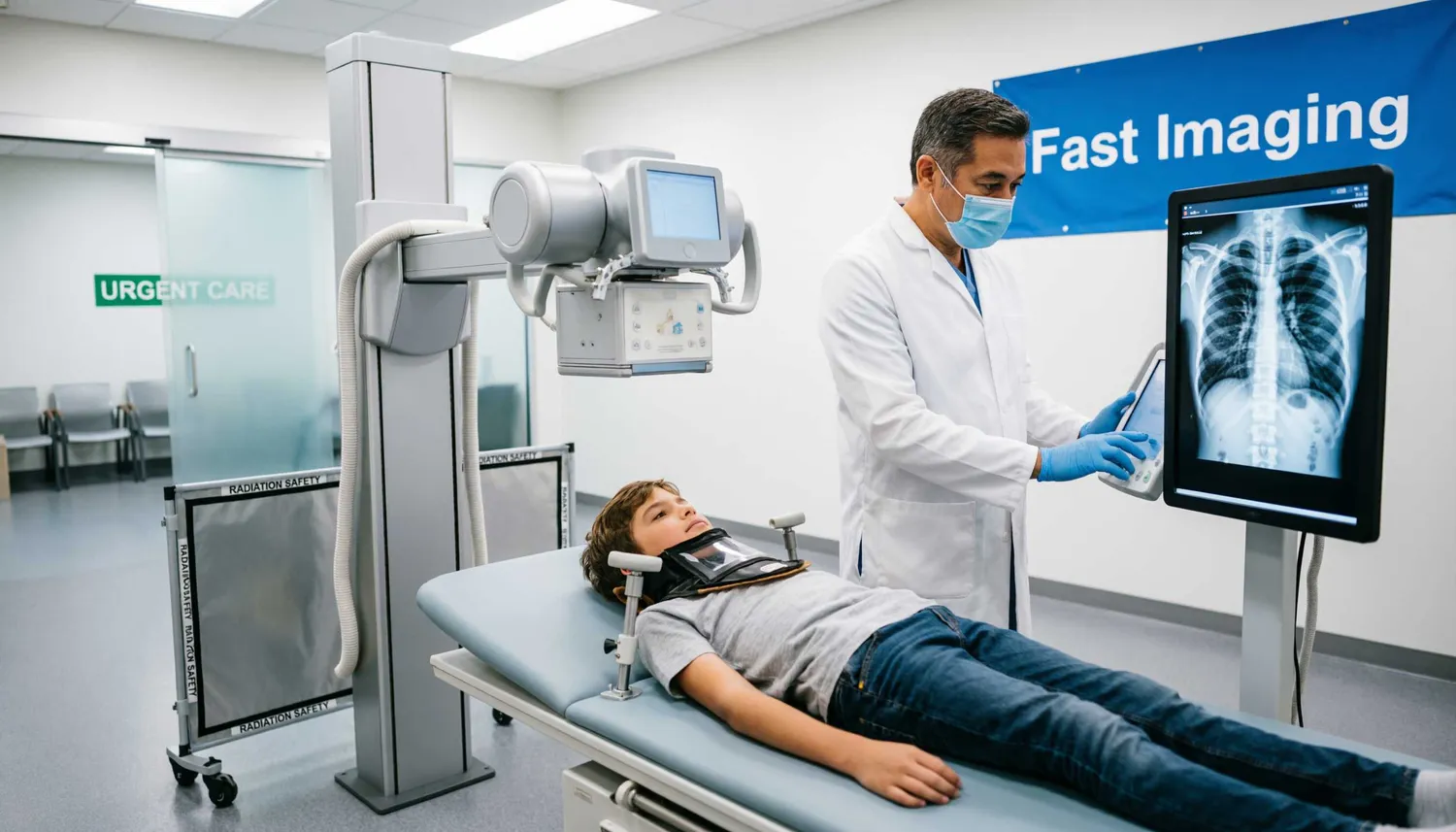
When an injury or sudden medical concern happens, getting quick and accurate diagnosis is critical. That’s where Urgent Care X Ray services play an important role. Instead of waiting hours in an emergency room or scheduling days ahead at a diagnostic center, urgent care clinics with on-site X-ray capabilities provide fast imaging and prompt evaluation.
This article explains what urgent care X-ray services are, when you should use them, what conditions they help diagnose, and what you can expect during your visit.
What Is an Urgent Care X Ray?
An Urgent Care X Ray is a diagnostic imaging service available at many urgent care centers. It uses low-dose radiation to create images of bones, joints, and certain internal structures. These images help healthcare providers quickly identify fractures, dislocations, infections, and other abnormalities.
Unlike hospital radiology departments, urgent care imaging is designed for walk-in patients with non-life-threatening but time-sensitive conditions. The goal is speed, convenience, and immediate clinical decision-making.
When Should You Get an Urgent Care X Ray?
You should consider an urgent care X ray when you have a sudden injury or symptom that may involve a bone, joint, or chest issue — but is not severe enough to require emergency room care.
Common situations include:
- Suspected broken bones
- Sprains or joint injuries
- Falls or sports injuries
- Possible dislocations
- Persistent bone pain after trauma
- Chest pain with suspected lung involvement
- Severe coughing with concern for pneumonia
- Foreign object concerns in soft tissue
If there is severe bleeding, head trauma, loss of consciousness, or major deformity, emergency services are more appropriate.
Benefits of Getting an X Ray at Urgent Care
Choosing an urgent care X ray instead of a hospital ER or imaging center offers several advantages.
Faster Service
Urgent care clinics typically have shorter wait times than emergency rooms. Many patients are evaluated, imaged, and treated in one visit.
Walk-In Convenience
Most urgent care centers accept walk-ins, so you don’t need an appointment for imaging.
Lower Cost Than ER Visits
Urgent care imaging is usually significantly less expensive than hospital emergency imaging for similar non-critical cases.
Immediate Clinical Review
In many clinics, the provider reviews the X-ray right away and explains the findings, allowing treatment to begin immediately.
One-Stop Care
You can get examined, imaged, diagnosed, and treated in the same location without multiple referrals.
What Conditions Can an Urgent Care X Ray Detect?
Urgent care X ray services are commonly used to evaluate a wide range of conditions.
Bone Fractures
X-rays are the primary tool for detecting broken bones in arms, legs, wrists, ankles, ribs, and more.
Joint Dislocations
If a joint appears out of place or cannot move properly, an X-ray confirms alignment and guides treatment.
Sprains vs. Breaks
Soft tissue sprains can mimic fracture symptoms. Imaging helps distinguish between them.
Chest Conditions
Chest X-rays may help detect pneumonia, certain infections, fluid buildup, or other lung concerns.
Degenerative Joint Changes
In some cases, X-rays show arthritis-related joint changes when pain suddenly worsens.
Foreign Objects
Some foreign materials lodged in soft tissue can be detected with X-ray imaging.
What Happens During an Urgent Care X Ray Visit?
If you’ve never had an urgent care X ray before, the process is simple and usually quick.
Step 1: Medical Evaluation
A provider examines your injury or symptoms and decides whether an X-ray is needed.
Step 2: Imaging Order
If appropriate, the provider orders the X-ray on-site. No outside referral is required.
Step 3: Positioning
A radiologic technologist positions the affected body part and may take images from multiple angles.
Step 4: Image Capture
The imaging takes only a few seconds per view. You must remain still briefly.
Step 5: Review and Diagnosis
The provider reviews the images and discusses the findings. Some clinics also have radiologist overreads for confirmation.
Step 6: Treatment Plan
You may receive a splint, brace, wrap, medication, or referral depending on the diagnosis.
Clinics such as Lockport Express Medical offer integrated urgent care evaluation and imaging so patients can move from diagnosis to treatment without delay.
How Long Does an Urgent Care X Ray Take?
The imaging itself takes only a few minutes. The entire urgent care visit — including exam, X-ray, and treatment — often takes between 30 and 90 minutes depending on patient volume and injury complexity.
This is much faster than scheduling outpatient imaging or waiting in an emergency department for non-critical injuries.
Is Urgent Care X Ray Safe?
Yes. Urgent care X ray imaging uses low radiation doses and is considered very safe for diagnostic purposes. Modern equipment minimizes exposure while maintaining image quality.
Precautions are taken for:
- Pregnant patients
- Children
- Repeated imaging cases
Protective shielding may be used when appropriate. Always inform staff if you might be pregnant.
Limitations of Urgent Care X Ray
While urgent care X ray services are highly useful, they do have limits.
They may not detect:
- Ligament tears
- Tendon injuries
- Early stress fractures (in some cases)
- Soft tissue damage
- Brain injuries
These conditions may require MRI, CT scan, or ultrasound — typically ordered through a hospital or specialist.
Urgent care providers will refer you if more advanced imaging is needed.
Urgent Care X Ray vs Emergency Room Imaging
Understanding when to choose urgent care vs the ER is important.
Choose urgent care X ray when:
- Injury is painful but stable
- No severe bleeding
- No major deformity
- You can walk or move with support
- Symptoms are moderate but concerning
Choose the emergency room when:
- There is severe trauma
- Possible head or spine injury
- Loss of consciousness
- Heavy bleeding
- Chest pain with cardiac symptoms
- Serious accident involvement
Urgent care fills the gap between primary care and emergency care.
Preparing for Your Urgent Care X Ray Visit
You usually don’t need special preparation, but these tips help:
- Bring your ID and insurance card
- Know how and when the injury happened
- Remove jewelry near the injured area
- Wear comfortable clothing
- Bring prior imaging if available
Quick preparation helps speed up your visit and diagnosis.
FAQs
1. Do I need an appointment for an urgent care X ray?
No. Most urgent care centers offer walk-in X-ray services without appointments.
2. How much does an urgent care X ray cost?
Costs vary by location and insurance, but urgent care imaging is typically far less expensive than emergency room imaging.
3. Will a radiologist read my urgent care X ray?
Many clinics have providers read images immediately, with a radiologist providing a later confirmation review in some cases.
4. Can urgent care treat my fracture after the X ray?
Yes. Many urgent care centers can provide splints, braces, pain relief, and referrals to orthopedic specialists.
5. Are urgent care X rays available for children?
Yes. Most urgent care clinics can perform X-rays for children, using appropriate safety precautions.