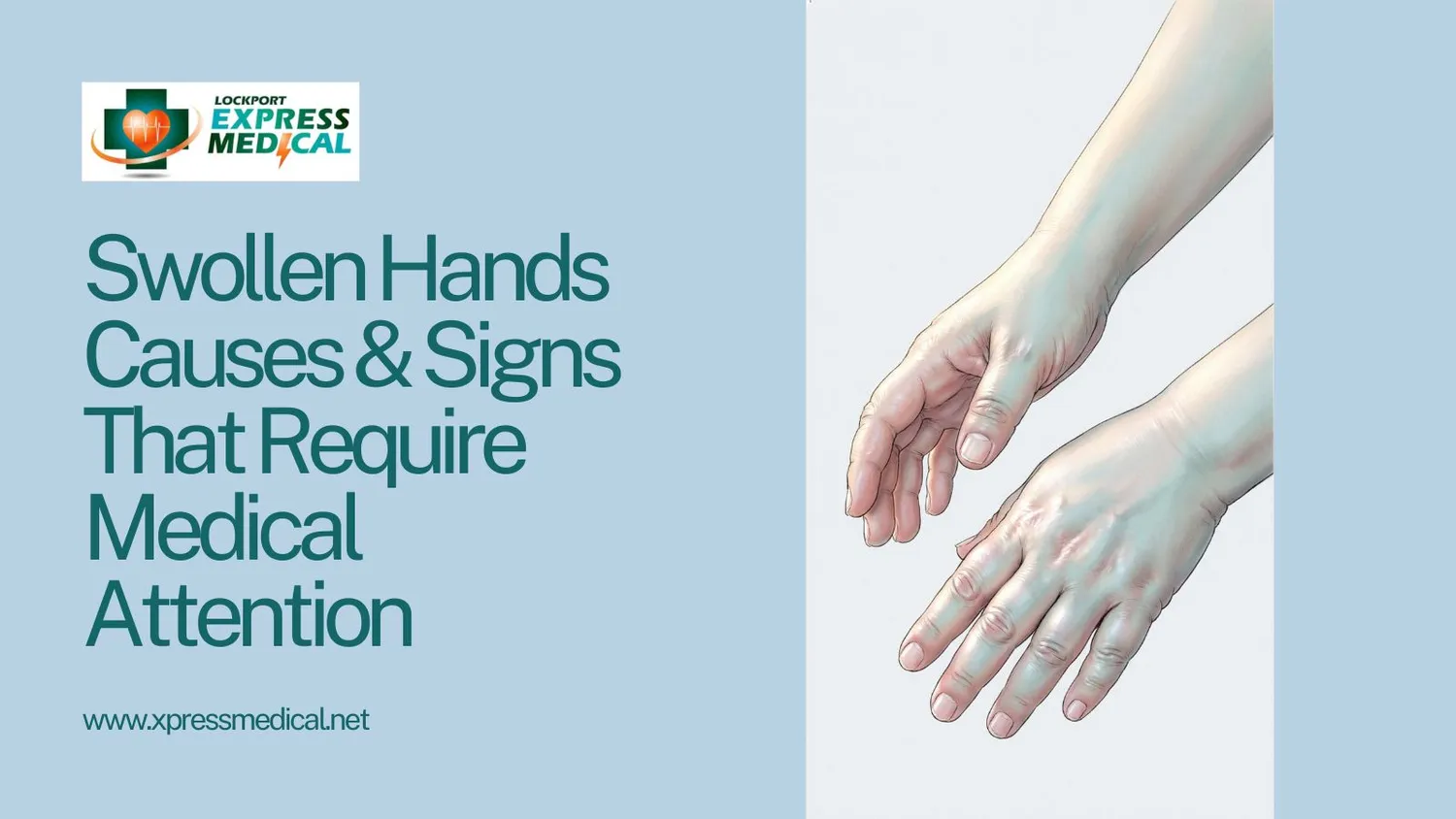
Hand swelling is a common symptom that can affect people of all ages. It may develop suddenly after an injury or gradually over time due to an underlying health condition. In some cases, swollen hands are harmless and resolve on their own, while in others they may indicate a more serious medical problem requiring prompt evaluation.
Understanding swollen hands causes can help you recognize when simple home care is appropriate and when it's time to seek professional medical attention.
What Does Hand Swelling Mean?
Hand swelling occurs when excess fluid accumulates in the tissues or when inflammation affects the joints, muscles, tendons, or skin. The swelling may involve one hand or both and can be accompanied by pain, warmth, redness, stiffness, tingling, or limited movement.
The severity and accompanying symptoms often help identify the underlying cause.
Common Swollen Hands Causes
Many different conditions can lead to swollen hands. Some are temporary, while others require medical treatment.
Common causes include:
- Fluid retention (edema)
- Minor injuries
- Arthritis
- Allergic reactions
- Insect bites
- Infections
- Heat exposure
- Repetitive hand movements
- Pregnancy
- Kidney disease
- Heart disease
- Liver disease
- Autoimmune disorders
- Certain medications
Fluid Retention (Edema)
One of the most frequent swollen hands causes is fluid retention. Extra fluid collects in body tissues, making the hands appear puffy.
Edema may result from:
- Standing or sitting for long periods
- High sodium intake
- Hot weather
- Pregnancy
- Certain medications
Mild edema often improves with elevation, movement, and hydration.
Arthritis and Joint Inflammation
Several forms of arthritis commonly cause swollen hands.
These include:
- Osteoarthritis
- Rheumatoid arthritis
- Psoriatic arthritis
- Gout
Swelling often occurs with:
- Morning stiffness
- Joint pain
- Warmth
- Difficulty gripping objects
Early diagnosis can help slow joint damage in inflammatory arthritis.
Hand Injuries
Trauma is another common cause of hand swelling.
Examples include:
- Sprains
- Fractures
- Finger dislocations
- Bruises
- Tendon injuries
Swelling usually develops shortly after the injury and may be accompanied by severe pain or limited movement.
Infections
Bacterial infections can cause rapid swelling in the hand or fingers.
Symptoms may include:
- Redness
- Warm skin
- Fever
- Pus
- Severe tenderness
Untreated infections may spread quickly, making prompt medical evaluation essential.
Allergic Reactions
Allergic reactions may cause sudden swelling of the hands after exposure to:
- Foods
- Medications
- Latex
- Insect stings
- Chemicals
Seek emergency medical care immediately if swelling is accompanied by:
- Difficulty breathing
- Facial swelling
- Tongue swelling
- Dizziness
These symptoms may indicate anaphylaxis.
Heat and Exercise
Warm temperatures naturally cause blood vessels to expand.
This can lead to temporary swelling during:
- Summer weather
- Outdoor activities
- Long walks
- Running
- Exercise
The swelling generally disappears after cooling down and staying hydrated.
Pregnancy-Related Swelling
Many pregnant women experience swollen hands due to increased blood volume and fluid retention.
However, sudden or severe swelling—especially when accompanied by headaches, vision changes, or high blood pressure—may indicate preeclampsia, which requires immediate medical attention.
Autoimmune Diseases
Several autoimmune conditions contribute to swollen hands causes by triggering chronic inflammation.
Examples include:
- Rheumatoid arthritis
- Lupus
- Scleroderma
These conditions often affect multiple joints and may cause fatigue, rashes, and stiffness.
Heart, Kidney, and Liver Disease
Organ dysfunction can interfere with the body's ability to regulate fluid balance.
Swollen hands may occur alongside:
- Leg swelling
- Shortness of breath
- Fatigue
- Weight gain
- Decreased urine output
Medical evaluation is necessary to determine the underlying cause.
Medications That May Cause Hand Swelling
Some prescription medications can contribute to swelling as a side effect.
Examples include:
- Blood pressure medications
- Steroids
- Hormonal medications
- Certain diabetes medications
- Anti-inflammatory drugs
Never stop a medication without consulting your healthcare provider.
How Doctors Diagnose Swollen Hands Causes
A healthcare provider begins with a detailed medical history and physical examination.
Additional testing may include:
- Blood tests
- X-rays
- Ultrasound
- MRI
- CT scan
- Joint fluid analysis
- Allergy testing
- Urine tests
These evaluations help identify the underlying condition and guide treatment.
Treatment Options
Treatment depends entirely on the underlying diagnosis.
Common approaches include:
- Rest
- Ice therapy
- Hand elevation
- Compression
- Anti-inflammatory medications
- Antibiotics for infections
- Allergy medications
- Physical therapy
- Management of chronic diseases
Ignoring persistent swelling can delay treatment and increase the risk of complications.
When Should You See a Medical Provider?
Seek medical care if you experience:
- Swelling lasting more than a few days
- Severe pain
- Fever
- Redness spreading across the hand
- Numbness
- Inability to move fingers
- Swelling after significant trauma
- Sudden swelling with breathing difficulty
- Recurrent unexplained swelling
Early evaluation can identify serious conditions before they worsen.
Why Choose Lockport Express Medical for Swollen Hands Evaluation?
If you're experiencing persistent hand swelling, pain, or limited mobility, Lockport Express Medical provides prompt evaluation for many swollen hands causes without the long wait associated with emergency departments. The experienced medical team performs thorough examinations, orders appropriate diagnostic testing when needed, and develops personalized treatment plans to address the underlying condition. Whether your symptoms are related to injury, infection, arthritis, allergies, or another medical issue, Lockport Express Medical offers convenient, compassionate urgent care to help you recover quickly and safely.
FAQs
What are the most common swollen hands causes?
The most common causes include fluid retention, arthritis, injuries, infections, allergic reactions, heat exposure, pregnancy, repetitive hand use, and certain chronic medical conditions.
Can dehydration cause swollen hands?
Yes. Although dehydration reduces body fluids, it may trigger the body to retain water, occasionally contributing to temporary swelling.
Should I worry if only one hand is swollen?
Swelling in one hand may indicate injury, infection, blood vessel problems, or localized inflammation and should be evaluated if severe or persistent.
Can arthritis cause swollen fingers and hands?
Yes. Rheumatoid arthritis, osteoarthritis, psoriatic arthritis, and gout commonly cause swelling, pain, and stiffness in the hands.
When should I seek emergency care for swollen hands?
Seek immediate medical attention if swelling is accompanied by difficulty breathing, facial swelling, severe pain, fever, loss of sensation, or follows a serious injury.
Can medications make my hands swell?
Yes. Certain blood pressure medications, steroids, hormone therapies, and other prescription drugs may cause hand swelling as a side effect.
Does hand swelling always indicate a serious illness?
No. Many cases result from temporary factors like heat, exercise, or minor injuries, but persistent or unexplained swelling should always be medically evaluated.
How can I reduce mild hand swelling at home?
Rest, elevate your hands, apply ice, stay hydrated, reduce sodium intake, and avoid repetitive activities. If symptoms persist or worsen, consult a healthcare provider.