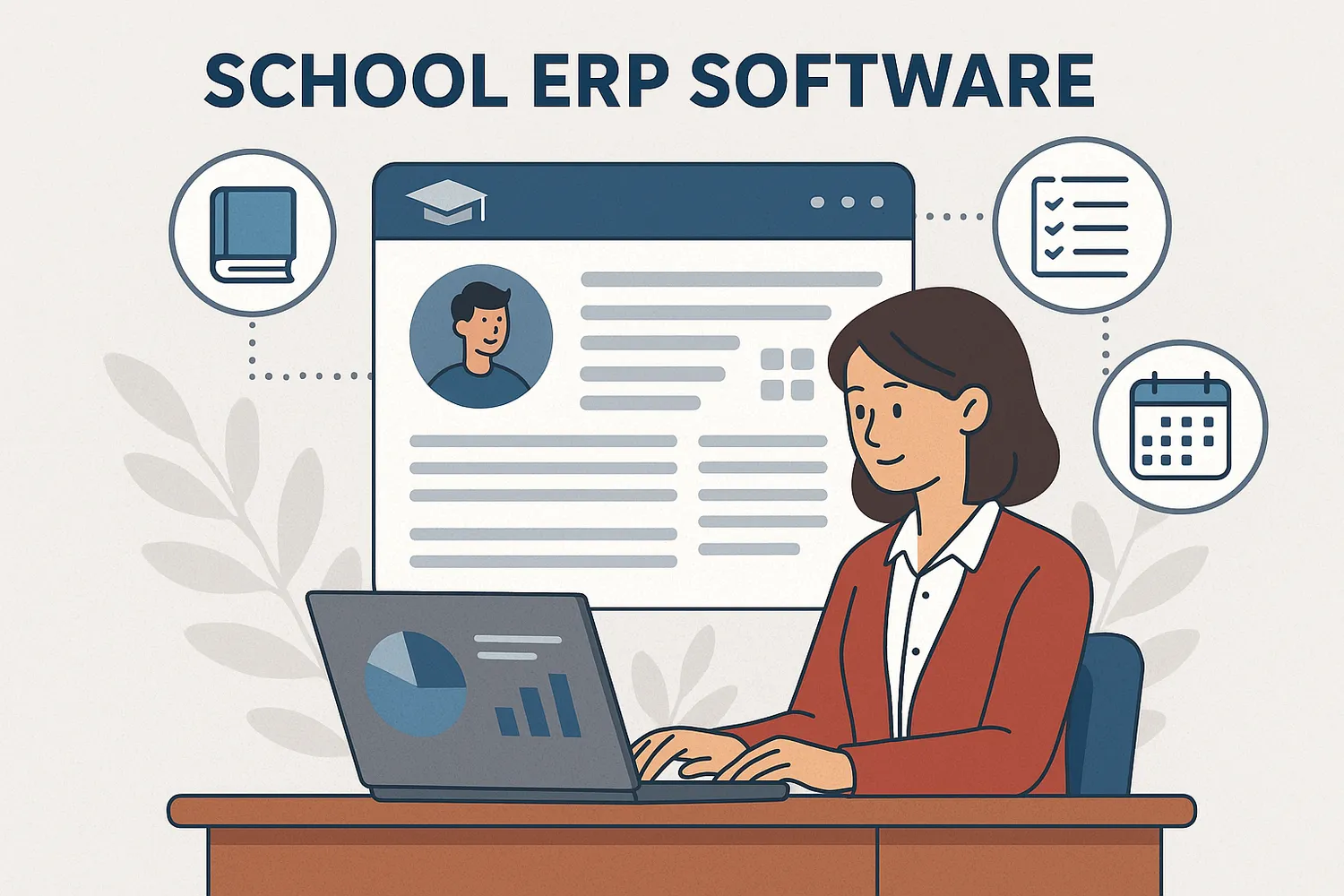
In recent years, the education sector has undergone a dramatic shift in how institutions manage their operations. As academic environments become more complex, top-performing schools are moving away from outdated processes and embracing smarter solutions. One tool leading this transformation is school ERP software — a comprehensive platform designed to integrate and automate school management systems across all departments.
From easing administrative burdens to enhancing parent engagement, ERP systems are becoming an essential part of the modern school toolkit. But what exactly is driving this shift, and why are elite institutions leaping?
Meeting the Demand for Efficiency and Integration
School administrators face a unique set of challenges — managing academic records, fee collections, communication, inventory, transportation, and more — all while maintaining high standards of education. Traditional methods, whether paper-based or siloed digital systems, are increasingly seen as inefficient and prone to error.
A school ERP system consolidates these functions into a single, user-friendly platform. This reduces duplication of work, streamlines communication between departments, and ensures data consistency across the board. With a centralized dashboard, staff members can access real-time updates, monitor academic progress, and automate repetitive tasks like report card generation and attendance tracking.
Empowering Teachers and Administrators
One of the most significant advantages of ERP systems is how they empower teaching and administrative staff to do their jobs more effectively. Teachers can upload grades, share assignments, and communicate with parents through a secure portal, cutting down on paperwork and boosting transparency. Meanwhile, administrators gain access to tools that simplify admission tracking, fee management, and compliance reporting.
According to a 2023 survey by Education World India, over 60% of schools using ERP systems reported higher productivity among teachers and back-office staff within the first year of implementation.
Enhancing the Parent and Student Experience
For parents, a school ERP system offers unparalleled visibility into their child’s education. Whether it's checking attendance, tracking academic performance, or paying fees online, everything is available through a mobile app or web interface. This level of access not only saves time but also strengthens the parent-school relationship.
Students, too, benefit from organized academic schedules, digital homework submissions, and online access to learning materials. This creates a more consistent and engaging learning environment, especially in blended or remote learning contexts.
Financial Transparency and Smart Decision-Making
Managing school finances is no small task, especially in large institutions with hundreds or thousands of students. ERP systems simplify financial planning and tracking, offering detailed reports on revenue, expenses, payroll, and inventory. Automated billing and reminders reduce the chances of missed payments or mismanagement.
Some ERP systems even come equipped with analytics tools that offer insight into enrollment trends, academic outcomes, and resource usage. This data-driven approach enables school leaders to make informed decisions that drive growth and improvement.
Customization and Scalability
No two schools operate in exactly the same way, which is why flexibility is critical. Leading ERP systems are modular, allowing schools to implement only the features they need — whether it's library management, transportation tracking, hostel administration, or alumni relations.
Moreover, cloud-based ERP solutions make it easy to scale as the institution grows. Schools can start with a basic setup and add more capabilities over time without disrupting their operations.
Real Schools, Real Impact
Schools across the globe are already reaping the benefits of ERP integration. For instance, an international school in Singapore noted a 70% reduction in administrative time after moving to a cloud-based ERP solution. Similarly, a group of private schools in Delhi saw an improvement in parent satisfaction scores following the introduction of a transparent academic and fee tracking system.
These success stories aren't isolated. From elite boarding schools to urban day schools, institutions of all sizes are finding that ERP systems offer a measurable return on investment.
Potential Challenges and How Schools Overcome Them
Despite the clear benefits, implementing an ERP system isn't without hurdles. Initial training, data migration, and system setup can be time-consuming. However, most ERP providers now offer onboarding support, dedicated account managers, and continuous system updates, ensuring a smooth transition.
It's also crucial for schools to choose a vendor with a proven track record in the education space — one that understands the nuances of academic operations and offers strong customer support.
Final Thoughts
As schools navigate increasing administrative demands and evolving educational standards, technology is no longer optional — it’s essential. By adopting a robust school ERP software, leading institutions are not only simplifying their processes but also future-proofing their educational ecosystem.
The switch to ERP isn’t about replacing human effort — it’s about amplifying it. With the right system in place, schools can focus more on what truly matters: delivering high-quality education and supporting student success.