Electrical panel upgrades are expensive because they involve complex, high-risk work, strict code requirements, and extensive coordination with utilities. What looks like a simple box replacement often includes new service lines, grounding upgrades, permits, inspections, and hours of specialized labor—quickly pushing costs into the $4,000–$8,000 range.
But here’s the part most homeowners don’t realize: you don’t always need a full panel upgrade. Occasional breaker trips, limited breaker space, or plans to add new appliances don’t automatically mean your panel is undersized. Many electrical issues can be solved with far less expensive options like circuit reconfiguration, dedicated circuits, or smart load-management systems.
Knowing when an upgrade is truly necessary, and when it isn’t, can save thousands while keeping your home safe and code-compliant. This article breaks down why upgrades cost so much, how to tell if you actually need one, and the practical alternatives homeowners often overlook.
Key Takeaways
- Panel upgrades are costly because of labor, permits, and code requirements. Replacements typically range from $2,000–$8,000 due to complex installation steps and utility coordination.
- Not every electrical issue requires a full upgrade. Many problems can be fixed with load management, circuit balancing, or targeted electrical improvements at a much lower cost.
- Professional load calculations prevent unnecessary spending. Many homeowners discover their existing panel has enough capacity once a licensed electrician performs a proper assessment.
- Load-management devices offer affordable alternatives. Smart systems redistribute power and maximize existing capacity, often eliminating the need for a panel upgrade entirely.
- Some situations truly require a new panel. Adding EV chargers, heat pumps, major appliances, or home additions often requires upgrading from 100-amp to 200-amp service for safety and performance.
- Upgrading now can future-proof your home. A 200-amp panel supports modern technology, reduces long-term limitations, and adds resale value.
Why Electrical Panel Upgrades Cost So Much
Electrical panel upgrades represent one of the most expensive home improvement projects, typically costing between $2,000 and $8,000 or more. Understanding where these costs come from helps homeowners evaluate whether upgrades are necessary and budget appropriately.
Labor and permitting requirements account for a substantial portion of upgrade costs. Licensed electricians must perform panel replacements, as this work involves potentially lethal voltages and complex code requirements. The installation process requires several hours to several days depending on complexity.
Electricians must obtain permits, which typically cost $50 to $300, and coordinate inspections with local building departments. Many jurisdictions require multiple inspections at different stages, each adding time and cost to the project.
Material costs include far more than just the panel itself. A new 200-amp electrical panel costs $500 to $1,500 depending on features and capacity. However, materials also include circuit breakers for each circuit ($10-$50 each), copper wire for updated circuits, grounding components, weatherhead assemblies, and various connection hardware. These materials collectively add $500 to $2,000 to project costs.
Code compliance and safety standards increase costs but ensure safe installations. Current National Electrical Code requirements mandate arc-fault circuit interrupters (AFCIs) and ground-fault circuit interrupters (GFCIs) in specific locations, adding $30-$50 per protected circuit. Modern installations must include proper grounding systems, adequate clearances around panels, and specific mounting requirements that older installations may not have followed.
Additional upgrades often become necessary during panel replacement, significantly increasing total costs:
Common Additional Upgrade Requirements:
- Service entrance cable: Replacing underground or overhead lines from utility connection ($1,000-$3,000)
- Meter base replacement: Updating outdated meter housings ($300-$800)
- Service mast and weatherhead: Replacing damaged or code-violating components ($400-$1,200)
- Main disconnect: Installing exterior shutoffs now required in many jurisdictions ($200-$500)
- Grounding system upgrades: Adding ground rods and bonding to meet current standards ($300-$800)
- Utility coordination fees: Charges for disconnecting and reconnecting service ($100-$500)
These additional requirements often surprise homeowners who expected only panel replacement costs. A project that begins with a $2,500 estimate for panel replacement can easily reach $5,000 to $8,000 when necessary auxiliary work is included.
How to Tell if Your Home Actually Needs an Upgrade
Many homeowners assume they need panel upgrades when experiencing electrical problems, but not every issue requires this expensive solution. Proper diagnosis determines whether upgrades are truly necessary or if less costly alternatives will suffice.
Warning signs that suggest capacity problems include several observable symptoms. Frequent breaker trips when operating normal appliances indicate circuits operate beyond safe capacity. Panels that feel warm to the touch or emit buzzing or humming sounds signal overloaded components.
Lights that dim noticeably when appliances start suggest voltage drops from inadequate capacity. Limited physical space in the panel for additional breakers prevents adding new circuits for modern appliances.
Situations that don't always require panel upgrades include many scenarios homeowners assume need replacement:
- Occasional breaker trips: Single circuits overloaded with too many devices may need redistribution, not panel replacement
- Older panel with adequate capacity: A 30-year-old 200-amp panel in good condition may not need replacement
- Adding one moderate appliance: Some additions fit within existing capacity after load analysis
- Cosmetic panel issues: Rust or outdated appearance without functional problems may not warrant replacement
- Limited breaker space: Subpanels can add circuits without replacing main panels
When load calculations reveal safe capacity, expensive upgrades become unnecessary. Professional load calculations determine your home's actual electrical demand by cataloging all devices, calculating their combined usage patterns, and comparing this to available capacity.
Before assuming you need a costly upgrade, many homeowners first review condo ev charging solutions that simplify smart electrical load planning to understand how much capacity they truly use and where adjustments can prevent unnecessary upgrades.
Many homes with 150 or 200-amp service discover they use only 60-70% of available capacity during peak loads. This headroom allows adding moderate appliances without upgrades. Even some 100-amp panels in homes with gas heating and gas water heaters have adequate capacity for additional electrical devices.
The key difference between necessary and unnecessary upgrades lies in actual measured capacity versus perceived problems. Homeowners who invest $300-$500 in professional load calculations often save thousands by discovering their electrical system already meets their needs with minor adjustments rather than complete replacement.
Smarter Alternatives to Full Panel Replacement
Several cost-effective alternatives to complete panel replacement can resolve electrical capacity issues while saving thousands of dollars. These solutions work best for homes with marginal capacity shortages or specific bottlenecks rather than severely undersized systems.
Load management devices represent the most effective alternative to panel upgrades for many households. These systems continuously monitor total household electrical consumption and automatically adjust power distribution to prevent exceeding capacity.
When multiple high-power appliances operate simultaneously, load management reduces power to selected devices temporarily, then restores full power when demand decreases.
How Load Management Systems Function:
- Monitor real-time electrical demand across all circuits
- Automatically reduce EV charging speed when other appliances start
- Prevent total load from exceeding panel capacity
- Allow installation of high-power devices that would otherwise require upgrades
- Cost $600-$1,500 versus $2,000-$8,000 for panel replacement
These systems particularly benefit homes wanting to add EV chargers to 100 or 150-amp service. The load manager allows EV charging during periods of lower household demand while preventing overloads during peak usage times.
Subpanels add circuit capacity without replacing main panels when physical breaker space is the limiting factor rather than total amperage. Installing a 100-amp subpanel near a garage or addition costs $800-$1,500 and provides space for 8-16 additional circuits.
This solution works well when your main panel has adequate total capacity but lacks physical slots for new breakers.
Balancing circuits and reducing demand addresses capacity issues through strategic redistribution. Electricians can:
- Redistribute loads across phases for balanced power draw
- Separate high-power appliances onto dedicated circuits
- Replace inefficient appliances with models drawing less power
- Install timers preventing simultaneous operation of high-power devices
- Identify and eliminate phantom loads from always-on devices
Targeted upgrades where actually needed cost far less than complete panel replacement. If specific circuits are inadequate but overall capacity is sufficient, upgrading individual circuits from 15 to 20 amps or adding dedicated circuits for specific appliances resolves problems for $300-$800 per circuit versus thousands for complete panel replacement.
These alternatives work best when professional evaluation confirms adequate total capacity exists but distribution or management improvements are needed. They provide practical, economical solutions that defer or eliminate expensive panel replacement while maintaining safety and functionality.
When Upgrading Is Truly the Right Call
Despite available alternatives, some situations genuinely require panel upgrades for safety, functionality, and code compliance. Recognizing these scenarios helps homeowners make appropriate decisions rather than attempting inadequate workarounds.
Adding high-power appliances to older systems typically necessitates upgrades. Level 2 EV chargers requiring 40-50 amps, heat pumps drawing 30-60 amps, and induction ranges needing 40-50 amps each consume substantial capacity. A home with 100-amp service supporting electric water heating, air conditioning, and standard appliances simply lacks capacity for these additions regardless of load management solutions.
Multiple simultaneous additions exceed what load management can handle. A family planning to install an EV charger, replace gas heating with a heat pump, and add a pool with pumps and heating needs the capacity increase that only panel upgrades provide. Attempting to manage 150 amps of new demand on a 100-amp panel creates safety risks no management system can adequately address.
Home additions and major renovations trigger code requirements for panel upgrades. Building permits for substantial additions often require bringing electrical systems to current code standards. Inspectors may mandate panel upgrades, proper grounding, AFCI/GFCI protection, and other improvements before approving permits. What begins as a room addition can require electrical work throughout the home.
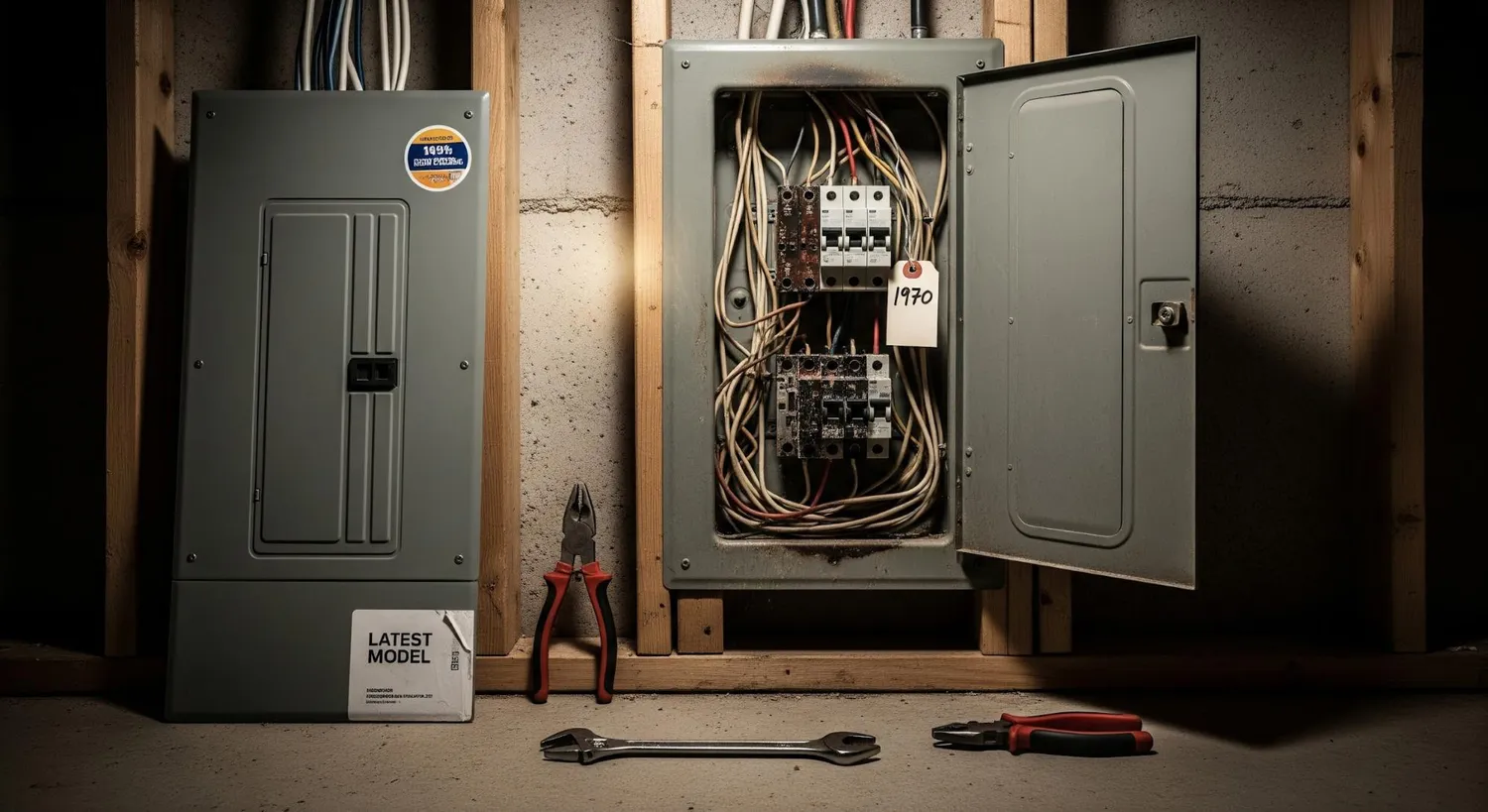
Long-term safety considerations make upgrades worthwhile even when alternatives exist. Panels more than 30 years old have aged components, degraded connections, and outdated safety features. Federal Pacific Electric and Zinsco panels, common in homes built 1950s-1980s, have known safety defects and should be replaced regardless of capacity adequacy. Fuse boxes should be replaced with modern circuit breaker panels for improved safety and functionality.
Ensuring future expansion capability provides long-term value. Homes barely adequate for current needs will struggle with future additions. Upgrading to 200-amp service when replacing a 100-amp panel costs only marginally more than upgrading to 150 amps but provides substantially more future flexibility. This additional capacity accommodates second EVs, additional HVAC zones, home offices, and other expansions without subsequent upgrades.
Increasing home value and marketability justifies upgrade costs. Modern 200-amp electrical service is expected in today's housing market. Homes with adequate, updated electrical systems command higher prices and sell faster than comparable homes with outdated 60 or 100-amp panels. The $4,000-$6,000 upgrade investment often returns 80-100% of cost in increased home value.
Final Takeaway
Electrical panel upgrades are expensive because they require licensed labor, code-compliant materials, permits, inspections, and often service-line or grounding improvements. The typical $2,000–$8,000 cost reflects the real complexity of safe electrical work, not inflated pricing.
However, many homeowners don’t actually need a full upgrade. Professional load calculations often show that existing panels have enough capacity, and affordable options like load-management devices, circuit balancing, subpanels, or targeted fixes can safely support new appliances for a fraction of the cost. The key is getting a professional evaluation before assuming a replacement is necessary. When upgrades truly are required, such as for multiple high-power appliances or severely undersized panels, the investment improves safety, supports modern technology, and prepares your home for the future.
Frequently Asked Questions (FAQs)
Q: How much does a typical electrical panel upgrade cost?
Most panel upgrades cost $2,000 to $8,000. Simple panel replacements run $2,000-$3,500, while upgrades requiring new service lines, meter bases, or extensive rewiring cost $4,000-$8,000 or more. Get multiple quotes from licensed electricians for accurate estimates.
Q: Can I upgrade my panel myself to save money?
No. Panel upgrades must be performed by licensed electricians due to life-threatening voltages, complex code requirements, and permit regulations. DIY panel work is illegal in most jurisdictions and creates serious safety hazards.
Q: How do I know if I need a panel upgrade or just circuit improvements?
A professional load calculation determines this. If total electrical demand exceeds 80% of panel capacity, upgrades are usually necessary. If demand is lower but specific circuits have problems, targeted circuit improvements may suffice.
Q: What is a load management system and can it replace a panel upgrade?
Load management systems monitor household electrical demand and automatically adjust power distribution to prevent exceeding capacity. They often eliminate the need for panel upgrades when adding EV chargers or other high-power appliances, costing $600-$1,500 versus $2,000-$8,000 for upgrades.
Q: How long does a panel upgrade take?
Most upgrades take 1-3 days. Simple panel replacements may complete in 6-8 hours, while projects requiring service line upgrades and utility coordination take longer. Your home will have temporary power outages during the work.
Q: Will upgrading my panel lower my electricity bill?
No. Panel upgrades do not reduce electricity consumption or costs. They increase capacity and improve safety but do not change how much power your appliances use.
Q: Do all old panels need to be replaced?
No. Age alone does not require replacement if panels function properly and have adequate capacity. However, panels with known defects (Federal Pacific, Zinsco), fuse boxes, or panels more than 40 years old should be evaluated for replacement due to safety concerns.
Q: Can I add a subpanel instead of upgrading my main panel?
Sometimes. If your main panel has adequate total capacity but lacks physical breaker space, subpanels provide additional circuits for $800-$1,500. However, if total capacity is inadequate, subpanels do not solve the problem.
Q: What permits are required for panel upgrades?
All panel upgrades require electrical permits and inspections. Licensed electricians obtain permits, which typically cost $50-$300. Work without permits is illegal, voids insurance, and creates problems when selling your home.
Q: How can I tell if my current panel has enough capacity?
Check your main breaker for amperage rating (60, 100, 150, or 200 amps). A professional load calculation compares this to your actual electrical demand. If you use less than 80% of rated capacity, you likely have adequate headroom for modest additions.