Trees are essential to our ecosystem, providing oxygen, shade, and habitats for various species. However, they can become vulnerable to various pests. This article explores the types of bugs that are notorious for harming and often killing trees.
Common Tree-Killing Bugs
Emerald Ash Borer (EAB)
Origin and Spread
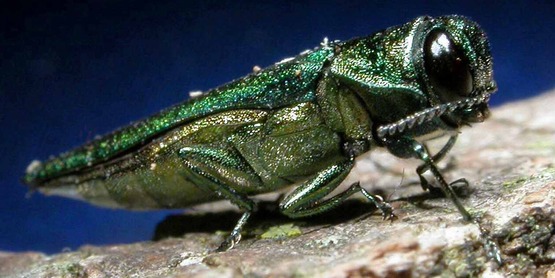
The Emerald Ash Borer (Agrilus planipennis) is a small, metallic green beetle native to East Asia. It was first identified in North America in 2002 near Detroit, Michigan, and Windsor, Ontario. Since its discovery, EAB has caused widespread destruction to ash trees (Fraxinus spp.) across the United States and Canada. Its spread is primarily attributed to the transport of infested wood materials like firewood.
Life Cycle and Identification
- Adult Beetles: They are about 1/2 inch long, with a bright, metallic green color. They emerge from trees in late spring to early summer.
- Larvae: The larvae are creamy white, flat, and segmented. They are found beneath the bark and are the primary cause of damage.
- Life Cycle: EAB completes its life cycle in one to two years. Females lay eggs in bark crevices, which hatch into larvae. The larvae then feed on the inner bark, creating serpentine galleries and disrupting the tree's ability to transport water and nutrients.
Impact on Trees
- Symptoms of Infestation: The first signs of EAB infestation include canopy dieback, yellowing leaves, and D-shaped exit holes in the bark. Trees also show increased woodpecker activity as they feed on the larvae.
- Tree Mortality: Infested trees typically die within 2-4 years. EAB is especially deadly as it attacks healthy trees, not just weakened or old trees.
Control and Management
- Quarantine and Transport Restrictions: To prevent the spread, many areas have regulations against moving ash wood.
- Chemical Treatments: Insecticides can be effective, especially if applied early. These include soil injections, trunk injections, or sprays.
Bark Beetles
Bark beetles are a group of beetles that live and breed in the bark of trees. They are known for their ability to destroy large numbers of trees, particularly in forests. Different species of bark beetles affect different types of trees.
Types and Distribution
- Diverse Species: There are over 600 species of bark beetles in the United States alone.
- Global Presence: These beetles are found in forests across the world, with each region having its own species.
Life Cycle and Identification
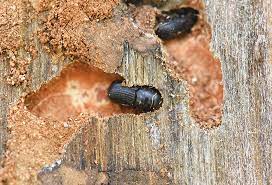
- Appearance: Bark beetles are small, cylindrical insects, usually brown or black, ranging from 1/10 to 1/2 inch in length.
- Life Cycle: They have a complete metamorphosis cycle, including egg, larva, pupa, and adult stages. Females typically lay eggs under the bark, and the larvae feed on the tree's inner bark.
- Signs of Infestation: Common signs include boreholes in the bark, sawdust-like frass, and pitch tubes where the tree has tried to push the beetle out. Infested trees show foliage discoloration, from green to yellow to red.
Impact on Trees
- Feeding Habits: The larvae create networks of tunnels under the bark, which disrupt the tree's ability to transport nutrients and water.
- Tree Mortality: Large infestations can girdle and kill trees. Stressed and weakened trees are particularly susceptible.
Control and Management
- Preventive Care: Keeping trees healthy and stress-free is the first line of defense.
- Physical Removal: Infested trees and wood are often removed to prevent the spread of beetles to healthy trees.
Gypsy Moth
The Gypsy Moth (Lymantria dispar) is a notorious pest known for its caterpillar stage, which consumes the leaves of a wide variety of trees and shrubs. Native to Europe and Asia, it has become a major invasive species in North America.
Description and Lifecycle
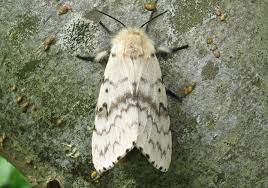
- Appearance: Adult gypsy moths are sexually dimorphic. Males are dark and mottled with feathery antennae, while females are larger, white or cream-colored, with less conspicuous antennae.
- Lifecycle: Gypsy moths go through four life stages: egg, caterpillar (larva), pupa, and adult. The caterpillar stage is responsible for the damage to trees. Females lay eggs in large masses on tree trunks and branches in late summer, which hatch the following spring.
Impact on Trees
- Feeding Habits: The caterpillars are voracious feeders and can defoliate trees. They primarily target deciduous trees like oak, birch, and willow, but in high population densities, they can also feed on conifers.
- Consequences of Infestation: Severe defoliation stresses trees, making them more susceptible to disease and other pests. Repeated defoliation can lead to tree death.
Spread and Management
- Spread: Gypsy moths have spread extensively across North America since their introduction in the late 19th century. Their movement is often facilitated by human activities, such as the transport of infested materials.
- Control Measures: Management strategies include the use of biological controls like the fungus Entomophaga maimaiga and the bacterium Bacillus thuringiensis, as well as chemical pesticides. Public awareness and monitoring are also crucial in managing their spread.
Environmental and Economic Impact
- Ecological Impact: Beyond damaging trees, severe infestations can disrupt forest ecosystems, affecting wildlife and increasing soil erosion.
- Economic Impact: The gypsy moth poses a significant threat to forestry and horticulture industries, requiring costly management and control measures.
Conclusion
The impact of tree pests like the Emerald Ash Borer, Bark Beetles, and Gypsy Moths is profound and far-reaching. These pests not only cause significant damage to individual trees but also have broader ecological and economic implications. Understanding their life cycles, identifying signs of infestation, and employing effective management strategies are crucial in mitigating their impact. Collaboration between researchers, forest managers, and the public is essential in controlling these pests and preserving our forests for future generations.
FAQs
Can trees recover from these pest infestations?
Recovery depends on the severity of the infestation and the tree's overall health. In some cases, early detection and treatment can save a tree, but often, severely infested trees may not recover.
How can I prevent my trees from getting infested?
Maintain tree health through proper care and regular inspections. Avoid moving firewood long distances to prevent the spread of pests. Consult with an arborist for specific preventive treatments.
Are there any natural enemies of these tree pests?
Yes, each of these pests has natural predators. For example, certain birds and parasitic wasps target Emerald Ash Borers, and specific fungi and bacteria are used to control Gypsy Moths. However, these natural controls are often insufficient to manage large infestations.
What are the long-term effects of these pests on forest ecosystems?
Long-term effects include reduced biodiversity, altered forest composition, and increased vulnerability to other stresses like climate change. These changes can have cascading effects on wildlife and water resources.
Can chemical treatments harm the environment?
Chemical treatments, if not used judiciously, can have adverse environmental impacts. It's important to use them responsibly and explore integrated pest management strategies that include biological controls and cultural practices.