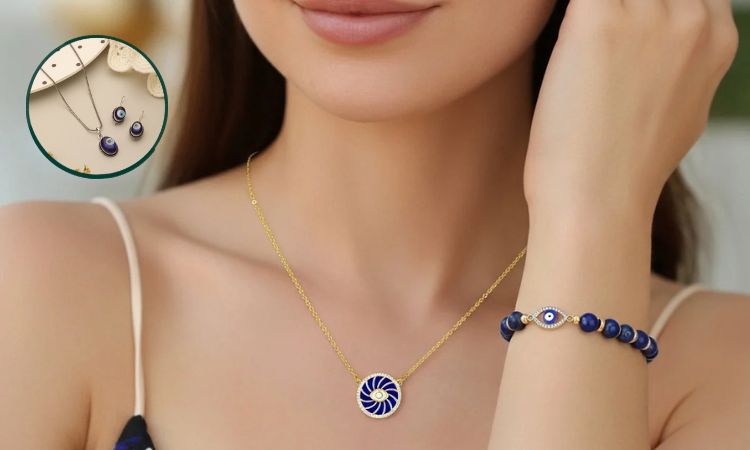
The charm of the evil eye symbol goes beyond its striking blue design. What many people don’t realise is that the materials behind these pieces play a huge role in how they look, feel, and hold up over time. From traditional glass beads that originated in Mediterranean cultures to modern metals and gemstones used by contemporary jewellers, the design has gradually evolved into what we now recognise as evil eye jewellery, a mix of cultural meaning and thoughtful craftsmanship.
This guide explores the most common metals, stones, and techniques used today, helping you understand how each material influences durability, style, and everyday wear.
Why the Materials Behind the Evil Eye Matter
The evil eye symbol has been worn for centuries as a protective talisman. Traditionally, the design represented protection against negative energy or bad intentions. But beyond symbolism, the materials used in modern pieces influence comfort, longevity, and aesthetics.
Jewellers today balance tradition with modern design. A piece made with sterling silver or gold will age differently from one made with plated metal or glass beads. Understanding the materials helps you choose jewellery that suits both your lifestyle and your wardrobe.
Glass Beads
Historically, the evil eye symbol was crafted from coloured glass. In fact, the famous deep blue eye that many people recognise today was originally produced using glass-blowing techniques.
Glass beads remain one of the most authentic materials used in evil eye jewellery. Their glossy surface enhances the layered colours that form the eye motif, typically blue, white, and black.
Why glass remains popular:
- It creates vivid colour contrast
- It’s lightweight and comfortable
- It reflects the original cultural design
Even modern jewellery designers often include glass charms to keep the traditional aesthetic intact.
Sterling Silver
Sterling silver is one of the most widely used metals in evil eye jewellery today. Its clean, neutral tone complements the bright colours of the eye symbol without overpowering them.
Another reason silver is popular is due to its durability. When cared for properly, sterling silver can last for decades while maintaining its shine. Many bracelets, necklaces, and rings use silver settings to hold enamel or gemstone eyes.
Silver also pairs well with casual and formal outfits, making it a practical choice for daily wear.
Gold and Gold-Plated Designs
Gold has long been associated with protection, prosperity, and timeless style. In evil eye jewellery, gold settings create a warmer look compared to silver.
There are two common variations:
- Solid gold pieces - durable and resistant to tarnish
- Gold-plated jewellery - more affordable while maintaining the gold appearance
Gold tends to highlight the contrast between the eye’s colours and the surrounding metal, making the design stand out more prominently.
Enamel Detailing for Vibrant Colour
Enamel is widely used in modern jewellery to recreate the iconic blue evil eye pattern. The process involves fusing powdered glass onto metal at high temperatures, producing a smooth and colourful finish.
Enamel allows jewellers to create:
- Bright colour gradients
- Intricate eye designs
- Long-lasting surfaces resistant to fading
Because enamel bonds directly to the metal base, it holds colour better than many painted finishes.
Gemstones That Add a Luxury Touch
Some jewellers elevate the evil eye motif by incorporating gemstones into the design. These stones either replace parts of the eye or surround the symbol as decorative accents.
Common stones include:
- Cubic zirconia
- Sapphire
- Diamonds
Gemstones add dimension and light reflection, which gives the jewellery a more refined look.
Stainless Steel and Modern Metals
Not every piece needs to be precious metal. Stainless steel has become a popular option for people looking for durable, low-maintenance jewellery.
Why stainless steel works well:
- Resistant to rust and tarnish
- Strong enough for everyday wear
- More affordable than silver or gold
Resin and Acrylic in Contemporary Designs
Fashion-forward jewellery designers often experiment with resin or acrylic materials. These allow for bold colours, unique shapes, and lightweight designs.
Although resin pieces may not carry the same heritage value as glass or metal, they open the door for more playful interpretations of the evil eye symbol.
These materials are particularly common in casual bracelets and statement necklaces.
When the Design Moves to Rings
While bracelets and pendants are the most common formats, rings have become increasingly popular. Evil eye rings combine the protective symbol with wearable minimalism.
Designers often use enamel or small gemstones within a silver or gold band to keep the ring comfortable and visually balanced. Because rings sit closer to the eye when gesturing or holding objects, the symbol becomes more noticeable in everyday interactions.
This visibility is one reason rings have become a preferred style for people who want the protective motif to remain front and centre.
FAQs
What is the traditional material used in evil eye jewellery?
Traditionally, evil eye charms were made from coloured glass beads, often hand-blown to create the iconic layered eye design.
Is sterling silver a good choice for evil eye jewellery?
Yes, sterling silver is durable, versatile, and complements the bright colours of the eye symbol.
Why is the evil eye usually blue?
Blue glass was historically believed to ward off negative energy, which is why the colour became associated with the symbol.
Are gemstones commonly used in evil eye jewellery?
Yes. Cubic zirconia, sapphire, and even diamonds are sometimes added to enhance the design.
Do evil eye rings have the same meaning as necklaces or bracelets?
Yes. The protective symbolism remains the same regardless of the jewellery type.
Does enamel fade over time?
High-quality enamel fused to metal is extremely durable and maintains its colour for many years.
Can evil eye jewellery be worn daily?
Yes, especially when made with durable materials like sterling silver, gold, or stainless steel.