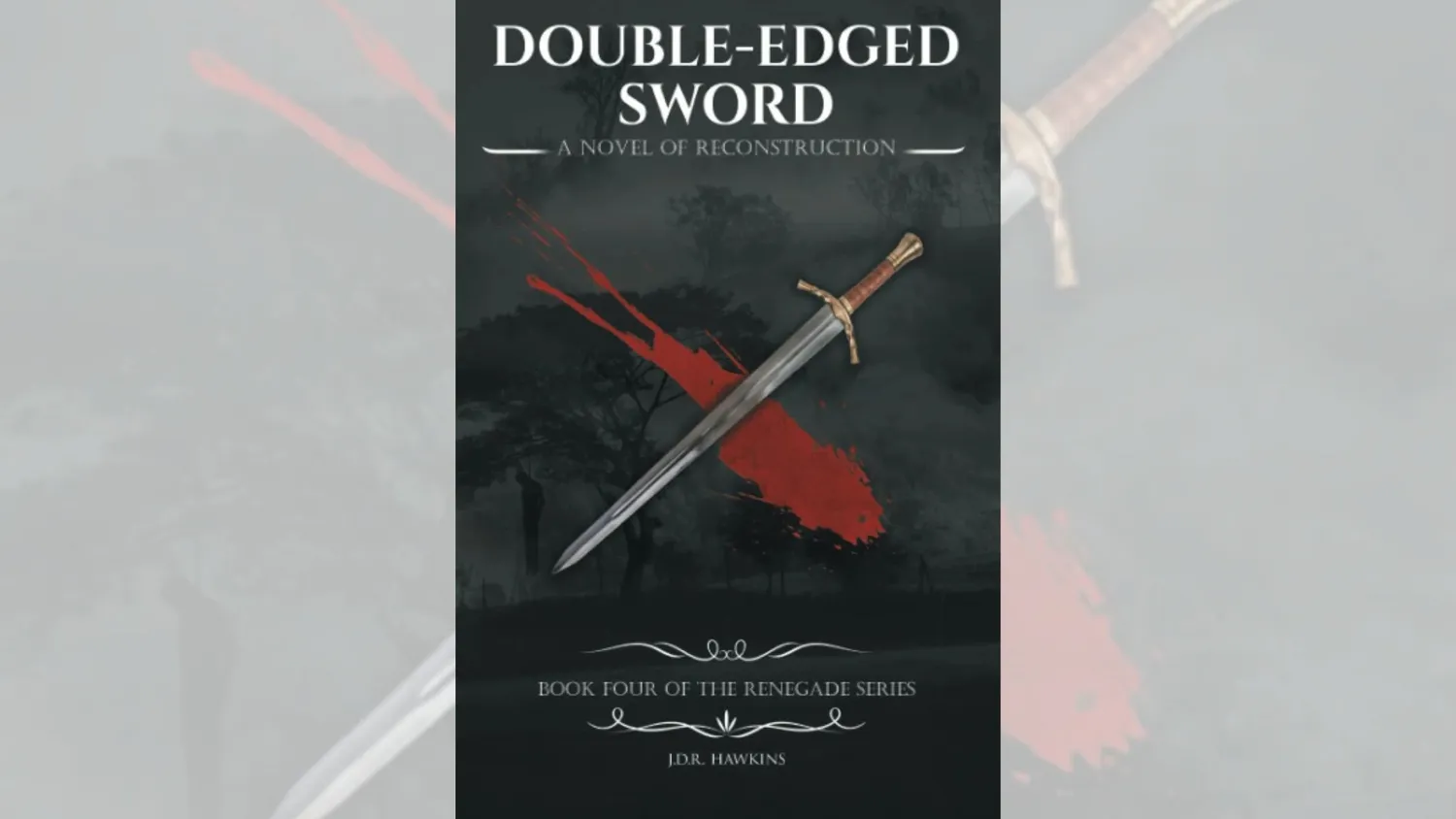
Reconstruction is often overlooked in American historical fiction. Yet it’s one of the most critical—and complex—periods in our nation’s past. Double-Edged Sword, the fourth installment in J.D.R. Hawkins’ award-winning Renegade Series, brings this turbulent era to life in a way that feels raw, emotional, and deeply human. With sharp storytelling and vivid detail, the novel explores what happens after the war ends—when the fighting stops but the scars remain.
Set in post-Civil War Alabama, Double-Edged Sword follows former Confederate cavalryman David Summers as he returns home with his new wife, only to find that peace is far more complicated than war. Reconstruction is supposed to be about healing. But for David—and the South—it’s also about reckoning with loss, change, and the new reality of a divided nation trying to piece itself back together.
A Real Look at Life After War
A big part of what makes Double Edged Sword so powerful is how honestly it portrays the chaos of Reconstruction. The war may be over, but the conflict isn’t. David’s hometown is unrecognizable, both physically and emotionally. Neighbors are bitter. Old enemies still hold grudges. And nothing about “coming home” feels safe or simple.
J.D.R. Hawkins captures this tension with incredible precision. Her writing paints a vivid picture of a South struggling to redefine itself—economically, socially, and morally. Through David’s eyes, readers see how hard it was to move forward when no one could agree on what the future should look like. This is where the novel shines. It doesn’t shy away from the mess. Instead, it leans into the complexity of the time.
Character-Driven Conflict That Feels Real
The emotional engine of Double-Edged Sword lies in the renewed conflict between David Summers and his longtime adversary, Stephen Montgomery. Their animosity didn’t die with the war. In fact, it’s only intensified. What begins as a simmering tension boils over into a dramatic courtroom battle that puts David’s reputation—and his future—on the line.
This personal feud mirrors the larger social divisions of the Reconstruction era. Hawkins uses their rivalry to explore themes like justice, honor, revenge, and forgiveness. At the same time, she gives each character depth and nuance. No one is a one-note villain. Everyone believes they’re doing what’s right. That moral gray area is what makes the story so compelling.
Historical Accuracy Without the Dry Textbook Vibe
One of the biggest challenges in historical fiction is staying true to the time period without bogging down the story. Double-Edged Sword nails this balance. Hawkins clearly did her research—but she doesn’t hit you over the head with it. The historical details feel natural, woven into the fabric of the plot. Whether it's the tension in town meetings or the subtle shifts in post-war society, everything fits seamlessly.
This authenticity is a big reason why the book has earned critical acclaim. It received the 2023 John Esten Cooke Fiction Award and the prestigious B.R.A.G. Medallion. Reviewers have praised its richly developed setting and believable dialogue. But even more than that, they’ve highlighted how well the novel captures the emotional weight of the Reconstruction period without ever turning preachy or heavy-handed.
David Summers: A Relatable, Flawed Hero
It’s hard not to root for David. He’s a war veteran trying to find his place in a world that no longer fits him. He’s proud but not arrogant, strong but not immune to fear. His inner struggle is what makes him such a compelling lead. He wants to protect his family and reclaim his life—but doing so means confronting painful truths and making hard choices.
Readers get to see David evolve, not just as a soldier, but as a husband, a neighbor, and a man trying to build something new from the ashes of the past. His journey is emotional without being melodramatic. Hawkins gives him space to stumble and learn, which makes his growth feel earned.
Why It Hits Hard in 2025
Part of what makes Double-Edged Sword resonate today is how familiar some of its themes feel. Polarization, mistrust, and the struggle to find common ground—those aren’t just issues from 150 years ago. They’re still with us. Hawkins doesn’t draw forced parallels, but readers will pick up on the echoes between the post-Civil War South and today’s social landscape.
The novel also speaks to the quiet strength of rebuilding. It shows that peace isn’t just the absence of war—it’s a process, and sometimes a painful one. Through David’s journey, readers are reminded that healing takes time, and justice isn’t always clean-cut.
The Takeaway
At its core, Double-Edged Sword is more than just a post-war novel. It’s a story about resilience, identity, and the weight of history. It doesn’t flinch from the hard parts of Reconstruction, but it also doesn’t forget the hope that kept people moving forward. J.D.R. Hawkins delivers a gripping tale with heart, honesty, and historical depth.
Whether you're a fan of Civil War fiction or just love a well-told story with strong characters and high stakes, this book belongs on your shelf. Double-Edged Sword doesn’t just recount history—it makes you feel it. And that’s what makes it a must-read.