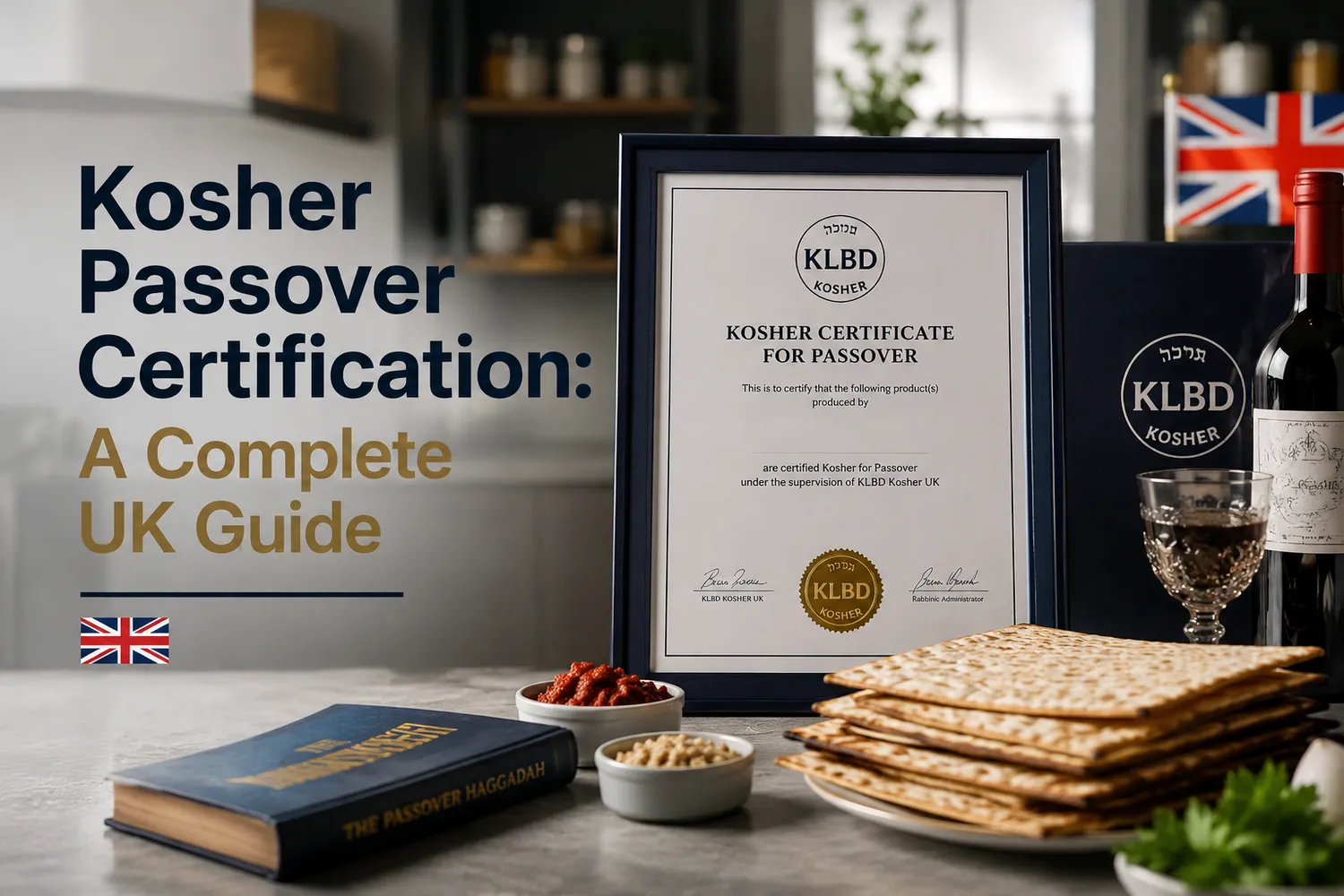
For food manufacturers, retailers, exporters, and hospitality businesses, meeting recognised food standards is essential for building trust and reaching wider markets. One area that requires particular attention is Kosher Passover Certification, a specialised form of Kosher Certification that ensures products comply with the strict dietary laws observed during the Jewish festival of Passover. While many businesses are familiar with year-round kosher requirements, fewer understand the additional standards that apply during this important holiday.
Understanding what is kosher for Passover is vital for any business planning to manufacture or supply products during the Passover season. Products that are suitable throughout the rest of the year may not automatically qualify for Passover because the rules surrounding ingredients, production, and handling become significantly more rigorous.
For UK businesses, achieving Kosher Passover Certification is about more than regulatory compliance. It demonstrates a commitment to quality, transparency, and consumer confidence while creating opportunities to serve Jewish communities both in the UK and international markets. Working with an experienced certification body such as KLBD can help businesses understand these requirements and maintain compliance throughout the certification process.
In this guide, we'll explain what is kosher for Passover, how Kosher Passover Certification differs from standard Kosher Certification, and why it plays such an important role for food businesses looking to expand their market reach.
What Is Kosher for Passover?
A common question among manufacturers and consumers alike is, what is kosher for Passover? The answer begins with understanding the significance of the Passover festival and the dietary laws that accompany it.
Passover, also known as Pesach, commemorates the Exodus of the Israelites from Egypt. During this eight-day festival, Jewish communities observe dietary rules that are stricter than those followed throughout the rest of the year. Foods consumed during Passover must not contain chametz, which refers to grains that have fermented or risen. This restriction applies to wheat, barley, rye, oats, and spelt when they have undergone fermentation.
Because these rules affect both ingredients and manufacturing processes, food businesses must carefully evaluate every stage of production. Simply removing restricted ingredients is not enough. Production equipment, storage facilities, cleaning procedures, and packaging methods may also require review before a product can qualify for Kosher Passover Certification.
Understanding what is kosher for Passover helps manufacturers appreciate why certification involves much more than checking an ingredient list. It is a comprehensive assessment of how a product is made from beginning to end.
Why Passover Has Additional Requirements
Many companies that already hold Kosher Certification are surprised to learn that they still need separate approval for Passover products. This is because Passover certification introduces seasonal requirements designed to eliminate any possibility of contamination from restricted ingredients.
For example, equipment that has previously processed products containing chametz may require specialised cleaning or preparation before it can be used for Passover production. Ingredient sourcing also becomes more detailed, with every raw material requiring careful verification.
These additional requirements help preserve the integrity of products intended for Passover and provide consumers with confidence that they meet the highest religious standards.
What Is Kosher Passover Certification?
Kosher Passover Certification is an independent verification that confirms a food product has been produced in accordance with Passover dietary requirements. It builds upon standard Kosher Certification but includes additional inspections, ingredient reviews, and production controls that are unique to the Passover season.
Unlike standard kosher approval, which applies throughout the year, Kosher Passover Certification focuses specifically on products manufactured for consumption during Passover. This distinction is important because ingredients and production methods that are acceptable during the rest of the year may not meet Passover requirements.
The certification process typically involves reviewing ingredient specifications, assessing manufacturing practices, inspecting production facilities, and verifying that appropriate cleaning procedures have been followed before production begins. Manufacturers must also demonstrate that cross-contamination risks have been effectively managed throughout the production process.
For businesses supplying supermarkets, wholesalers, retailers, or export markets, Kosher Passover Certification provides assurance that products satisfy recognised Passover standards and are suitable for consumers observing the festival.
Why Kosher Certification Matters for Food Businesses
Obtaining Kosher Certification offers advantages that extend well beyond serving Jewish consumers. Many retailers, distributors, and international buyers view kosher-certified products as a reflection of consistent manufacturing standards, ingredient transparency, and quality assurance.
For manufacturers operating in competitive food markets, certification can strengthen brand credibility while supporting expansion into new retail channels. Businesses that also obtain Kosher Passover Certification are able to serve seasonal demand during one of the most significant periods in the Jewish calendar.
Another important benefit of Kosher Certification is the confidence it provides to consumers. Independent certification reassures buyers that products have undergone careful assessment and continue to meet recognised standards through ongoing compliance and monitoring.
For UK manufacturers looking to export, certification can also simplify entry into international markets where kosher products are in high demand. Retailers and distributors often seek products that have been certified by respected organisations because it reduces uncertainty and provides confidence in the product's production process.
This is where working with KLBD can provide long-term value. Beyond issuing certification, KLBD supports businesses throughout the process by helping them understand ingredient requirements, production expectations, and ongoing compliance obligations.
Which Products Need Kosher Passover Certification?
A wide variety of food products may require Kosher Passover Certification before they can be marketed during the Passover season. Whether the product is manufactured in the UK or intended for export, every ingredient and production process should be carefully assessed.
Bakery products often require particular attention because many traditional baked goods contain grains that are not permitted during Passover. Manufacturers producing cakes, biscuits, crackers, or specialty bakery products must review both their recipes and production methods before seeking certification.
Confectionery manufacturers also frequently apply for Kosher Passover Certification, especially when producing chocolates, sweets, chewing gum, or seasonal gift products. Although these items may appear straightforward, flavourings, emulsifiers, colourings, and processing aids often require detailed ingredient verification.
Dairy products such as milk, cheese, butter, yoghurt, and cream may also require Passover approval depending on their ingredients and manufacturing processes. Likewise, meat, poultry, seafood products, frozen meals, sauces, beverages, and food ingredients all require careful assessment to determine whether they comply with Passover standards.
Even products that seem naturally suitable can contain additives or processing aids that affect their eligibility. This is one reason why businesses should never assume that a product already holding Kosher Certification will automatically qualify for Passover.
Understanding what is kosher for Passover requires looking beyond the finished product and considering every component used throughout manufacturing.
Passover Ingredients and Production Requirements
One of the defining features of Kosher Passover Certification is the detailed review of ingredients and production processes. Compliance depends not only on what goes into a product but also on how it is manufactured.
Ingredients derived from wheat, barley, rye, oats, and spelt are carefully evaluated because they can become chametz under certain conditions. Manufacturers must also consider flavourings, starches, preservatives, emulsifiers, enzymes, and processing aids, many of which originate from complex supply chains. Each ingredient must be verified before it can be approved for Passover production.
Production facilities are equally important. Equipment used to manufacture standard food products may require extensive cleaning or preparation before it can be used for Passover production. Storage areas, production lines, and packaging processes are also reviewed to minimise the risk of cross-contamination.
Maintaining accurate documentation throughout production is another key requirement. Businesses should be able to demonstrate where ingredients were sourced, how they were handled, and how production controls were implemented. These records support the integrity of the certification process and help ensure ongoing compliance.
Working with KLBD allows businesses to prepare effectively for these requirements. By reviewing ingredients, production practices, and manufacturing procedures in advance, companies can reduce delays and approach Kosher Passover Certification with greater confidence.
Understanding what is kosher for Passover is ultimately about recognising that certification extends far beyond ingredients alone. It reflects a complete commitment to quality, traceability, and manufacturing excellence, helping businesses achieve recognised Kosher Certification standards while serving consumers with confidence during Passover.
How to Obtain Kosher Passover Certification
Once a business understands what is kosher for Passover, the next step is obtaining Kosher Passover Certification. While every manufacturing operation is different, the certification process generally follows a structured approach that focuses on ingredient integrity, production controls, and ongoing compliance.
The process usually begins with an initial assessment of the business, its products, and manufacturing facility. During this stage, information is gathered about ingredients, suppliers, production methods, and existing quality systems. This allows the certification body to understand how products are made and identify any areas that may require further review.
Ingredient verification is one of the most important stages of Kosher Passover Certification. Every raw material, flavouring, processing aid, additive, and packaging component may need to be assessed to confirm that it complies with Passover requirements. Even ingredients that appear straightforward can originate from complex supply chains, making careful verification essential.
Following the ingredient review, the manufacturing facility is evaluated to determine whether production processes meet the required standards. Equipment used throughout the year may need specialised cleaning or preparation before Passover production begins. Production schedules are often planned carefully to minimise the risk of cross-contamination and maintain product integrity.
Once all requirements have been met, the business can receive Kosher Passover Certification for approved products. Maintaining certification, however, is an ongoing responsibility. Manufacturers are expected to continue following approved production methods, use authorised ingredients, and notify the certification body of any significant changes to formulations or manufacturing processes.
Working with KLBD helps businesses manage this process more efficiently by providing guidance throughout every stage, from the initial application to ongoing compliance.
Common Challenges During Passover Certification
Although many manufacturers already hold Kosher Certification, preparing for Passover production often introduces additional challenges.
One of the most common issues involves ingredient sourcing. Suppliers may change formulations without notice, or ingredients may contain processing aids that affect Passover compliance. This is why businesses should regularly review specifications instead of relying on previous approvals.
Cross-contamination is another major consideration. Equipment used for standard production may need extensive cleaning before manufacturing Passover-approved products. Storage facilities, production lines, transport containers, and packaging areas should also be carefully managed to prevent unintended contact with restricted materials.
Production planning can also become more complex. Many manufacturers schedule dedicated production runs for Passover products to simplify compliance and maintain consistency throughout the manufacturing process. Proper planning reduces the likelihood of delays while helping businesses meet seasonal demand.
Documentation plays an equally important role. Accurate records relating to ingredients, suppliers, production batches, and cleaning procedures demonstrate compliance and support the integrity of Kosher Passover Certification.
Businesses that prepare early and work closely with KLBD are generally better positioned to manage these challenges while maintaining efficient production.
Why UK Businesses Choose KLBD
Choosing the right certification partner is just as important as understanding what is kosher for Passover. Businesses need a certification body that not only understands kosher requirements but also appreciates the realities of modern food manufacturing.
KLBD has built a strong reputation for supporting manufacturers, retailers, exporters, and hospitality businesses across a wide range of food sectors. Its experience with UK and international food production enables businesses to navigate certification requirements with greater confidence.
Rather than focusing solely on inspections, KLBD works alongside businesses throughout the certification journey. This collaborative approach helps manufacturers understand ingredient requirements, improve production planning, and maintain compliance as their product ranges evolve.
For companies looking to expand into kosher markets, Kosher Certification backed by KLBD demonstrates a commitment to recognised standards that are respected by retailers, distributors, and consumers alike.
Many businesses also value the practical guidance provided during product development. Early involvement in the manufacturing process can help identify potential compliance issues before production begins, saving valuable time and reducing costly changes later.
How KLBD Supports Businesses Beyond Certification
Receiving Kosher Passover Certification is not the end of the journey. As recipes, suppliers, and manufacturing processes change over time, businesses need continued support to ensure compliance is maintained.
This is where KLBD provides ongoing value. Businesses receive guidance on ingredient approvals, production changes, and annual certification requirements, helping them remain compliant throughout the year.
For manufacturers introducing new products, early ingredient reviews can simplify development while reducing the likelihood of unexpected compliance issues later in the process. This proactive approach supports faster product launches without compromising certification standards.
Companies exporting internationally also benefit from expert guidance on meeting the expectations of different kosher markets. As demand for certified products continues to grow, maintaining recognised Kosher Certification becomes an important competitive advantage.
By working closely with businesses over the long term, KLBD helps manufacturers maintain high standards while adapting to changing market requirements and consumer expectations.
Common Mistakes to Avoid
Many businesses experience unnecessary delays because they underestimate the additional requirements involved in Kosher Passover Certification.
One of the most common misconceptions is believing that standard Kosher Certification automatically covers Passover production. In reality, Passover introduces additional requirements relating to ingredients, manufacturing processes, and production controls.
Another frequent mistake is delaying certification planning until shortly before the Passover season. Ingredient verification, production scheduling, and facility preparation all require sufficient time, making early planning essential.
Manufacturers should also avoid making changes to approved ingredients or suppliers without consultation. Even small formulation changes may affect certification status and require additional review.
Poor record keeping can create further challenges during inspections. Maintaining accurate documentation for ingredients, suppliers, cleaning procedures, and production batches supports both compliance and operational efficiency.
Perhaps the most important lesson is that understanding what is kosher for Passover requires continuous attention rather than a one-time review. Ongoing communication with KLBD helps businesses remain prepared throughout the year.
Conclusion
As consumer demand for certified food products continues to grow, understanding what is kosher for Passover has become increasingly important for manufacturers, retailers, exporters, and hospitality businesses. Meeting these seasonal requirements demonstrates a commitment to quality, transparency, and recognised food standards while opening opportunities in valuable domestic and international markets.
Although Kosher Passover Certification builds upon standard Kosher Certification, it introduces additional responsibilities involving ingredient verification, production planning, equipment preparation, and ongoing compliance. Businesses that prepare early are better positioned to achieve certification efficiently and maintain confidence throughout the production process.
Partnering with KLBD gives businesses access to experienced guidance at every stage of the certification journey. From reviewing ingredients and assessing manufacturing facilities to supporting annual renewals and product development, KLBD helps organisations navigate the complexities of Kosher Passover Certification with confidence.
Whether your goal is to expand into new markets, strengthen consumer trust, or better understand what is kosher for Passover, investing in recognised Kosher Certification is a practical step towards long-term growth. By working with KLBD, UK businesses can confidently produce Passover-compliant products while demonstrating the high standards that today's retailers, distributors, and consumers expect.