HVAC companies operate in a service-intensive environment where customer expectations, equipment reliability, and field coordination define competitive success. As consumer demand shifts toward proactive service agreements and rapid response windows, the need for effective customer relationship management has grown substantially. HVAC companies now depend on CRM systems to manage not only customer data but also service contracts, dispatching, job scheduling, communication workflows, and post-installation maintenance. This shift has created a new category of CRMs purpose-built for field service trades rather than generic sales-driven organizations.
Understanding CRM Adoption Within the HVAC Market
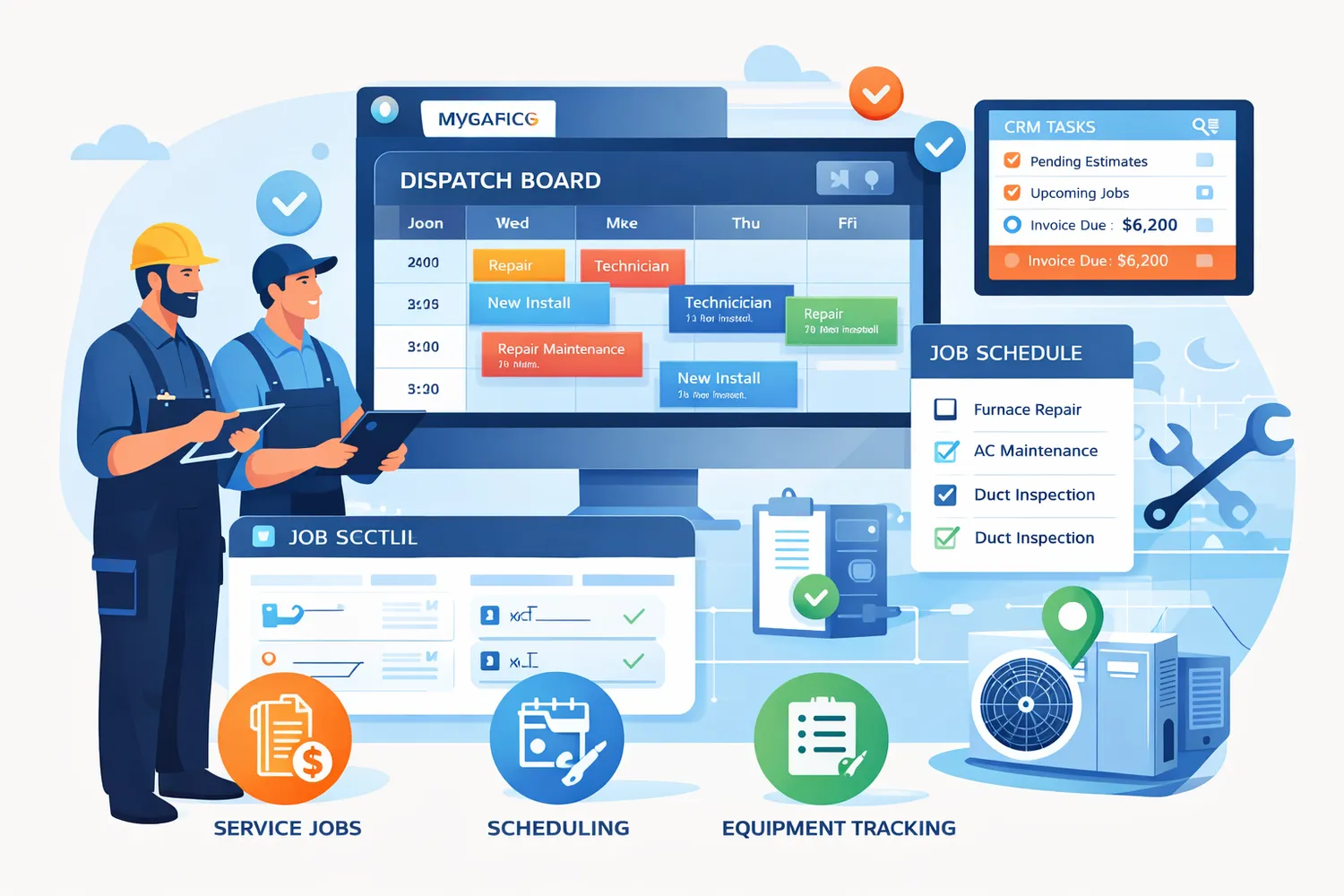
CRM adoption within the HVAC sector is driven by the interplay between field operations and customer lifecycle management. HVAC contractors must coordinate multiple roles; administrators, dispatchers, project managers, estimators, and technicianswhile also maintaining clear communication with homeowners and facility managers. Generic CRM solutions are insufficient for this environment because they lack tools for technician routing, maintenance scheduling, equipment lifecycle documentation, warranty tracking, invoicing, and seasonal service reminders. As a result, HVAC firms adopt CRM platforms found within the software categories known as HVAC field service management software and HVAC project management software, both designed to connect front-office, back-office, and field teams in real time.
These software ecosystems streamline the business around service agreements and maintenance cycles, which are core to HVAC profitability. By automating service reminders and renewal notifications, CRM systems help HVAC firms preserve and grow recurring revenue streams. They also maintain customer equipment histories, allowing technicians to diagnose and recommend solutions more accurately on-site. This approach strengthens trust, drives retention, and increases long-term customer lifetime value (CLV), which is critical in markets where equipment lifespan ranges from 10 to 20 years and repeat service contracts drive financial stability.
Functional CRM Benefits for HVAC Contractors
A well-implemented HVAC CRM supports operational efficiency across several business dimensions:
- Improved technician utilization via smart dispatching
- Faster quote processing through digital estimating tools
- Increased customer transparency through automated communication
- Reduced billing delays with integrated invoicing and payment modules
- Enhanced customer retention through maintenance contracts
- Better job profitability tracking through reporting dashboards
These benefits create long-term operational leverage by replacing manual systems with structured digital workflows that reduce errors and eliminate redundant administrative tasks.
CRM as a Catalyst for Service Excellence
Customer experience has become a competitive battleground within home services industries. Appointment confirmations, status notifications, and transparent billing all contribute to higher service satisfaction. HVAC CRMs ensure technicians arrive with context, including service history, equipment models, warranty details, notes from prior visits, and recommended maintenance schedules. This level of preparedness not only improves job completion rates but also opens opportunities for strategic upsells such as replacement upgrades and annual maintenance agreements.
Conclusion
HVAC contractors do not rely on standard business CRMs designed for general sales operations. Instead, they depend on specialized systems that merge customer relationship management with field execution, dispatch logistics, and financial workflows. The categories recognized as HVAC field service management software and HVAC project management software provide the workflow depth required to support job scheduling, equipment history tracking, seasonal maintenance programs, invoicing, and technician coordination within a single operational framework. The result is greater consistency, improved customer satisfaction, and a clearer path toward profitable long-term growth.
This digital adoption curve continues to shape the future of HVAC businesses. Platforms like Duct Architect function as both an HVAC software solution and HVAC calculator, providing accurate technical tools for duct design, load planning, project visualization, and field execution. By integrating calculation utilities with operational and customer-facing workflows, Duct Architect enables HVAC contractors to produce faster estimates, improve on-site performance, reduce communication errors, and scale service operations with confidence.