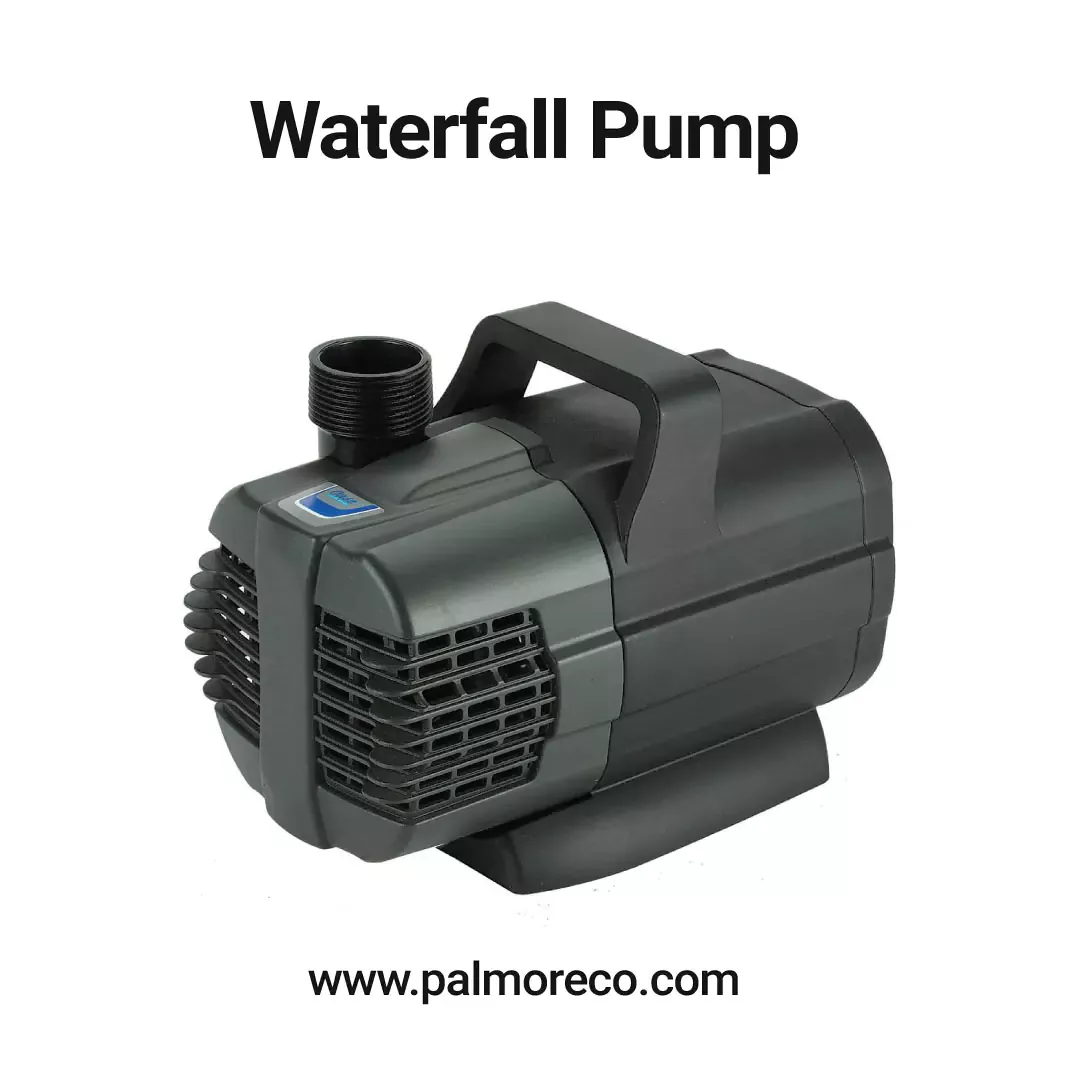
Are you deciding on a pump for a pond project or waterfall? There are plenty of waterfall pumps and pond pumps available in the market. An external pump or a submersible pond pump is your choice. Which one would you choose? Read the full article to know more about the characteristics and features of each type.
How to Choose a Waterfall Pump?
One of the most important elements in your water waterfall is the waterfall pump. It actually is the heart of your waterfall. because it continually circulates the water to keep water clean and clear. Since your waterfall pump is the engine of your waterfall, it is of high importance that you choose a long-lasting and efficient pump.
If you need a pump that functions properly for years( even if you run the pump 24 hours a day), you'll need to choose from one of the pumps that come with a warranty. Selecting the right waterfall pump for the job will ensure that your water is filtered properly, and your water feature is looking its best.
How to choose the write size pump?
Waterfall pump requires a bunch of calculations to determine the size needed. There is a wide variety of waterfall Pumps available in the market to get the flow you want. It is typically recommended that UV Clarifiers or Pressure Filters are operated with a specific pump size. If you don't know what pump size is recommended, you can check your manual or product page. Head pressure will also be a factor.
Every 2 hours, the water needs to run through the filter. In the case of a 1,000-gallon pond, you will need a pump that can produce at least 500 gallons per hour or GPH. Ideally, you should double the pump's capacity if you have fish. This will keep your water clean. Pump size is often misunderstood to be only related to pond size; however, the size of a waterfall, stream, or fountain is more likely to determine which pump will work best for your feature.
Measurements Needed
Head pressure and desired flow rate will influence the waterfall pump needed to power your waterfall. The term head pressure refers to the friction created when water is pumped uphill or over long distances. Flow rate determines how much water moves through the feature. here are some tips to help you calculate these measurements:
Head Pressure
A combination of the vertical distance from the water surface to the top of the waterfall and length of tubing is called Head Pressure.1' of head pressure is equivalent to A foot of vertical height or 10' of tubing. Therefore, a waterfall which is 3' tall with 16' of tubing would have 5' of head pressure.
Flow Rate
For every 1' of width, the average amount of water moving over a waterfall is 1,500 GPH. Therefore,for a 2' wide waterfall a 3,000 GPH pump will be needed. If you are looking for a heavier flow,you will need to calculate your flow using 2,000 GPH per foot.
Altogether
You may have noticed that waterfall pumps have different flow rates and head pressures, and you have to match up the numbers. For instance, if you wanted your waterfall to have a heavy flow then you would need a pump that can produce about 4,000 GPH at 5' of head pressure.
Types of pond pumps and waterfall pumps
Mag-Drive Pumps are the best selling pond pumps because they are energy efficient and usually have longer warranties. There are also other great pumps that deserve mention such as Fish-Mate, Alpine and Tetra that all sell well and are worthy to be considered. GemmeCotti is a famous supplier of mag-drive pumps that offers a variety of different models.
Direct drive pond pumps are stronger pumps commonly referred to as waterfall pumps, and are best suited for taller waterfalls and higher head lift situations. Direct Drive pumps usually need more energy since they are more powerful. Waterfall pumps usually have a shorter warranty since they have more parts that can break down.
Hybrid Pumps are new on the market and they are quickly gaining ground. It is advertised as a direct drive or mag-drive pump. Hybrid Pumps have the energy efficiency and durability of a mag drive pump and the power of a direct drive. There are many sizes available, ranging from 1600 gallons per hour to 6600 gallons per hour.
Inline Pumps must be located below the water level but they are capable of being placed outside of the pond water. It means that the pump is embedded below the surface of the water, which means that the water fills the pump without any assistance or assistance from the pump itself. They don't pull water, instead they push it.
External Pumps or Centrifugal Pumps are located outside the pond at a short distance from it.
As mentioned above in inline pumps, External Pond Pumps need to be flooded with water.
How to Choose a Pondless Waterfall Pump
If you already own or plan to build a Pondless Waterfall, you need to select a pump with adequate flow for the length and width of your waterfall. How many gallons per hour (gph) your pump needs to pump is also influenced by the length of the pipe leading to the waterfall. The waterfall pump will be installed inside the waterfall vault, protecting it and increasing its lifespan.
Palmore International offers oil and gas industry equipment( such as pumps, valves, etc) supply service throughout the sultanate of Oman and the rest of the world. We are pleased to offer you free consultancy, contact us now!
You can read about this palmore’s solution here:
https://palmoreco.com/ourproducts/oil-gas-equipment/pumps/