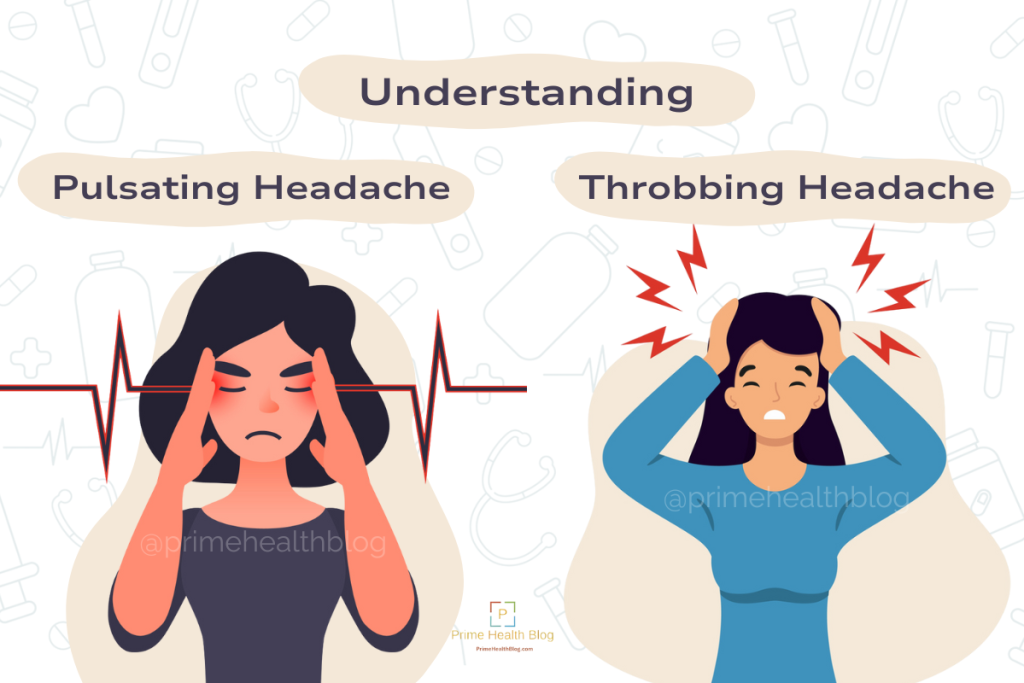
Pulsating headaches and throbbing headaches are often used interchangeably to describe a headache that has a rhythmic throbbing or pounding sensation. They are a common symptom of several different underlying conditions, ranging from mild dehydration to more serious illnesses.
Causes of Pulsating/Throbbing Headaches
There are many causes of pulsating or throbbing headaches, including:
- Dehydration: When you don't drink enough fluids, your brain can shrink slightly, causing pain.
- Caffeine withdrawal: If you regularly consume caffeine and then abruptly stop, you may experience a throbbing headache.
- Stress: Headaches are a common tension headache symptom, which is caused by tightened muscles in the shoulders, neck, and scalp.
- Medications: Certain medications, such as over-the-counter pain relievers, can cause rebound headaches if taken too frequently.
- Sinus problems: Sinusitis, or inflammation of the sinuses, can cause headaches with throbbing or pressure pain around the eyes and forehead.
- Migraines: Migraines are a severe type of headache that can cause throbbing pain, often on one side of the head. They are often accompanied by nausea, vomiting, and sensitivity to light and sound.
- Cluster headaches: Cluster headaches are a less common type of headache that causes intense pain, usually on one side of the head, around the eye.
- High blood pressure: Severe headaches can be a sign of dangerously high blood pressure.
- Serious medical conditions: In rare cases, a throbbing headache may be a symptom of a more serious medical condition, such as a brain tumor, aneurysm, or meningitis.
When to see a doctor
If you experience a sudden, severe headache, or a headache that is accompanied by other concerning symptoms, such as fever, neck stiffness, confusion, or weakness, you should see a doctor right away. You should also see a doctor if your headaches are chronic or become progressively worse.
Treatment for Pulsating/Throbbing Headaches
The treatment for a throbbing headache will depend on the underlying cause. For most headaches, home remedies such as rest, hydration, and over-the-counter pain relievers can be effective. If your headaches are chronic or severe, your doctor may prescribe medication or recommend other treatments.
Here are some tips for preventing throbbing headaches:
- Drink plenty of fluids: Aim to drink eight glasses of water per day.
- Manage stress: Many relaxation techniques can help to reduce stress, such as yoga and meditation.
- Get enough sleep: Most adults need around 7-8 hours of sleep per night.
- Eat a healthy diet: Eating a healthy diet can help to prevent headaches.
- Limit caffeine and alcohol: Caffeine and alcohol can both trigger headaches.
- Avoid triggers: If you know what triggers your headaches, such as certain foods or smells, try to avoid them.