Vanilla Planifolia
Everyone knows vanilla, whose vanilla bean perfumes many culinary creations. Vanilla, of Mesoamerican origin, belongs to the genus Vanilla, which is a monocotyledonous plant (a plant with only one cotyledon) of the family Orchidaceae, subfamily Vanilloideae, which has nearly one hundred species.
Buy Vanille bourbon de Madagascar the best vanille planifolia
The main variety used to produce vanilla beans is vanilla planifolia (synonym of vanilla fragrans). This variety of vanilla is a must for your homemade dishes and vanilla desserts!
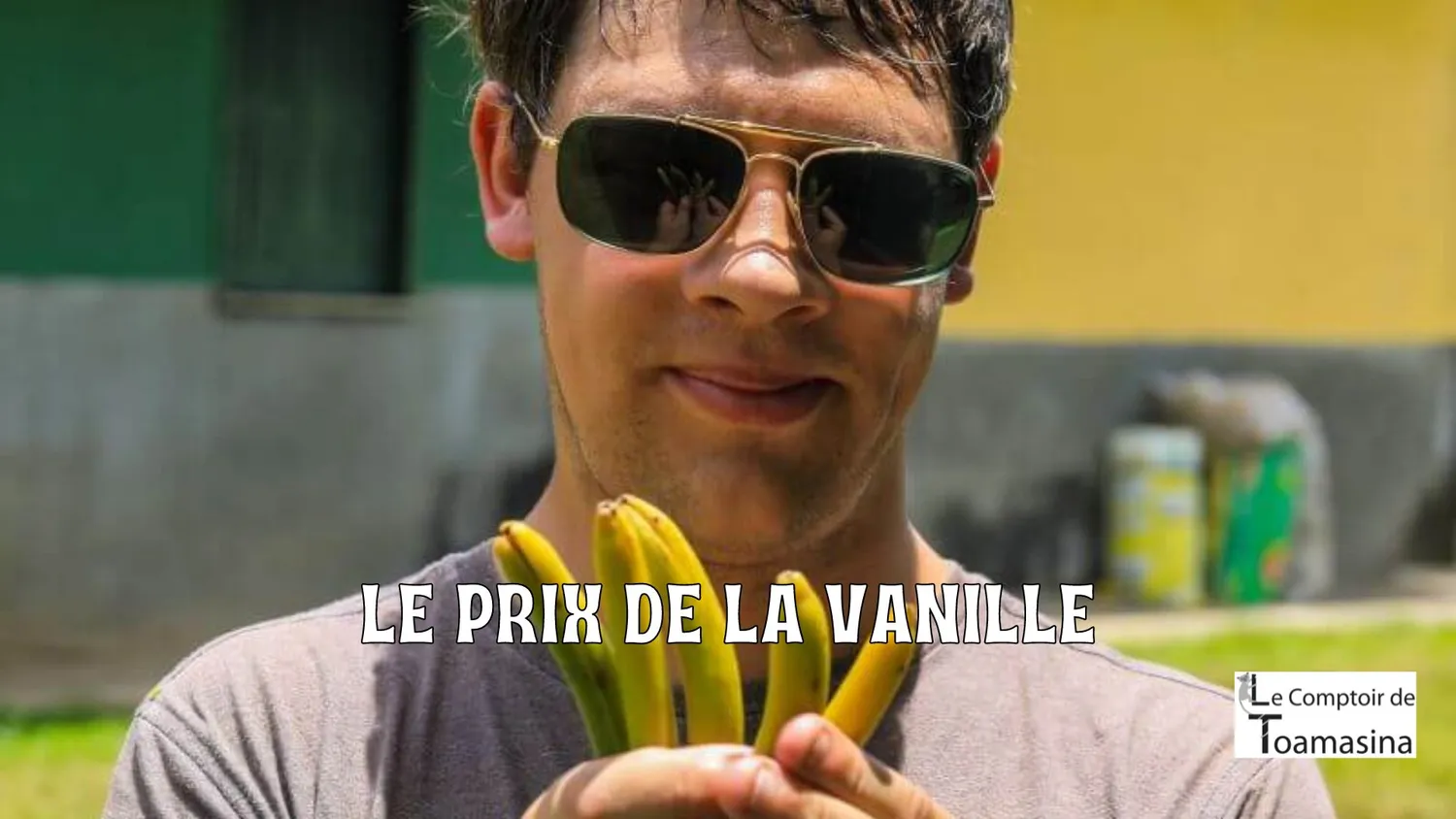
The vanilla tree
The production of vanilla is possible through the cultivated plants called "vanilla".
The fruit of the vanilla plant is regularly called "vanilla bean" but from a botanical point of view, the exact term is "capsule". The capsule of the vanilla planifolia is green and takes an elongated shape, slightly curved at the end of the stalk and measures on average 15 cm long but it can reach, in an exceptional way, 27 cm long!
Its climate
The climbing vine of the variety of Vanilla Planifolia is native of Central America, more precisely of Mexico. Vanilla planifolia needs a hot and humid tropical climate to develop. This variety of vanilla lives in tropical rainforests and grows in latitudes between 25°N and 25°S, with a rainfall of about 2000 mm per year. The vanilla tree can grow well up to an altitude of about 1000 meters, but it is essential that the temperatures are between 20 and 30 °C.
Its particularity
Moreover, vanilla planifolia is a so-called hemiepiphyte plant, which means that it grows along trees (called supports) during part of its life cycle. But be careful! It is not a parasite, it does not take anything from its host. This variety of vanilla, native to the south, climbs, with the help of its aerial roots, all along its plant support.
Vanilla planifolia produces clusters of white or yellowish flowers up to 5 cm in diameter which will produce fruits (capsules). The vanilla planifolia has leaves from 10 to 16 cm long which are smooth and flat.
The fertilization of the vanilla
The vanilla planifolia variety is native to Central America and has a special relationship with the Meliponas bee, which is the only insect capable of pollinating the vanilla flower. This pollinating insect is only present in Mexico. To this extent, this insect does not exist in Madagascar, Reunion Island and all the others cultivating vanilla. Therefore, without external intervention, the pollination of vanilla is impossible. Moreover, biologically, vanilla is hermaphroditic, that is to say that a flower has both the male and the female reproductive organs.
Fertilization is an essential and even primordial step to obtain vanilla pods. Due to the lack of Melipona bees in the islands, the pollination of the flowers is done by hand, flower by flower. This is due to the talent of a young slave named Edmond Albius, who found the process to manually fertilize the flower of a vanilla. Today, on every vanilla plantation, no matter how remote, each vanilla flower is fertilized by a human hand. The human hands are called "matchmakers". The "marieuses" can fertilize from 1000 to 1500 flowers per day!
Commercialized vanilla varieties
But did you know that there are also two other varieties of vanilla marketed in the world?
Vanilla tahitensis
Another variety of vanilla cultivated for food purposes, is mainly grown in Tahiti, Papua New Guinea and Indonesia. It has strong aromatic and agronomic qualities that distinguish it from the vanilla planifolia variety. For a long time, vanilla tahitensis was perceived as a mixture of vanilla planifolia and vanilla pompona. Today, it is rather considered as a cross between a species close to vanilla odorata and vanilla planifolia. The pods of vanilla tahitensis are wide and thick. Its vanillin content is lower compared to the vanillin present in Vanilla Planifolia. However, its moisture content is higher. It is considered a luxury vanilla because it is relatively expensive and rare.
The vanilla beans, of the variety Vanilla Planifolia, are carefully processed at Mavany. Our network of planters ensures the quality of the beans. Fleshy and intense, they are capable of aromatizing and sublimating unsuspected flavors. These pods, shiny and supple, are ideal for culinary creations. Discover our ranges on the website!