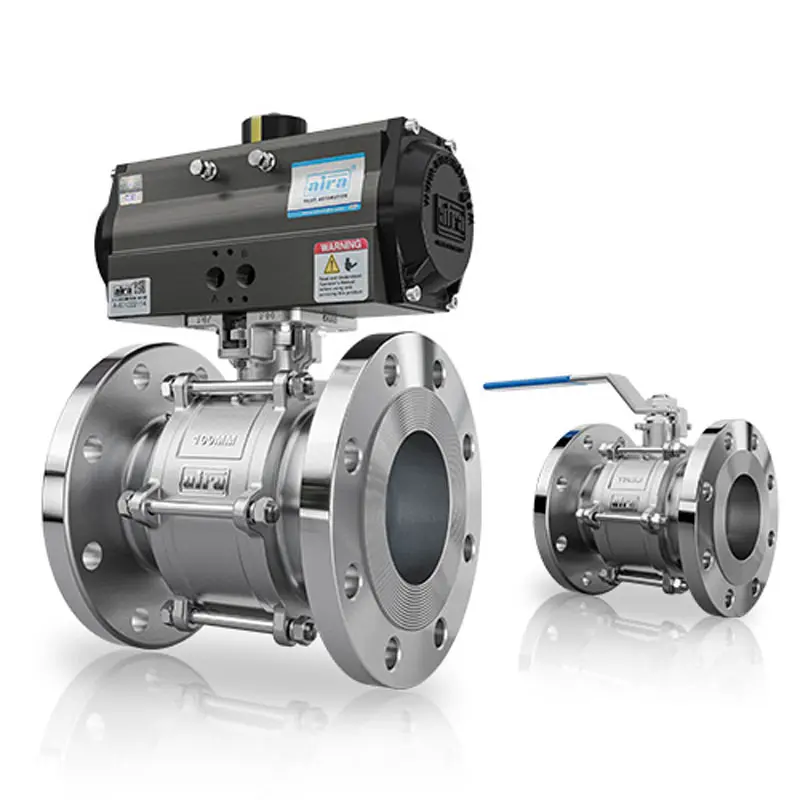
In industrial fluid control systems, selecting the right valve is crucial for operational efficiency, safety, and long-term performance. Among the most trusted solutions for demanding environments are ball valves. Whether handling steam, gas, oil, or chemicals, ball valves provide robust performance in high-pressure and high-temperature systems where reliability matters most.
As industries evolve, ball valve manufacturers like Aira Euro Automation are engineering advanced designs that meet stringent performance requirements across sectors ranging from petrochemical and power generation to oil & gas and refineries. This article explores the key advantages of ball valves in challenging environments and why they are preferred by engineers and maintenance teams worldwide.
Exceptional Sealing and Tight Shutoff
One of the most significant advantages of ball valves is their ability to provide a tight seal, even under extreme pressures and temperatures. The ball element inside the valve creates a 360-degree sealing surface that prevents leakage when closed. This capability makes ball valves ideal for systems where leak integrity is non-negotiable.
Modern ball valve manufacturers design seats and seals with heat-resistant materials such as PTFE, PEEK, and metallic alloys, allowing the valve to withstand thermal expansion without sacrificing performance. For systems where even a minor leak can have serious consequences—such as steam distribution or high-pressure gas lines—ball valves offer unmatched reliability.
Robust Performance Under High Pressure
Ball valves are engineered to handle high-pressure applications with confidence. Unlike some other valve types, which can deform or leak when exposed to extreme pressures, ball valves maintain their shape and sealing integrity. Their design features a spherical closure element that distributes pressure evenly, reducing wear and tear.
This makes them highly suitable for industries where pressure spikes are common, such as:
- Oil & gas extraction and processing
- High-pressure steam systems
- Hydraulic systems in heavy machinery
Ball valve manufacturers like Aira Euro Automation utilize precision casting and machining methods to ensure that the ball and body withstand both static and dynamic pressure loads. High-pressure variants often include reinforced bodies and stem designs that prevent leakage and mechanical failure.
Stability in High-Temperature Environments
Temperature extremes pose significant challenges for fluid control systems. Materials can expand, seals can fail, and performance can deteriorate. Ball valves, however, are designed to function reliably in elevated temperature conditions. The spherical closure and simplistic design minimize thermally induced stress points.
Advanced materials and engineering methods allow these valves to operate efficiently in temperatures that would compromise lesser valve types. For example:
- Metal-seated ball valves can endure temperatures far above what conventional rubber-sealed valves can handle.
- Full-bore designs allow flow without significant pressure drop, even as fluid temperatures rise.
High-temperature performance is essential in industries such as power generation, petrochemical processing, and steam distribution—areas where reliable shutoff and flow control are mission-critical.
Quick Operation and Low Maintenance
Another advantage of ball valves in demanding systems is their ease of use. With a simple 90-degree turn of the handle or actuator, a ball valve can switch between open and closed positions rapidly. This feature is particularly beneficial in emergency shutdown scenarios or when fast response times are needed.
Moreover, the internal design has fewer moving parts than many other valves, resulting in lower maintenance requirements and longer service life. Many ball valve manufacturers supply models with top-entry access, enabling maintenance without removing the valve from the pipeline—saving time and reducing downtime.
Versatility Across Applications
Ball valves are incredibly versatile. They are available in multiple configurations—such as:
- Floating ball
- Trunnion-mounted
- Three-piece construction
- V-port and reduced bore
This adaptability allows engineers to select the exact ball valve style that best suits fluid type, pressure class, temperature range, and operational needs. Manufacturers like Aira Euro Automation offer customized solutions tailored to specific industrial requirements, enhancing both performance and ROI.
Conclusion
When it comes to high-pressure and high-temperature systems, ball valves stand out as a high-performance, reliable, and cost-effective solution. Their exceptional sealing capability, robust pressure handling, temperature stability, simplicity, and versatility make them an industry favorite. With trusted ball valve manufacturers like Aira Euro Automation, businesses can ensure fluid control systems that deliver long-term reliability and efficiency.