
Uniswap v3 is a decentralized exchange that has gained significant popularity due to its unique automated market maker (AMM) model that allows users to trade cryptocurrencies without the need for intermediaries or centralized authorities. To further advance the platform, Uniswap Labs launched the Uniswap v3 core contracts under a BUSL 1.1 license.
But What’s so special about Uniswap V3 ?
Uniswap v3 introduced:
- Concentrated liquidity, giving individual LPs granular control over what price ranges their capital is allocated to. Individual positions are aggregated together into a single pool, forming one combined curve for users to trade against
- Multiple fee tiers , allowing LPs to be appropriately compensated for taking on varying degrees of risk
These features make Uniswap v3 the most flexible and efficient AMM ever designed:
- LPs can provide liquidity with up to 4000x capital efficiency relative to Uniswap v2, earning higher returns on their capital
- Capital efficiency paves the way for low-slippage trade execution that can surpass both centralized exchanges and stablecoin-focused AMMs
- LPs can significantly increase their exposure to preferred assets and reduce their downside risk
- LPs can sell one asset for another by adding liquidity to a price range entirely above or below the market price, approximating a fee-earning limit order that executes along a smooth curve
The BUSL 1.1 license is a modified version of the MIT license that provides additional protections for the Uniswap v3 core contracts. The license allows Uniswap Labs to protect its intellectual property while still enabling developers to use, modify and distribute the code. However, the BUSL 1.1 license has an expiration date of 1 April 2023, after which the code will be released under an open-source GPL 2.0 license.
The decision to launch the Uniswap v3 core contracts under a BUSL 1.1 license was necessary for several reasons.
First, it enabled Uniswap Labs to protect its intellectual property and prevent unauthorized use of the code. This protection was crucial in ensuring that the Uniswap v3 platform remained competitive and that the company could continue to innovate and improve the platform.
Second, the BUSL 1.1 license allowed Uniswap Labs to generate revenue by licensing the code to other businesses and developers.
Finally, the BUSL 1.1 license allowed Uniswap Labs to balance the benefits of open-source development with the need for commercialization. By releasing the code under an open-source GPL 2.0 license after the expiration of the BUSL 1.1 license, Uniswap Labs ensures that the code remains accessible to developers and the wider community while still retaining control over its intellectual property.
Table of contents :
The ReactionImpact on the Uniswap Userbase : Before & AfterImpact on Uniswap Transactions : Before & AfterImpact on Uniswap Volume : Before & AfterCompetitors that Forked V3 : Before & AfterConclusion
1. The Reaction
Critics of the BUSL 1.1 license argued that it went against the ethos of decentralized finance, which is built on the principles of transparency and openness. Some members of the community expressed concern that the license could lead to the centralization of Uniswap and undermine the platform's long-term sustainability.
Overall, the release of the Uniswap v3 core contracts under a BUSL 1.1 license highlighted the tensions between the principles of open-source development and the need for commercialization in the DeFi space. While the move was met with criticism from some members of the community, it also sparked the emergence of several forks that sought to provide more decentralized and community-driven alternatives to Uniswap.
2. Impact on the Uniswap Userbase : Before & After
Combining the data from 6 chains where v3 has been deployed i.e.
Ethereum
Optimism
BNB
Arbitrum
Celo
Polygon
Let’s analyse the data based on UAW [ Unique Active Wallets ] interacting with V3 in 90D timeframe .
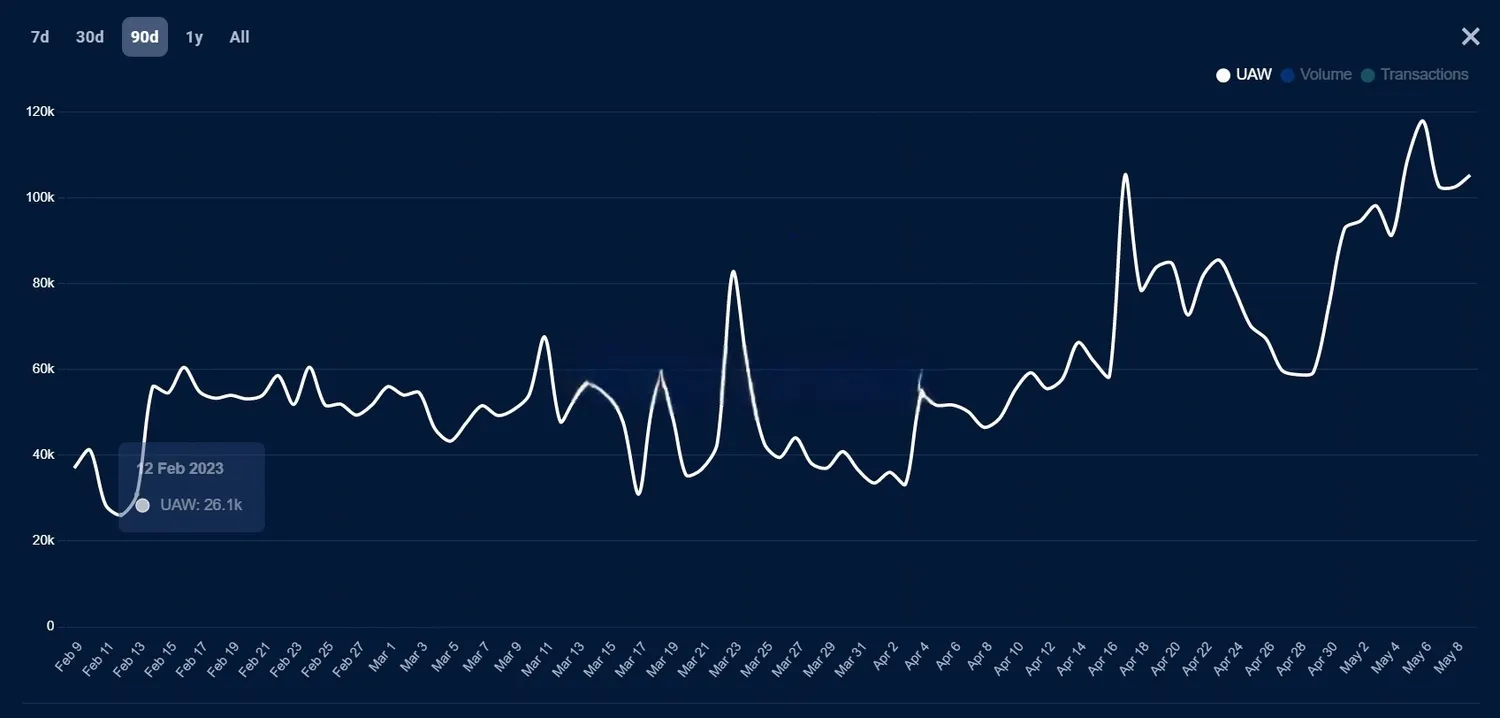
We can see that UAW data is in +ve & Expiration of License had negligible downside to Uniswap v3
3. Impact on Uniswap Transactions : Before & After
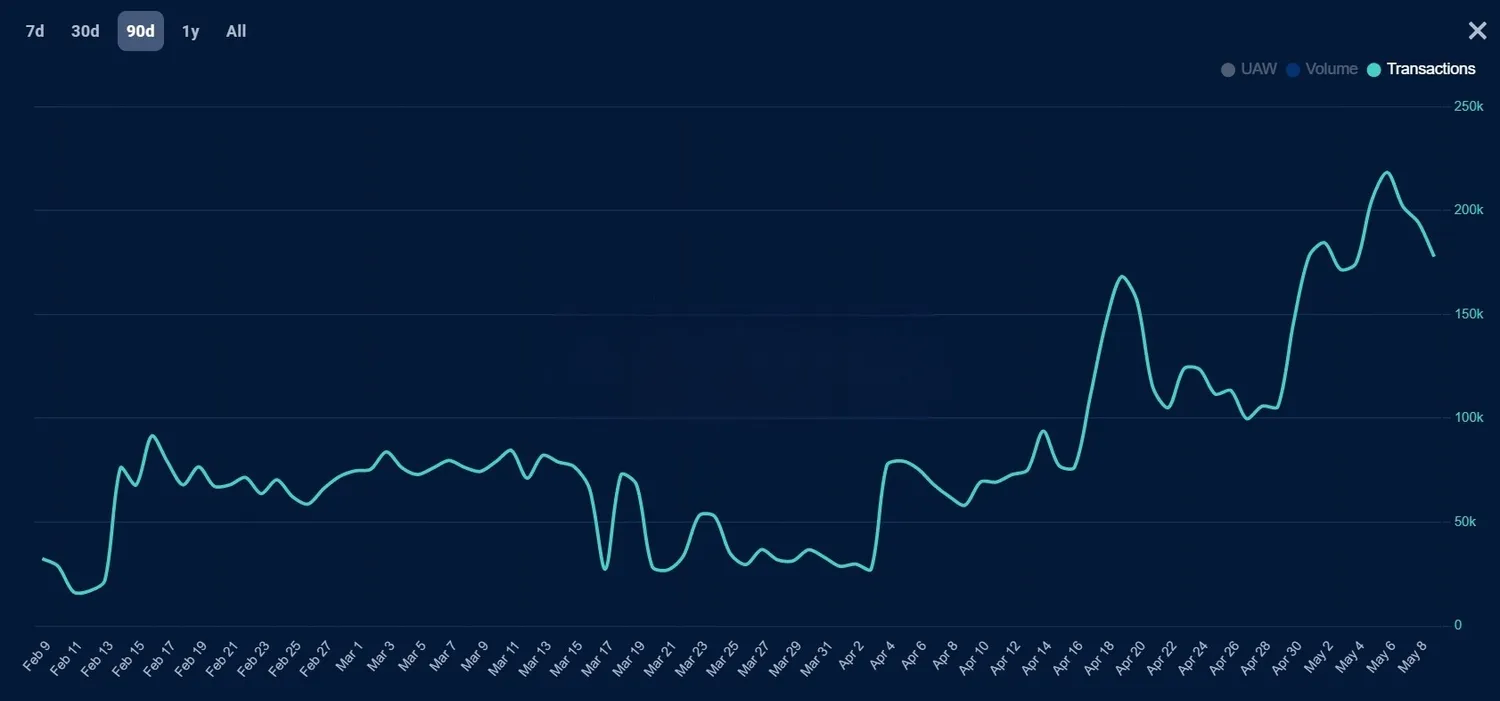
Here , We’ll be checking in the transactions volume of UNISWAP v3 under 90D timeframe
4. Impact on Uniswap Volume : Before & After
Here , We’ll be checking in the trading volume of UNISWAP v3 under 90D timeframe
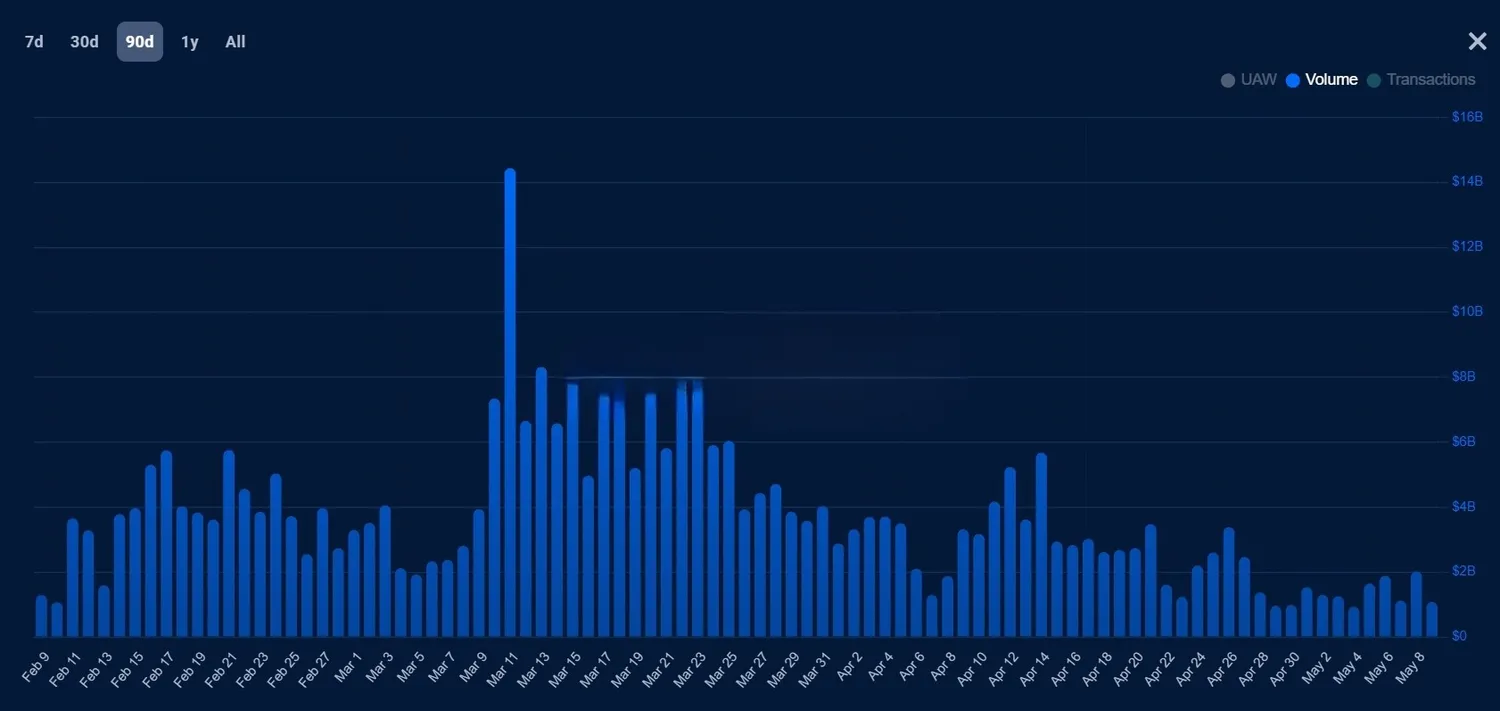
We see a Major Spike in Volume near march 11 which is contributed by USDC depeg while the Average volume hasn’t seen a major decline . Although With V3 being forked by other protocols we might see more users moving their capital & swaps to lesser gas intensive chains like L2 or Sidechains
5. Competitors that Forked V3 : Before & After
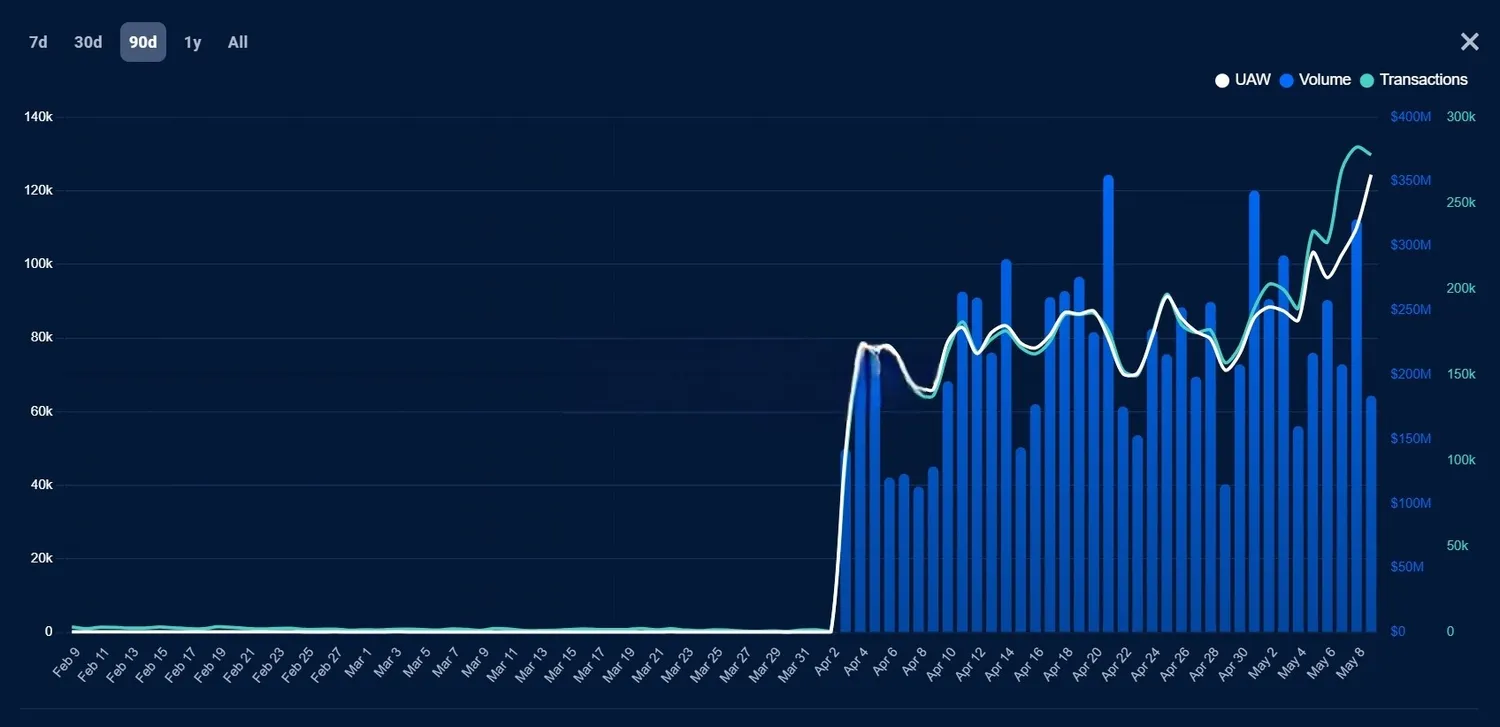
In this section , we’ll be cheking protocols that forked Uniswap v3 code before the license expired like holswap did on BSC chain & Major Players like Sushiswap or Pancakeswap who forked v3 after License Expiration .
[ After ] Take 1 : PancakeSwap V3 Still Far Behind Uniswap V3
According to DefiLlama, the Total Value Locked (TVL) on PancakeSwap V3 is $82.56 million as of writing. However, Uniswap V3 has a TVL of $2.8 billion.
With the upgrade to V3, the project claims to offer 25X lower trading fees. Unlike PancakeSwap V2, which had just fixed trading fees of 0.25%, V3 brings in different tiers 0.01%, 0.05%, 0.25%, and 1%.
The upgrade also promises to enhance the platform’s capital efficiency by allowing liquidity providers to concentrate their capital on smaller price ranges. With this, the platform claims that the fee earnings will be much higher with the same deposit amount.
[ Before ] Take 2 : HolaSwap Breaks Uniswap V3 Copyright
A new project, Holaswap, had forked Uniswap’s V3, despite a license theoretically protecting decentralized exchange’s code from use in production settings.
Legal Situation
Uniswap’s Business Source License 1.1, which states a party “must purchase a commercial license,” if their “use of the Licensed Work does not comply with the requirements currently in effect.”
Moreover , The HolaSwap developers had eliminated a governance token, possibly as a way to circumvent commercial use of the product. However, the license only allowed for “non-production use of the code.”
6. Concluding Remarks
The expiration of the BUSL 1.1 license on Uniswap V3 was a contentious issue within the DeFi community. Critics argued that it went against the principles of transparency and openness that are integral to decentralized finance. However, the license did have some positive effects, such as limiting the proliferation of copycat projects and creating space for new innovations to emerge.
Despite the expiration of the license, Uniswap V3 has maintained its dominance in the decentralized exchange space, with a TVL of $2.8 billion. This is a testament to the platform's popularity and the trust that users have in its technology.
Furthermore, the emergence of forks seeking to provide more decentralized and community-driven alternatives is a positive development for the DeFi ecosystem. These forks offer users more options and promote healthy competition in the space.
Overall, the expiration of the BUSL 1.1 license has not had a significant impact on Uniswap V3's user base or trading volume. The platform continues to innovate and remain at the forefront of the DeFi industry.