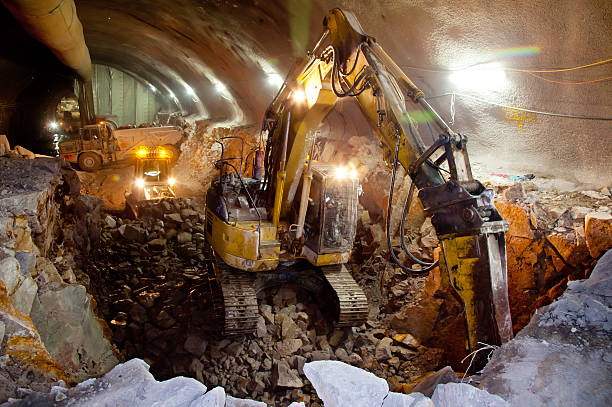
Underground engineering is a broad term used to describe the techniques and services used in underground construction. These techniques are used by tunneling companies, mining companies, utility companies, and other private infrastructure corporations.
Generally, the underground civil engineering services involve working in confined spaces/tunnels, and to design, construct, maintain and rehabilitate cities, streets, railways and other infrastructure.
It is defined as the branch of civil engineering that deals with urban and underground works. This industry is a diverse discipline, which covers techniques used in planning and carrying out construction of tunnels and subways.
Subway engineering dates back thousands of years; under it there are three main branches: railroad engineering (railway tunnels), utility works (water supply and sewage) and road tunneling.
Why is underground civil engineering services important?
The goal of underground civil engineering is to create and maintain safe and accessible transportation systems while minimising disruption to surface traffic and surrounding environments.
Underground engineering also plays a key role in ensuring that there is no flooding in an area where it has been constructed. Flooding occurs when rainwater accumulates on road surfaces before draining away into rivers or other bodies of water such as lakes or oceans.
This can happen due to poor drainage infrastructure in an area but underground civil engineering ensures that this does not happen by providing adequate drainage channels which allow rainwater to drain.
Below is a list of some typical underground civil engineering services:
1. Sewer systems
They consist of pipes that carry wastewater from homes and businesses to wastewater treatment plants. They are designed to prevent the contamination of groundwater or surface water sources by protect human health with proper sanitation.
2. Utility lines (electricity, telephone, gas)
Utility lines carry electricity, phone service, or natural gas from the utility company's distribution lines to homes or businesses. They are usually buried underground so they do not interfere with traffic on streets or sidewalks above them. Utility companies often use trenchless construction methods to install these lines without disturbing traffic above ground level.
3. Basement construction
Basements are built below ground level and provide extra storage space for homeowners. Basement construction can also involve adding living space to existing homes by digging out part of the first floor to create a basement underneath it. Some basements are also built above ground level on stilts.
4. Building foundations
Building foundations support buildings against earth movements such as earthquakes or floods. Buildings that are located near water bodies such as rivers need foundations with high resistance against water erosion so that they do not get damaged during floods.
How is the job market in the industry?
The job outlook for underground civil engineers is strong. As the population grows, there will be a greater need for new infrastructure projects like water supply systems or communications cables.
In addition, many cities require new underground structures such as subway lines or stormwater management systems when they're developing new residential areas or commercial properties — this also creates jobs for underground civil engineers.
Contact Lih Ming for a comprehensive service in underground engineering
As a highly specialised field that is practiced by few underground construction companies in Singapore, we at Lih Ming also provide pipe laying services for other underground civil engineering projects to eliminate unnecessary expenses. Contact us today!