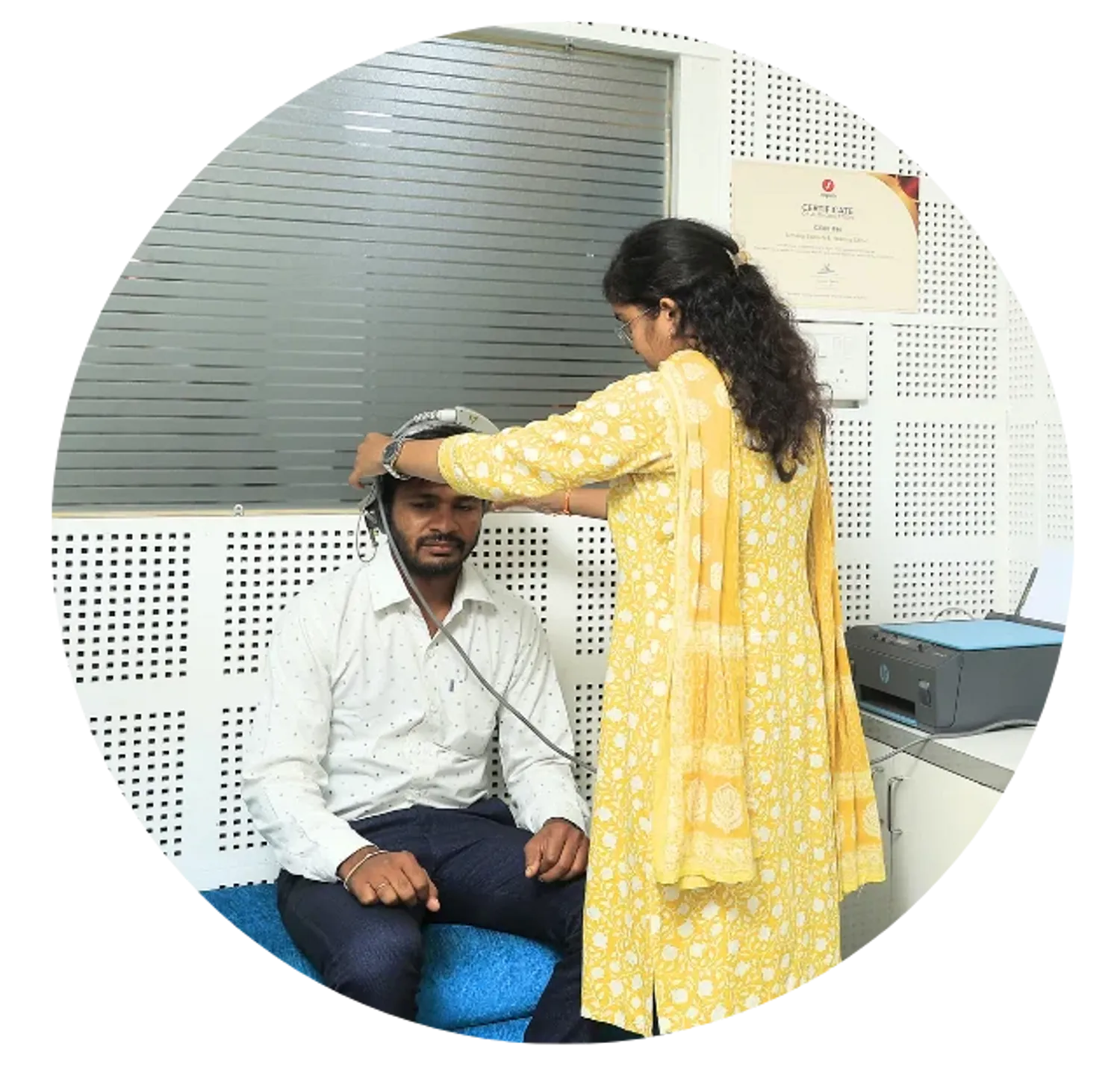
If you or someone you love has been living with severe hearing loss, you've probably come across the term cochlear implant. Maybe a doctor mentioned it, or you stumbled upon it during a 2 a.m. search spiral. Either way, you're likely wondering — how does this thing actually work? And more importantly, can it truly bring back hearing?
Let's break it down, minus the medical jargon.
First, What Goes Wrong With Hearing?
Inside your inner ear (the cochlea) are thousands of tiny hair cells. These cells pick up sound vibrations and convert them into electrical signals, which your auditory nerve then carries to the brain. When these hair cells are damaged — from aging, illness, noise exposure, or genetics — that conversion breaks down. The result is sensorineural hearing loss, the kind that hearing aids often can't fully address.
So How Does a Cochlear Implant Step In?
A cochlear implant doesn't amplify sound the way a hearing aid does. It bypasses the damaged hair cells entirely and does the job they can no longer do — directly stimulating the auditory nerve.
The system has two parts: an external sound processor worn behind the ear, and an internal implant placed under the skin during surgery. Here's the basic flow:
The external processor picks up sound through a microphone.
It converts that sound into a digital code and transmits it through the skin to the implant.
The implant sends electrical pulses along an electrode array coiled inside the cochlea.
The auditory nerve receives these pulses and sends them to the brain, which learns to interpret them as sound.
It's not magic — it's a workaround. A genuinely clever one.
But Does It Restore "Normal" Hearing?
Here's where honesty matters more than hope. A cochlear implant does not recreate natural hearing. The sound quality is different — often described as mechanical or robotic at first. Music, in particular, can sound quite strange compared to what someone used to hear.
That said, the outcomes can be remarkable. Many recipients — especially children implanted early — develop strong speech understanding and can hold conversations without lip-reading. Adults who lost hearing later in life typically adapt faster because their brains already know what sound "should" feel like.
Results vary widely based on age at implantation, duration of hearing loss, and consistent rehabilitation through auditory therapy. Patience and practice genuinely matter here.
Who Is a Candidate?
Cochlear implants are recommended for adults and children with severe to profound sensorineural hearing loss who aren't getting enough benefit from conventional hearing aids. A thorough evaluation — audiological testing, imaging scans, and counselling — is needed before any decision is made.
If you're in central India and exploring your options, consulting a cochlear implant clinic in Bhopal is a practical starting point. An experienced team there can assess whether the surgery is appropriate, walk you through what rehabilitation looks like, and give you realistic expectations — not just brochure-level optimism.
The Bottom Line
A cochlear implant won't hand you back the hearing you once had, note for note. But for many people, it hands them back something arguably more valuable — connection. The ability to follow a conversation, hear a child's voice, or respond when someone calls your name from across the room.
Is it the right choice for everyone? No. But for the right candidate, the difference it makes is hard to overstate.