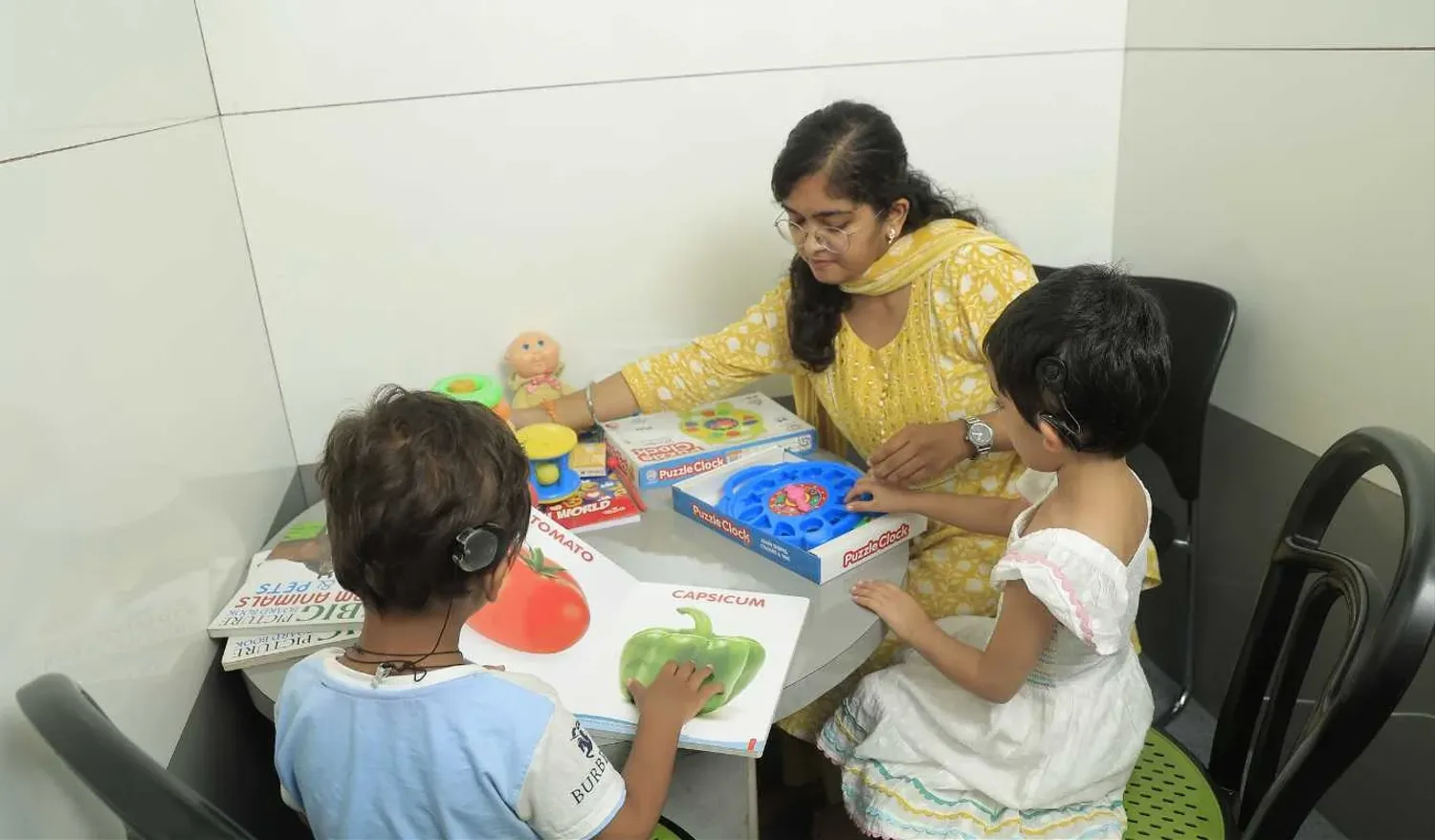
Every parent has been there — watching another child rattle off sentences while your own toddler points, grunts, or simply goes quiet. The question creeps in: Is something wrong?
The short answer? Sometimes it's nothing. Sometimes it matters. Knowing the difference is what this is about.
Every Child Has Their Own Clock — Up to a Point
Language development isn't a race, but it does follow a rough timeline. Most toddlers say their first words around 12 months and are stringing two-word phrases together by 24 months. Some children are simply "late talkers" — they're taking in everything around them and will catch up on their own. Others, however, are dealing with something that needs attention.
The tricky part is that both groups can look the same at first glance.
Signs That Are Worth Watching
Not all speech delays are equal. Here's what typically calls for a closer look:
By 12 months, your child should be babbling, pointing at things, and responding to their name. If they're doing none of these, that's worth noting.
By 18 months, most toddlers have 10–20 words. If your child has fewer than 5–6 words and isn't attempting new ones, it's a good time to talk to someone.
By 24 months, children typically use around 50 words and are beginning to combine them — "mama go," "more juice," that sort of thing. If this isn't happening, a speech evaluation makes sense.
What parents often miss is the quality of communication, not just the word count. Is your child making eye contact? Do they point to share things with you — not just to ask for them? Are they responding when you call their name across the room? These are often early clues that go unnoticed.
When Hearing Plays a Role
Here's something a lot of parents don't consider right away — hearing loss.
A child who can't hear clearly won't learn to talk clearly. It's that direct. Mild or partial hearing loss is notoriously easy to miss because the child may still respond to loud sounds, music, or the TV. It's the softer sounds — consonants, quiet voices, words at a distance — that get lost.
If your toddler seems to hear selectively, turns up the volume on everything, or wasn't tested at birth (or had a failed newborn hearing screen that was never followed up), that alone is a reason to visit a speech and hearing clinic in Bhopal for a proper audiological evaluation.
What Parents Can Do Right Now
While you're figuring out next steps, a few things genuinely help at home:
- Talk to your child constantly — narrate what you're doing, what you see, what you're making for lunch
- Read picture books together, pointing and naming as you go
- Reduce background noise during conversations; turn off the TV when you're talking with them
- Don't finish every sentence for them — give them a beat to try
These aren't fixes, but they create the kind of rich language environment that supports development.
The Biggest Mistake: Waiting Too Long
"He'll talk when he's ready." "Her older brother was the same way." "Boys are always slower."
Some of this is true. Some of it is reassurance that delays action.
The earlier a speech or hearing issue is identified, the better the outcome — consistently, across study after study. A child assessed at two has far more neurological flexibility than one assessed at four. Therapy at this age is often shorter, more effective, and less disruptive.
If something feels off, trust that instinct. A visit to a speech and hearing clinic in Bhopal isn't an overreaction — it's parenting done right.
Concerned about your child's speech or hearing? An evaluation is the first step, not the last resort.