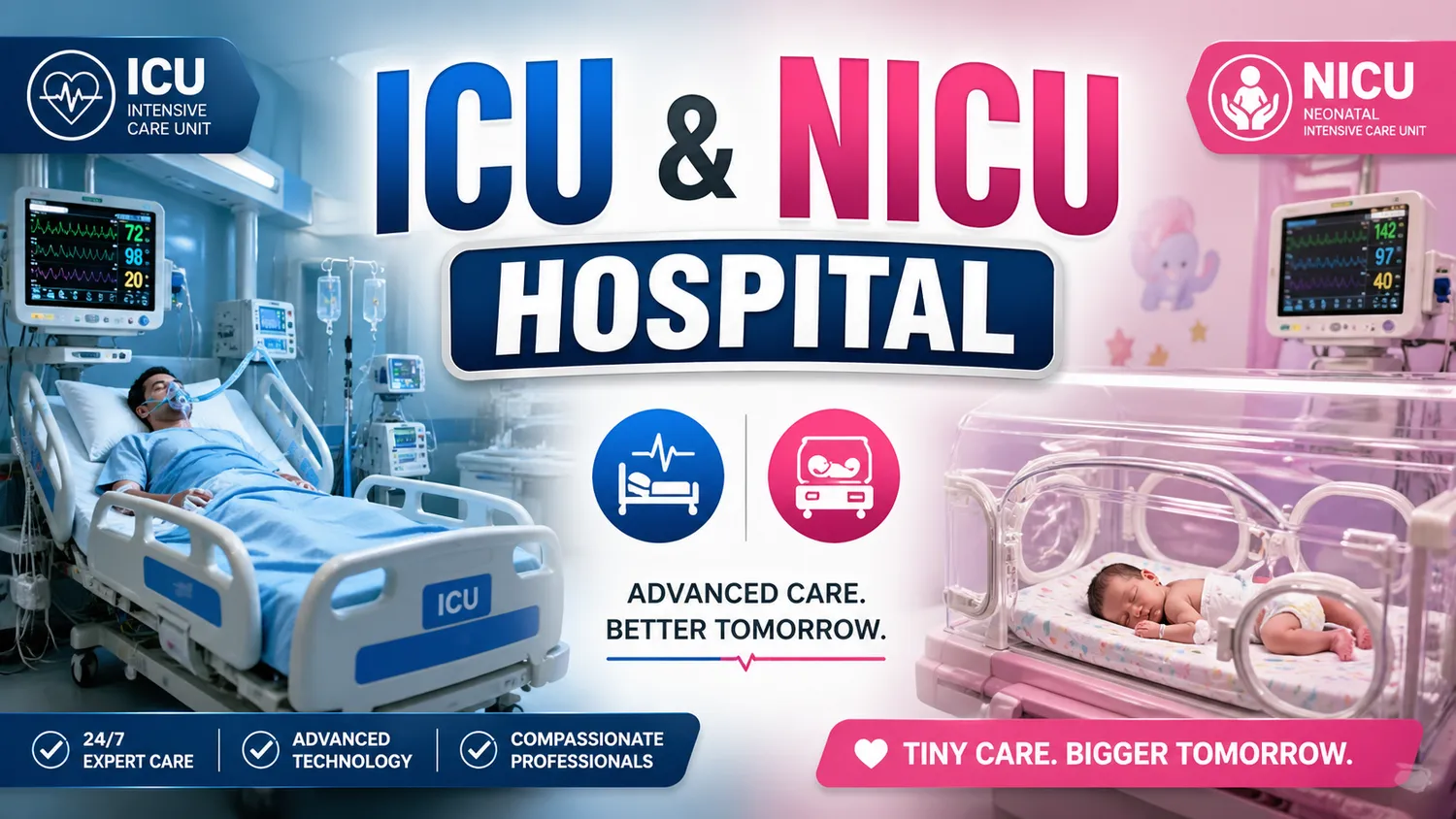
The transition into critical care is often an overwhelming experience for patients and their families. Whether it involves an adult requiring life-saving intervention or a newborn needing specialized support, the Intensive Care Unit (ICU) and Neonatal Intensive Care Unit (NICU) represent the pinnacle of modern medical monitoring and treatment. Hospitals like Trustmed Hospital prioritize a multidisciplinary approach, ensuring that every patient receives around-the-clock attention from highly trained specialists. Understanding the mechanics of these units can help demystify the environment and provide comfort during a stressful time.
The Role of the Intensive Care Unit (ICU)
The ICU is a specialized department within a hospital designed to care for patients with life-threatening illnesses or injuries. These patients require constant supervision and support from specialized equipment to maintain normal body functions. Common reasons for ICU admission include severe trauma, major surgery, organ failure, or serious infections like septicemia.
In the ICU, the ratio of staff to patients is much higher than in general wards. This ensures that any change in a patient’s condition is noticed and addressed instantly. For residents in the Haryana region, finding a reliable icu hospital in badshahpur gurgaon is vital for ensuring that advanced hemodynamic monitoring and respiratory support are accessible during emergencies. Trustmed Hospital integrates cutting-edge technology with compassionate care to stabilize patients in these critical windows.
Advanced Monitoring and Medical Equipment
A defining feature of the ICU and NICU is the array of technology surrounding the patient bedside. Monitoring is continuous and covers several vital parameters:
- Cardiac Monitors: These track heart rate and rhythm via electrodes placed on the chest.
- Pulse Oximeters: Small sensors usually placed on the finger or toe to measure oxygen saturation in the blood.
- Ventilators: Machines that assist or take over the breathing process for patients whose lungs are not functioning adequately.
- Intravenous (IV) Pumps: Precisely controlled devices that deliver medications, fluids, and nutrition directly into the bloodstream.
This level of detail allows the medical team to make data-driven decisions every minute of the day.
Specialized Care for Newborns in the NICU
The NICU is a specific type of intensive care dedicated to infants born prematurely or with serious health conditions. Neonatal care is delicate and requires a focus on growth, temperature regulation, and developmental support. Babies may be placed in incubators, which are clear, enclosed beds that maintain a warm environment and protect the infant from germs and noise.
At Trustmed Hospital, the neonatal team focuses on family-centered care, encouraging parents to be involved in their baby’s journey. If you are seeking a nicu hospital in badshahpur gurgaon, it is essential to look for facilities that offer advanced respiratory support for underdeveloped lungs and specialized nutritional programs. The goal of the NICU is not just survival, but ensuring the long-term health and neurological development of the newborn.
Common Treatments and Procedures
Treatment in these units is highly individualized. In the ICU, doctors may perform procedures such as intubation for airway management, hemodialysis for kidney failure, or the insertion of central lines for medication delivery. In the NICU, treatments often involve phototherapy for jaundice, surfactant therapy for respiratory distress syndrome, or specialized feeding tubes for infants who cannot yet swallow.
Trustmed Hospital employs a team of intensivists, neonatologists, and specialized nurses who work in tandem to execute these complex treatment plans. The presence of a dedicated hospital in badshahpur gurgaon equipped with these facilities means that patients do not have to travel far to receive world-class medical intervention.
The Importance of the Multidisciplinary Team
Recovery in a critical care setting is a team effort. Beyond the primary doctors, several other professionals play crucial roles:
- Critical Care Nurses: They are the primary caregivers, monitoring patients minute-by-minute and acting as the bridge between families and the medical team.
- Respiratory Therapists: They manage ventilators and ensure the patient’s airway remains clear.
- Physiotherapists: Even in the ICU, early mobilization is often encouraged to prevent muscle wasting and improve recovery outcomes.
- Nutritionists: They ensure that the patient receives the specific caloric and nutrient intake required to heal, whether through a tube or IV.
The Path to Recovery and Rehabilitation
Recovery from the ICU or NICU is rarely an overnight process. It is often described as a "step-down" journey. Once a patient is stable and no longer requires mechanical support or intensive monitoring, they are moved to a High Dependency Unit (HDU) or a general ward.
For adults, the "Post-Intensive Care Syndrome" (PICS) can include physical weakness, cognitive changes, or psychological stress. Rehabilitation usually begins while the patient is still in the unit and continues long after discharge. For NICU graduates, follow-up appointments are crucial to monitor developmental milestones. Trustmed Hospital remains committed to this continuum of care, providing follow-up services to ensure that the transition from the hospital to home is safe and sustainable.
Support for Families and Loved Ones
Having a loved one in the ICU or NICU is emotionally taxing. Trustmed Hospital recognizes that clear communication is the best way to alleviate anxiety. Families are encouraged to ask questions, understand the purpose of the various machines, and participate in care when possible.
The journey through intensive care is a testament to the resilience of the human body and the advancements in medical science. By combining high-tech monitoring with a human touch, these units provide the best possible chance for recovery and a return to a healthy, fulfilling life.