When designing or renovating a commercial or public restroom, choosing the right bathroom partition is crucial for durability, privacy, and aesthetics. Whether you need a modular toilet partition or a custom solution, understanding the different toilet partition materials available will help you make the best decision.
In this guide, we’ll explore the various bathroom partition materials, their advantages, and how to select the right one for your space.
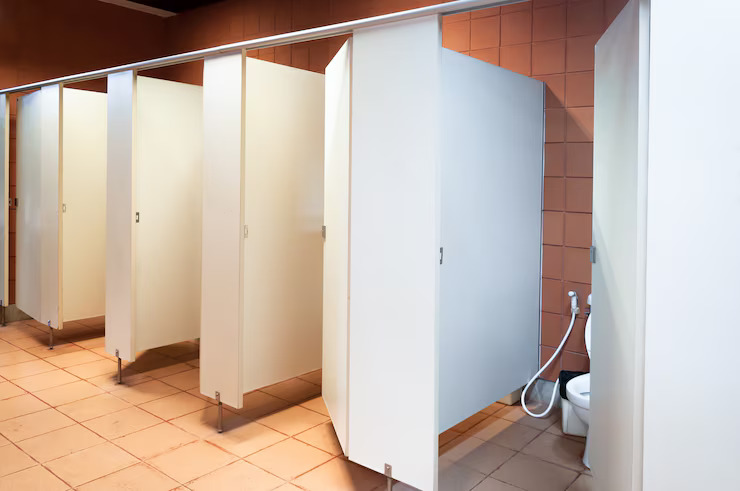
Why Are Bathroom Partitions Important?
Bathroom partitions provide privacy, improve hygiene, and enhance the overall look of restrooms. They are essential in:
- Commercial spaces (offices, malls, airports)
- Educational institutions (schools, universities)
- Healthcare facilities (hospitals, clinics)
- Hospitality venues (hotels, restaurants)
A well-chosen toilet partition ensures durability, easy maintenance, and resistance to moisture and vandalism.
Types of Toilet Partitions
1. Modular Toilet Partitions
Modular partitions are prefabricated systems that allow for easy installation and reconfiguration. They are ideal for spaces that may need future layout changes. Benefits include:
- Quick installation
- Adjustable designs
- Cost-effective solutions
2. Floor-Mounted Partitions
These partitions are anchored to the floor, providing maximum stability. They are commonly used in high-traffic areas.
3. Ceiling-Hung Partitions
Suspended from the ceiling, these partitions create a sleek, modern look and make floor cleaning easier.
4. Floor-to-Ceiling Partitions
These offer full privacy and are often used in upscale restrooms for a seamless appearance.
Bathroom Partition Materials: Pros and Cons
Choosing the right bathroom partition material depends on budget, durability needs, and aesthetics. Here are the most common options:
1. Phenolic Core
- Pros: Waterproof, durable, resistant to graffiti, and low maintenance.
- Cons: Higher cost than some alternatives.
- Best for: High-traffic public restrooms.
2. Powder-Coated Steel
- Pros: Extremely durable, scratch-resistant, and available in various colors.
- Cons: Can rust if the coating is damaged.
- Best for: Schools, airports, and industrial settings.
3. Plastic (HDPE)
- Pros: Lightweight, waterproof, and resistant to bacteria and chemicals.
- Cons: Less sturdy than metal options.
- Best for: Healthcare facilities and wet environments.
4. Stainless Steel
- Pros: Rust-proof, hygienic, and sleek modern appearance.
- Cons: Expensive and can show fingerprints.
- Best for: Luxury hotels and high-end commercial spaces.
5. Laminate Partitions
- Pros: Affordable, wide range of colors and patterns.
- Cons: Not as water-resistant as other materials.
- Best for: Offices and low-moisture environments.
How to Choose the Right Bathroom Partition
Consider the following factors:
- Traffic volume – High-traffic areas need durable materials like phenolic or steel.
- Moisture exposure – For wet environments, choose waterproof options like HDPE or stainless steel.
- Budget – Laminate is cost-effective, while stainless steel is premium.
- Aesthetics – Match the partition material to your restroom’s design.
Conclusion
Selecting the right bathroom partition involves balancing durability, cost, and design. Whether you opt for a modular toilet partition for flexibility or a high-end stainless steel partition for luxury, understanding the materials will help you make an informed choice.
Investing in quality toilet partition materials ensures long-term performance, easy maintenance, and a professional restroom appearance.
Need help choosing the best partition for your space? Contact us today for expert advice and premium toilet cubicle solutions!