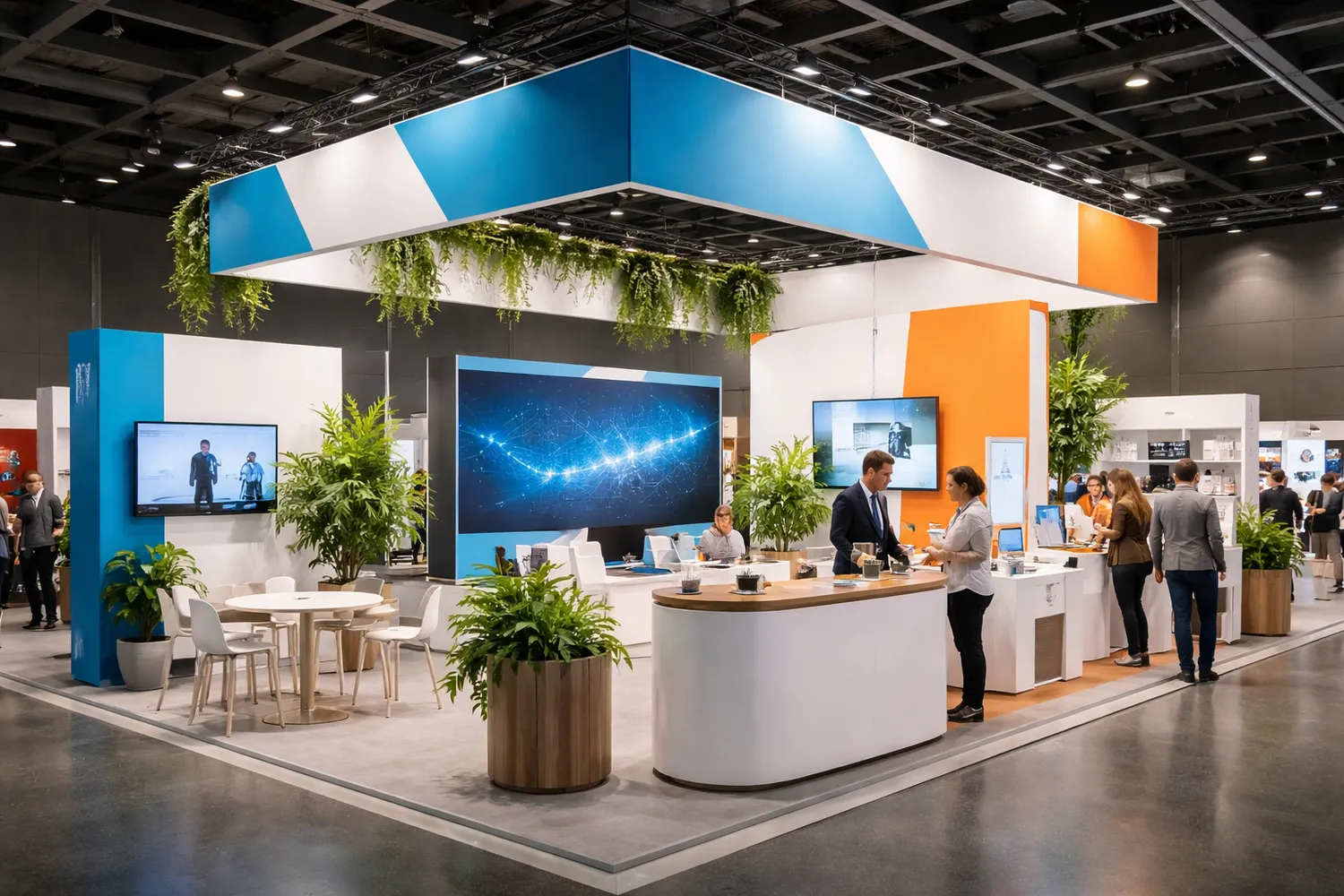
The way brands show up at events has shifted dramatically over the past few years. Exhibitions are no longer isolated, one-off appearances built around a single location and a fixed audience. They now sit inside broader campaigns that blend in-person engagement with digital amplification. In this environment, flexibility has become just as valuable as visual impact. That’s where Expo Kits have started to play a more strategic role.
Rather than being seen as simple display systems, Expo Kits are increasingly part of a brand’s long-term event strategy. They support adaptability, repeated use across locations, and consistency in presentation, all while allowing room for creativity. As hybrid events become the norm, the conversation is less about building the biggest stand on the floor and more about designing the smartest one.
The Hybrid Event Landscape Has Changed Expectations
Events used to operate in clear categories. You either attended in person or you didn’t. Today, audiences move fluidly between physical and digital spaces. They may discover a brand through a social post, visit the stand at an expo, scan a QR code for more information, and continue the conversation online. The exhibition booth is no longer the endpoint. It is one touchpoint in a much wider journey.
This shift has changed what people expect from live activations. Visitors are looking for interaction, clarity and relevance. They are often time-poor, navigating crowded halls with limited attention. A stand needs to communicate quickly, guide movement effectively and integrate seamlessly with digital channels.
On platforms like Telescope, discussions around digital transformation and innovation frequently explore how traditional industries are adapting to new behaviours. In the same way, event design has had to evolve. Hybrid strategies demand infrastructure that can respond to changing formats, varying booth sizes and different audience demographics.
Agility Over Permanence
In the past, many brands invested heavily in custom-built exhibition stands that were impressive but inflexible. They were designed for a specific footprint, a specific event and often a single campaign. Once dismantled, large portions of the build might never be used again.
Today, marketing budgets are scrutinised more closely, and sustainability considerations carry greater weight. Brands are asking different questions. How quickly can this be set up? Can it travel interstate without excessive freight costs? Can it be reconfigured for a smaller space next month?
This is where Expo Kits have gained traction. Modular systems allow components to be rearranged, resized or refreshed with updated graphics. Instead of rebuilding from scratch, teams can adapt what they already have.
Agility also reduces operational stress. Faster setup and pack-down times can mean lower labour costs and fewer logistical headaches. When a team is managing multiple events across the year, this efficiency compounds. A structure that works just as well at a major industry expo as it does at a regional trade show becomes a practical asset rather than a one-time spectacle.
The Strategic Role of Expo Kits in Modern Campaigns
At their core, Expo Kits are about structure. But strategically, they are about continuity. A consistent physical presence across events helps build recognition. When the same design language appears in different cities, audiences start to connect the dots.
In Australia, many businesses now look for scalable systems that balance portability with professionalism. For brands researching practical solutions, conversations around expo kits Australia often focus on how modular designs support repeated use without sacrificing visual impact.
The key lies in thoughtful configuration. Panels can be repositioned to suit varying floor plans. Backdrops can anchor a space visually while leaving room for interaction zones. Integrated screens can display live social feeds, product demos or campaign messaging that aligns with online activity.
This adaptability makes Expo Kits well suited to hybrid campaigns. A visitor might engage with a digital competition at the stand, share content on social media and later revisit the brand’s website. The physical structure becomes a bridge between offline and online engagement.
Designing for Smaller Footprints with Bigger Impact
Another noticeable trend in exhibitions is the move toward compact but purposeful spaces. Instead of sprawling builds filled with decorative elements, brands are focusing on intentional layouts that encourage conversation and interaction.
Effective Expo Kits support this approach by prioritising clarity. Strategic use of vertical space can increase visibility without expanding the floor footprint. Clean lines and defined zones can guide visitors naturally from entry to interaction point.
Behavioral design principles are increasingly influencing these layouts. Articles on Telescope often examine how the environment shapes decision-making and attention. The same thinking applies on the exhibition floor. Clear focal points reduce cognitive overload. Open pathways invite entry rather than blocking it. Subtle cues can encourage visitors to move deeper into the space rather than hovering at the edge.
Expo Kits that allow for flexible zoning make it easier to experiment with these ideas. A space can include a quick engagement point near the aisle and a quieter discussion area further inside. The structure becomes a framework for storytelling rather than just a backdrop.
Sustainability and Long-Term Value
Sustainability is no longer a side note in event planning. It is central to procurement decisions and brand reputation. Traditional custom builds often generated significant waste, particularly when materials were not reused.
Reusable Expo Kits offer a different value equation. By designing systems intended for multiple deployments, brands reduce material waste and spread production costs over several events. Components can be stored, transported and reassembled with minimal modification.
There is also a reputational dimension. Audiences are increasingly aware of environmental impact. A brand that visibly prioritises reusable infrastructure signals a level of responsibility. This aligns with broader business conversations around sustainable practice, which are frequently explored across thought leadership platforms.
Financially, the return on investment may become clearer over time. Instead of evaluating cost per event in isolation, businesses can consider the cumulative value across a year or more. The more frequently a kit is used, the more efficient it becomes.
Integrating Digital Layers into Physical Spaces
Hybrid events are not just about livestreaming keynote sessions. They are about layering digital engagement into physical interactions. QR codes, NFC touchpoints and interactive screens allow brands to capture data and continue conversations beyond the exhibition hall.
Expo Kits that are designed with these integrations in mind provide greater flexibility. Screen mounts, concealed cabling and adaptable panel systems make it easier to incorporate technology without clutter. The result is a cleaner, more cohesive environment.
The physical stand becomes a launchpad rather than a silo. A visitor might scan a code to access exclusive content, book a follow-up call or join a mailing list. The structure supports this process by providing clearly defined engagement points.
As discussions on innovation and cross-channel strategy continue to develop, it is evident that physical presence still matters. What has changed is how that presence is structured and supported. Expo Kits enable brands to maintain a tangible footprint while staying connected to digital ecosystems.
Looking Ahead: Agile Brand Presence as the Standard
It is unlikely that events will return to purely traditional formats. Hybrid elements are now embedded in audience expectations. This means agility is not a temporary adjustment but a long-term requirement.
Brands that treat Expo Kits as part of a broader strategic toolkit rather than a one-off purchase are better positioned to respond to change. Whether adapting to new venue sizes, shifting campaign themes or evolving audience behaviours, modular systems offer breathing room.
The focus is no longer on building the largest structure in the room. It is on creating spaces that are purposeful, adaptable and aligned with multi-channel marketing efforts. In this context, Expo Kits represent a shift toward smarter design thinking.
As the exhibition landscape continues to evolve, the ability to move quickly, reuse effectively and integrate seamlessly across platforms may become the defining advantage. Agile infrastructure supports agile strategy, and that alignment is shaping the future of live brand experiences.