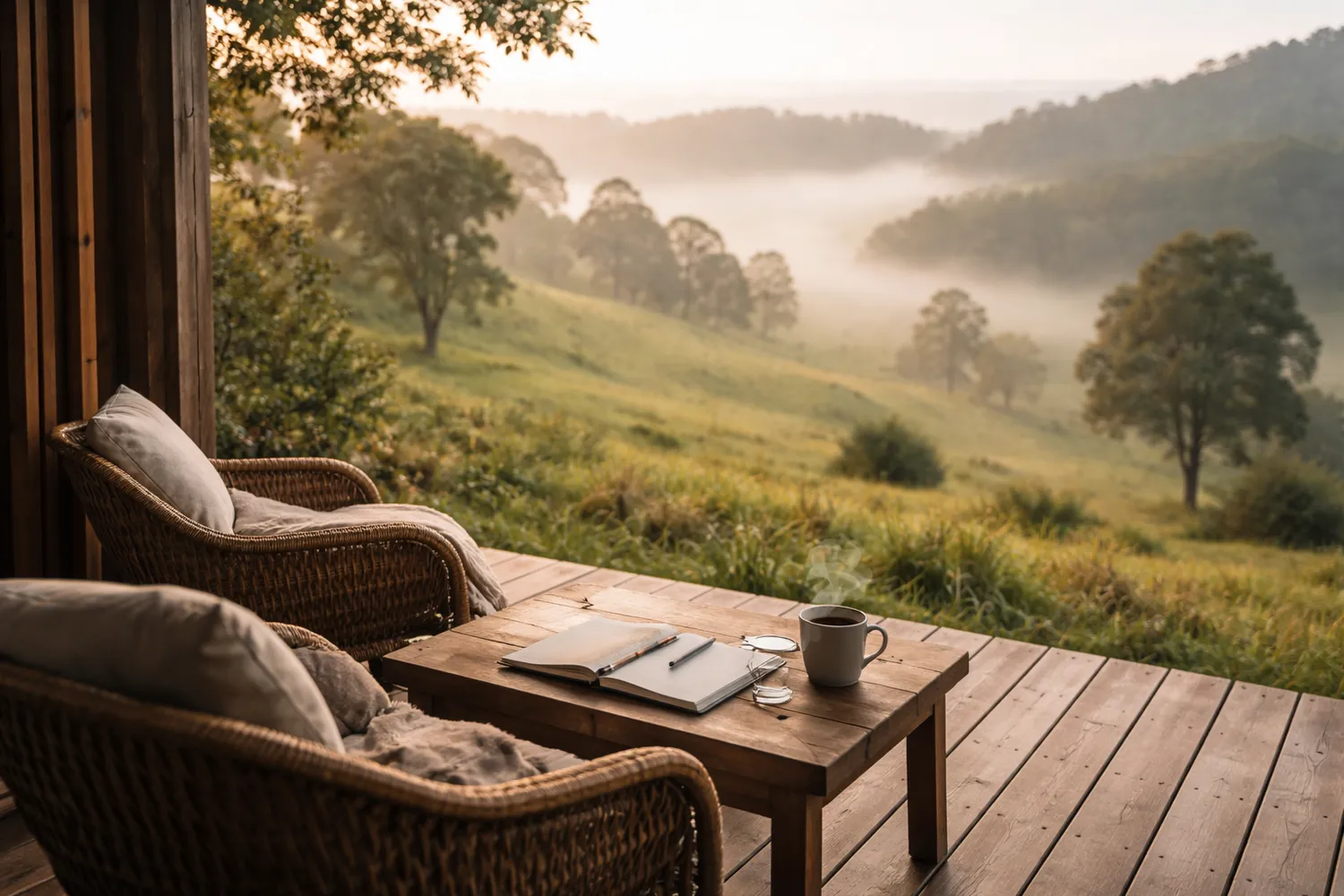
Modern life rarely leaves much room for stillness. Messages arrive instantly, deadlines overlap, and attention is often divided between multiple tasks. In this environment, creativity may begin to feel like something that only appears under pressure, squeezed into small pockets of time. Yet many writers, designers, and professionals notice that their clearest ideas often surface when they step away from noise rather than when they push harder within it.
Quiet environments, particularly those removed from everyday routines, may play a significant role in helping people think differently. Whether through a walk in nature, a weekend offline, or time spent in a peaceful rural setting, creating distance from constant stimulation may allow new perspectives to emerge.
Why Environment Shapes the Way We Think
Human thinking is influenced by surroundings more than many people realise. Sound, movement, and visual clutter all compete for attention, even when we believe we are focused. Over time, this continuous input may lead to mental fatigue, which can reduce the ability to concentrate or reflect deeply.
Researchers studying attention and restoration have found that time in natural environments may improve cognitive function, particularly tasks related to memory and creativity. Exposure to nature has been associated with improved concentration and reduced mental fatigue, according to findings discussed by organisations such as the American Psychological Association.
While these benefits are often discussed in academic contexts, many people recognise them in everyday life. A quiet park, a coastal walk, or a weekend away from busy streets may make it easier to think clearly, solve problems, or generate new ideas.
The Value of Stepping Away From Routine
Routine provides structure, but it may also narrow perspective. When people follow the same schedule, interact with the same environment, and address similar tasks each day, thinking patterns may become repetitive. This does not mean routine is harmful, but it highlights why occasional change may be beneficial.
Stepping away from familiar surroundings often encourages reflection. Without the usual cues and responsibilities, the mind has space to process thoughts that are normally postponed. Many people find they begin to notice patterns in their work, relationships, or goals only after taking time away from daily obligations.
This principle is not limited to artists or writers. Engineers, teachers, healthcare workers, and business owners frequently report that solutions to complex problems emerge during quiet moments rather than during intense activity. The mind sometimes needs distance to see connections clearly.
Quiet Retreats as Places for Reflection
For some people, creating quiet space at home is possible. For others, a change of environment makes the difference. Rural settings, in particular, offer a contrast to urban life that many find refreshing. Open landscapes, slower rhythms, and fewer distractions naturally encourage a different pace of thinking.
Travellers who seek time for reflection often look for accommodation that supports rest rather than activity. Peaceful countryside stays, where the emphasis is on simplicity and calm, provide an environment that encourages reading, journalling, walking, or simply sitting without interruption. One example that is often mentioned in discussions about restorative travel is Tarcutta Retreat, a rural setting that reflects the broader idea of stepping away from routine to reconnect with quiet and perspective.
Such places are not about productivity in the conventional sense. Instead, they provide space for mental clarity, which may lead to clearer priorities and more thoughtful decisions later.
Creativity Beyond the Arts
When creativity is discussed, people often think of painting, writing, or music. Yet creativity is present in many aspects of daily life. Planning a project, resolving a workplace challenge, or finding a better way to manage time all require creative thinking.
Professionals across different fields rely on the ability to see patterns, generate alternatives, and evaluate possibilities. These processes benefit from reflection. Without time to pause, people may default to familiar solutions rather than considering new approaches.
Reflective writing platforms and essay communities often explore this connection between thinking and environment. Many contributors on platforms such as Telescope Editorial discuss how moments of stillness influence their ideas, writing habits, and personal growth. Reading or contributing to reflective essays may reinforce the idea that creativity is not always about producing something quickly, but about allowing ideas to develop gradually.
How Reflection Improves Decision Making
Reflection is sometimes misunderstood as inactivity. In reality, it may be one of the most productive forms of thinking. By reviewing past experiences and considering future possibilities, people may make decisions that are more deliberate and aligned with their priorities.
Psychologists often refer to the concept of “incubation” in problem solving. This refers to the period when a person steps away from a challenge, allowing subconscious processing to occur. During this time, the brain continues working in the background, often leading to insights that were not obvious before.
Quiet environments support this process because they reduce interruptions. Without constant input, the mind has the freedom to wander, connect ideas, and evaluate possibilities.
Creating Quiet Space in Everyday Life
Not everyone is able to travel frequently or spend extended time in rural settings. Fortunately, smaller changes may also create space for reflection.
Setting aside time without digital devices, even for short periods, may reduce mental clutter. Walking outdoors, keeping a journal, or reading without distractions may also help slow thinking patterns and encourage deeper thought.
Another effective approach is scheduling time for unstructured thinking. Instead of filling every hour with tasks, leaving space in the day allows ideas to emerge naturally. This practice may feel unfamiliar at first, particularly for people accustomed to busy schedules, but many find it becomes easier over time.
Writers and contributors who share essays and reflections often discuss these practices in depth. Articles and creative submissions found through sections such as Telescope’s writing resources frequently explore personal routines, creativity, and the role of stillness in daily life.
The Growing Interest in Slow Travel and Mindful Living
In recent years, many travellers have begun to seek experiences that emphasise rest and connection rather than constant activity. This shift is sometimes described as slow travel, where the focus is on staying in one place, observing surroundings, and engaging with the environment at a relaxed pace.
This approach reflects a broader cultural interest in mindful living. As people become more aware of burnout and information overload, the value of quiet time is increasingly recognised. Retreats, rural stays, and technology-free weekends are no longer seen as luxuries but as practical ways to restore balance.
Importantly, the goal of these experiences is not to escape life permanently but to return with clearer thinking and renewed focus. A few days of rest may influence weeks or months of productivity afterwards.
Why Stillness Often Leads to Insight
Many of history’s well-known thinkers valued solitude. Writers, scientists, and philosophers often sought quiet environments where they could think without interruption. While modern life is very different, the underlying principle remains the same: insight often arises when the mind has space to wander.
Stillness does not mean inactivity. It is a different form of engagement, one that allows thoughts to develop gradually rather than forcing them to appear instantly. In a culture that often prioritises speed, this slower approach may feel unfamiliar, yet it remains effective.
Places that support rest and reflection, whether at home or in nature, remind people that thinking clearly sometimes requires stepping back rather than pushing forward.
Conclusion
Creative thinking rarely appears on demand. It develops in environments where the mind is able to pause, observe, and reflect. Quiet spaces, time away from routine, and moments of stillness all contribute to this process. Whether through daily habits or occasional retreats, creating room for reflection may lead to clearer decisions, fresh ideas, and a deeper sense of perspective.