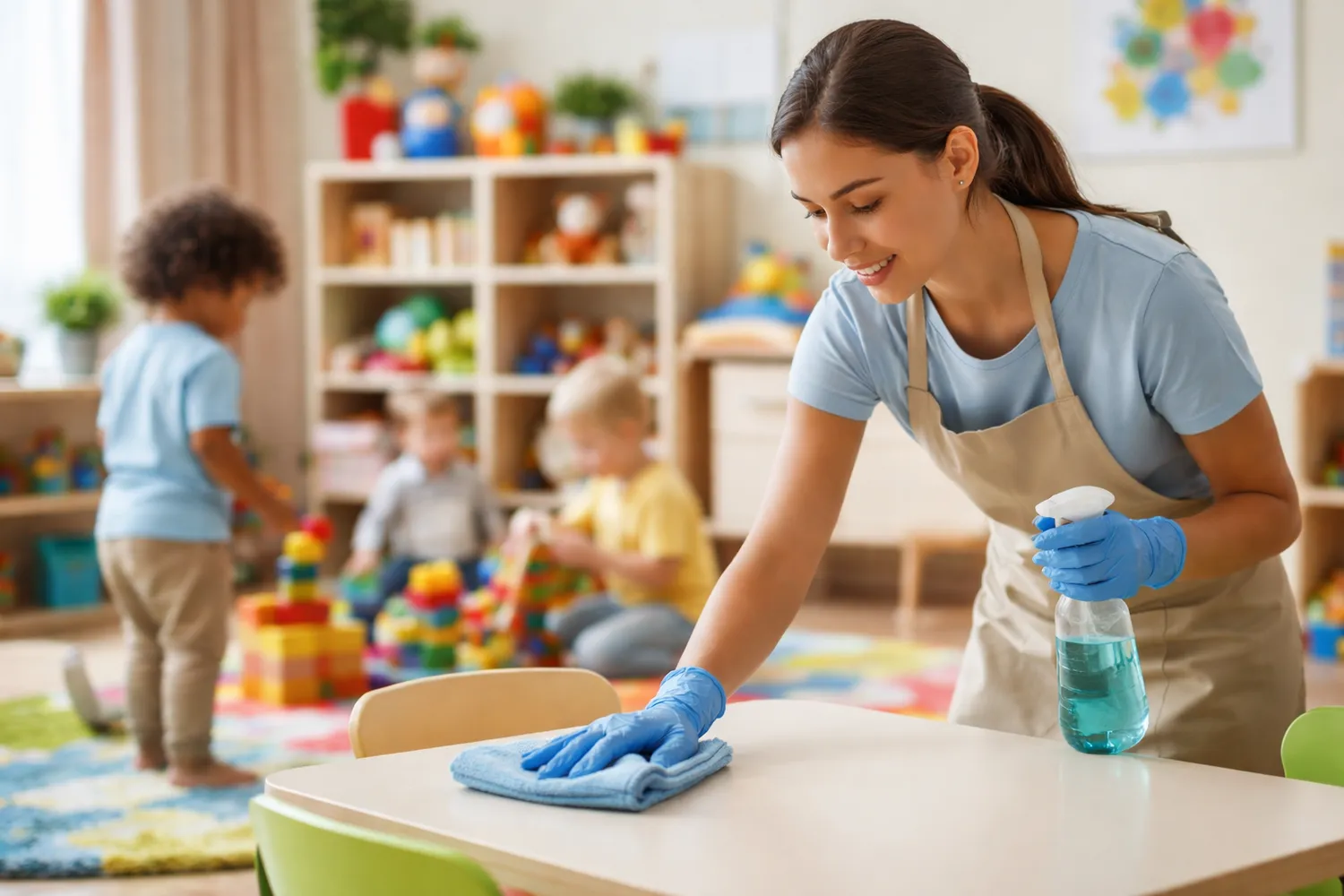
Cleanliness in early learning environments shapes far more than first impressions. In childcare settings, hygiene practices influence health outcomes, daily routines, staff workload and parent confidence. While many centres appear tidy on the surface, Childcare Cleaning standards in Australia involve deeper systems that are often misunderstood or quietly assumed rather than clearly explained. This article takes a closer look at what tends to be overlooked, and why informed expectations matter for everyone involved.
Why childcare cleaning matters beyond appearances
Parents touring a childcare centre often notice bright rooms, organised play areas and neatly stacked resources. These visual cues are reassuring, but they do not always reflect the full scope of cleaning practices behind the scenes. Effective Childcare Cleaning supports infection control, reduces disruption caused by illness and helps maintain calm, predictable daily routines for children.
Educators rely on consistent cleaning systems to keep learning environments functional. When hygiene tasks fall back onto teaching staff due to gaps in cleaning schedules, attention is pulled away from care and education. This is one reason why cleaning standards deserve more discussion in conversations about quality early learning environments.
For broader context on how physical spaces influence learning and wellbeing, Telescope regularly explores topics related to education environments and operational planning. Articles available through the Telescope publishing platform often examine how systems, processes and environments support better outcomes across schools and organisations.
Understanding childcare cleaning standards in Australia
Australia’s early learning sector operates within the National Quality Framework (NQF), which sets expectations around health, safety and wellbeing. While the framework does not prescribe exact cleaning methods, hygiene is woven through several National Quality Standards, particularly those focused on children’s health and safety.
In practice, this means centres are expected to maintain environments that reduce risk, support infection control and protect vulnerable age groups. Cleaning is not a standalone compliance item but a foundational support that enables centres to meet broader quality benchmarks.
What is often overlooked is how these expectations translate into daily cleaning routines. General commercial cleaning approaches may not align with the realities of childcare spaces, where surfaces are used differently and exposure risks are higher.
Areas in childcare centres that are commonly missed
Some parts of a childcare centre receive regular attention, while others are easy to overlook due to time pressures or assumptions about cleanliness.
High-touch surfaces
Children interact constantly with door handles, light switches, shelving edges, toys and play equipment. These surfaces may appear clean but require frequent sanitising due to constant use. Inadequate attention here may contribute to the spread of common illnesses.
Soft furnishings and rest areas
Sleep mats, cushions and soft toys are essential for comfort but may harbour germs if not cleaned according to appropriate schedules. These items often require different cleaning methods compared to hard surfaces.
Transition zones
Entryways, bathrooms and outdoor-to-indoor thresholds are high-risk areas where dirt and bacteria are transferred throughout the day. Consistent cleaning in these zones supports better hygiene across the entire centre.
The difference between general cleaning and childcare cleaning
One of the most significant gaps in understanding lies in the difference between standard commercial cleaning and Childcare Cleaning. Childcare environments require approaches that account for age-related vulnerabilities, higher surface contact and the safe use of cleaning products.
Children spend time on floors, explore objects through touch and may be sensitive to chemical residues. Cleaning products and methods must balance effectiveness with safety, and schedules need to align with daily routines such as meals, naps and play sessions.
This distinction is often highlighted by providers specialising in childcare environments. For example, resources outlining structured approaches to Childcare Cleaning, such as those referenced by discovercleaning.com.au Childcare Cleaning, demonstrate how cleaning systems may be adapted specifically for early learning settings rather than applied as generic solutions.
What parents often assume and rarely ask
Many parents assume that visible cleanliness equates to thorough hygiene. While this assumption is understandable, it may leave important questions unasked.
Parents may consider asking centres about:
- How often high-touch surfaces are cleaned during the day
- Whether cleaning occurs around children or primarily after hours
- How cleaning products are selected for safety
- How illness outbreaks are managed through enhanced cleaning
Greater transparency around these topics may help families feel more confident in their childcare choices and foster trust between parents and providers.
Discussions around informed decision-making in education settings are frequently explored in articles published on Telescope, where contributors examine how operational clarity supports stronger relationships with families and communities.
What educators and centre managers may overlook
From an operational perspective, inconsistent cleaning practices may quietly increase pressure on educators. When cleaning gaps appear, teaching staff often step in to manage hygiene tasks, adding to already demanding workloads.
Over time, insufficient cleaning may also affect the condition of facilities and equipment. Flooring, furniture and fixtures exposed to heavy use benefit from regular, appropriate cleaning to reduce wear and minimise the need for disruptive deep cleans or replacements.
Clear cleaning processes support smoother daily operations. When everyone understands what is covered, when it happens and who is responsible, routines are easier to maintain and expectations remain realistic.
Why consistent childcare cleaning supports safer learning environments
Reliable Childcare Cleaning contributes to fewer illness-related absences, more predictable routines and calmer environments. Children thrive in spaces where disruptions are minimised and daily patterns remain stable.
For staff, well-maintained environments reduce stress and allow greater focus on education and care. For families, confidence in hygiene practices supports trust and long-term engagement with a centre.
Operational topics like these align with broader discussions on organisational effectiveness and wellbeing that feature across Telescope’s editorial content, where practical systems are often highlighted as the backbone of successful environments.
Seeing childcare cleaning as part of daily care
Childcare Cleaning is not an isolated task carried out after hours. It is an ongoing support system that underpins health, learning and trust. By looking beyond appearances and asking informed questions, parents and educators alike may gain a clearer picture of how hygiene practices contribute to quality care.
Greater awareness helps shift cleaning from an assumed background activity to a recognised part of daily childcare operations, benefiting children, staff and families over the long term.