When you step inside a piece of mobile machinery, you are not just operating steel and hydraulics. You are stepping into a system that must constantly make decisions. It must adapt to uneven ground, shifting loads, sudden starts, and delicate positioning, all while delivering raw mechanical force. That is why hydraulic systems for mobile equipment have become one of the most sophisticated forms of fluid power in the modern world.
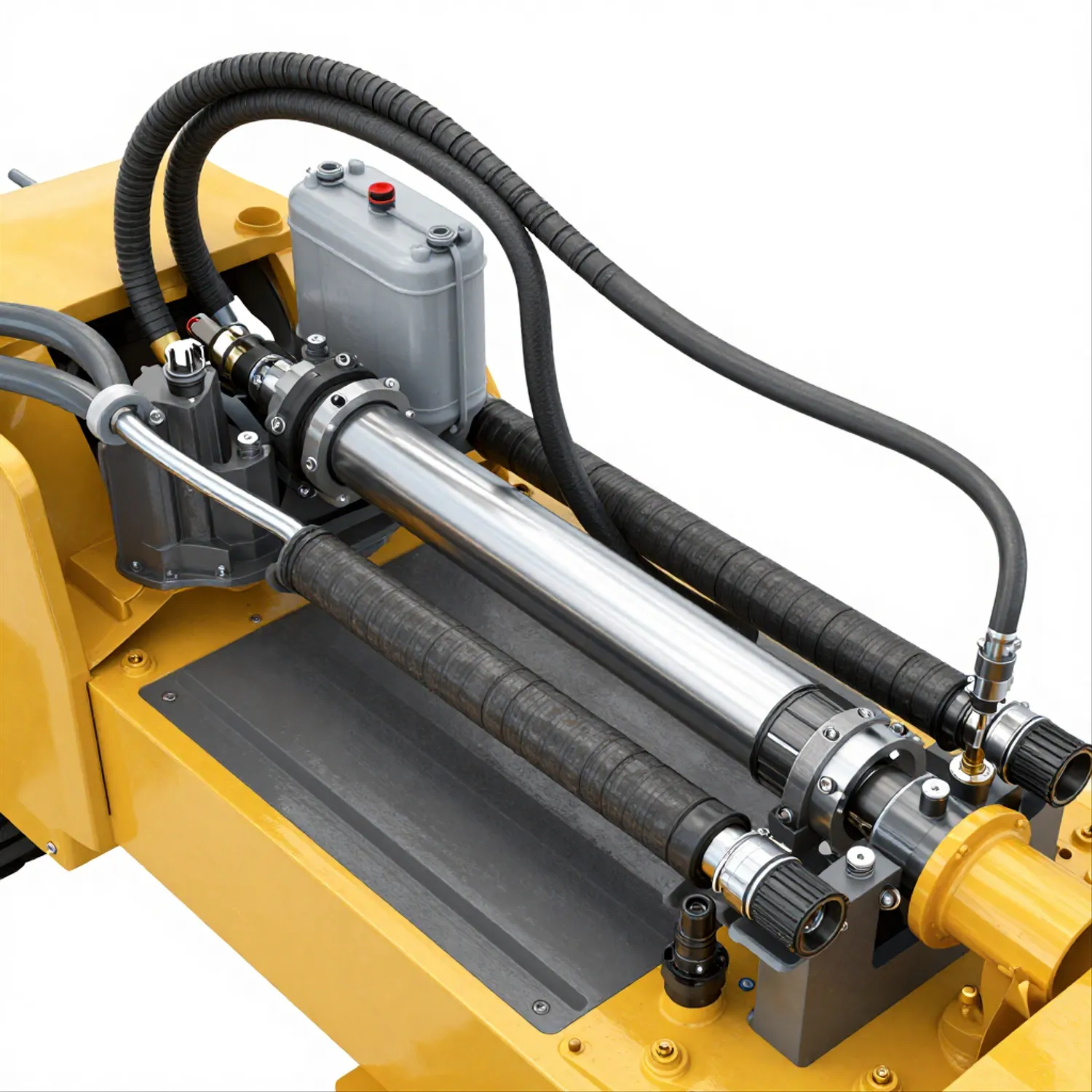
Unlike factory machines that run in controlled environments, mobile machines live in chaos. They work on dirt, gravel, slopes, and unpredictable terrain. Every movement must be both powerful and precise. That balance is not achieved by brute force. It is achieved by carefully controlled hydraulic flow, pressure, and motion working together as a single intelligent system.
Why Mobile Hydraulics Demand More Than Industrial Systems
Stationary hydraulic machines are designed around consistency. A press always pushes the same way. A conveyor always moves at the same speed. Mobile equipment does not have that luxury. One moment a machine might be lifting a full load, and the next moment it might be traveling over rough ground with no load at all.
This constant change is why hydraulic systems for mobile equipment must be adaptive. They need to deliver high power when required and conserve energy when it is not. If the system cannot adjust quickly, you feel it as hesitation, jerking, or wasted fuel. The machine becomes harder to control, and components wear out faster.
To prevent that, modern mobile hydraulics rely on pump and motor technologies that continuously react to real-world conditions.
The Intelligence of Variable Displacement Pumping
One of the most important advances in mobile hydraulics is the use of variable displacement piston pumps. Unlike fixed pumps that push the same amount of oil all the time, these pumps adjust their output automatically.
When a load increases, the pump delivers more flow and pressure. When the load decreases, it reduces output. This keeps the system balanced and prevents excess energy from being turned into heat. In hydraulic systems for mobile equipment, this ability to change output is essential for both performance and fuel efficiency.
Without variable displacement, a mobile machine would constantly waste energy during light loads and struggle during heavy ones.
Why Internal Gear Pumps Matter in Control Circuits
Not every part of a hydraulic system needs high pressure or variable flow. Many parts of the system, such as pilot controls and lubrication circuits, require smooth, consistent oil delivery. That is where the hydraulic internal gear pump plays a critical role.
Internal gear pumps are designed to produce low-pulsation flow. This makes them ideal for feeding valves, controls, and auxiliary circuits. In mobile machines, this stable flow helps control systems respond more accurately, which improves the feel of joysticks, pedals, and automated functions.
When combined with variable displacement piston pumps, the internal gear pump helps create a system that is both powerful and refined.
How Radial Piston Motors Handle Real-World Loads
A radial piston hydraulic motor is built for torque. These motors are often used to drive wheels, winches, and heavy rotating equipment. In mobile machinery, loads change constantly, and these motors must deliver steady force without slipping or stalling.
What makes radial piston designs special is their ability to maintain high torque at low speeds. This is essential when a machine is climbing, lifting, or positioning something heavy. In hydraulic systems for mobile equipment, that kind of low-speed control is what allows operators to move heavy loads with confidence.
These motors are also extremely durable, which is important in environments where shock loads and vibrations are unavoidable.
Servo Control and the New Era of Hydraulic Precision
Traditional hydraulic pumps are driven at constant speed by an engine. A servo drive hydraulic pump changes that by using electronic control to adjust pump speed in real time.
Instead of always producing maximum flow, the pump delivers only what the system needs. This means the engine does not have to work harder than necessary, and the hydraulic system runs cooler and quieter. In mobile machines, this improves fuel efficiency and reduces noise.
More importantly, servo-driven pumps allow hydraulic systems for mobile equipment to respond instantly to control inputs. Movements become smoother, more predictable, and easier to automate.
Why These Components Must Work Together
No single component defines the performance of a hydraulic system. What matters is how everything interacts. A variable displacement piston pump provides adaptive flow. A hydraulic internal gear pump stabilizes control circuits. A radial piston hydraulic motor converts fluid into torque. A servo drive hydraulic pump fine-tunes energy use.
Together, they form a hydraulic system that can think while it works. The machine becomes responsive instead of reactive. It no longer wastes energy pushing against itself. Instead, it moves in harmony with the load and the operator’s commands.
This is the true goal of modern hydraulic systems for mobile equipment.
Energy Efficiency and Heat Management
In mobile equipment, every drop of fuel matters. Excess hydraulic energy turns into heat, which must be removed using coolers and fans. That consumes even more power. Modern systems reduce this waste by controlling flow and pressure precisely.
With variable displacement piston pumps and servo drive hydraulic pump technology, oil flows only when needed. When the machine is idle, the system relaxes. When it works hard, the system delivers exactly the energy required.
This not only saves fuel but also extends the life of seals, hoses, and hydraulic oil.
Reliability in Harsh Environments
Mobile equipment often operates far from maintenance facilities. Breakdowns are expensive and dangerous. That is why hydraulic systems for mobile equipment are designed for stability and long service life.
Smooth flow from a hydraulic internal gear pump reduces vibration. Controlled torque from a radial piston hydraulic motor prevents shock loads. Smart pump control minimizes wear across the system.
All of these factors work together to create machines that keep running when conditions are tough.
The Future of Mobile Hydraulics
As electronics, sensors, and software become more advanced, hydraulics is becoming smarter. Machines are beginning to adjust themselves automatically based on load, position, and operating conditions.
Yet no matter how advanced these systems become, they will still depend on fluid power. Hydraulic systems for mobile equipment will continue to combine mechanical strength with digital intelligence, creating machines that are powerful, efficient, and remarkably precise.