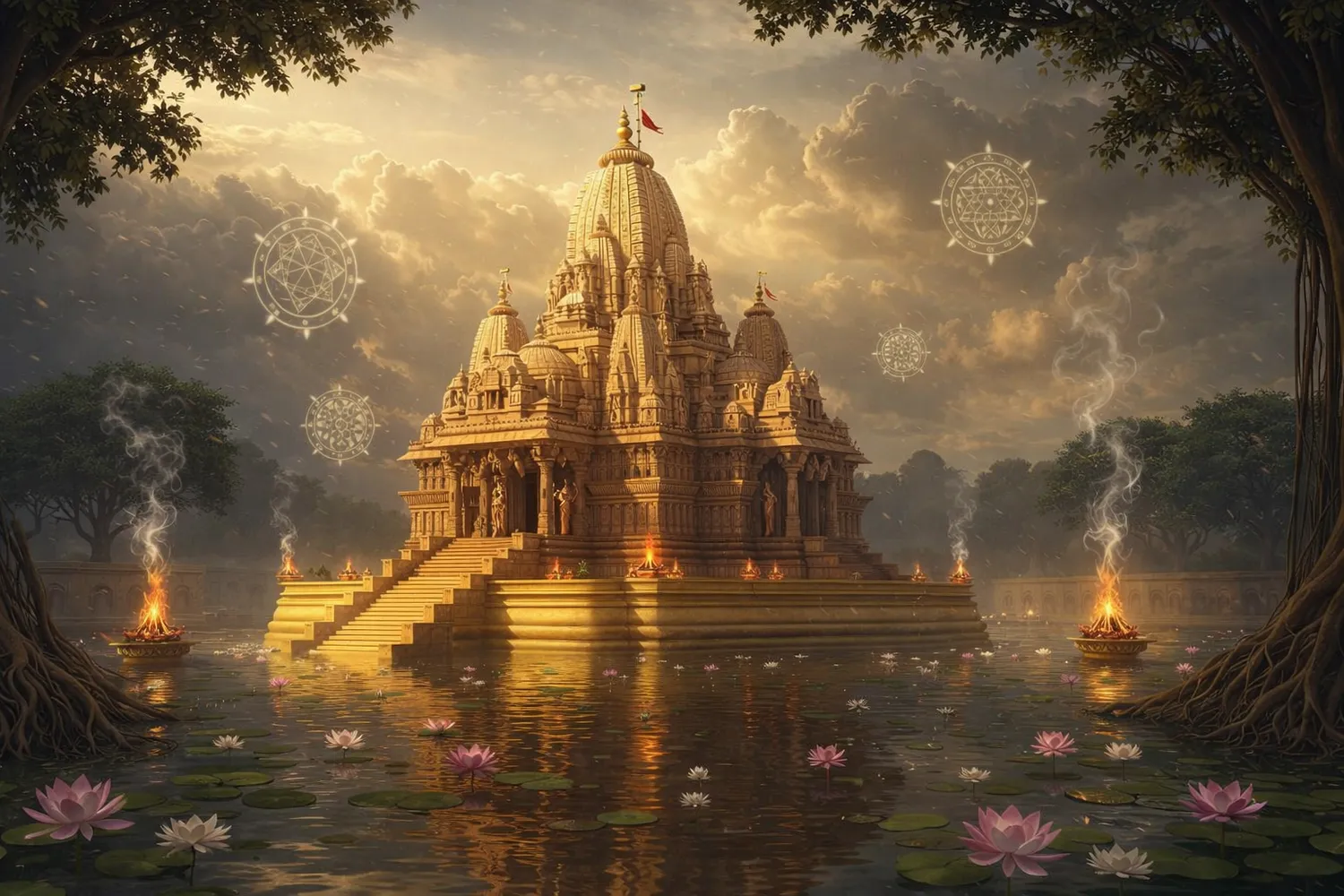
Hindu temples are not just architectural structures; they are deeply symbolic representations of the universe, human life, and the journey toward spiritual enlightenment. Every element of a temple—from its layout to its sculptures—carries philosophical meaning rooted in Hindu thought.
At the heart of a temple lies the garbhagriha (inner sanctum), which symbolizes the womb of the universe. This sacred space is where the main deity resides, such as Shiva or Vishnu, representing the ultimate reality or divine consciousness. Devotees enter this space after passing through outer halls, symbolizing a journey from the outer material world to inner spiritual awareness.
The temple structure itself reflects the idea of the cosmos. In many traditions across India, the temple is seen as a mandala, a spiritual diagram of the universe. The towering shikhara (spire) or vimana represents Mount Meru, the mythical center of the universe in Hindu cosmology, connecting heaven and earth.
The mandapa (pillared hall) serves as a gathering space for devotees and symbolizes the transition between the outer world and the divine inner space. The progression through these spaces mirrors the spiritual path—from ignorance to knowledge and from the physical to the spiritual realm.
Temples such as the Khajuraho Temples and the Konark Sun Temple beautifully illustrate these symbolic principles through intricate carvings and precise geometric planning. Their sculptures often depict stories from ancient scriptures, moral lessons, and aspects of human life, reminding devotees of dharma (righteousness) and karma (action).
In essence, Hindu temple design is a sacred blend of art, science, and spirituality. It guides worshippers not only through physical space but also through a profound inner journey toward self-realization and unity with the divine.