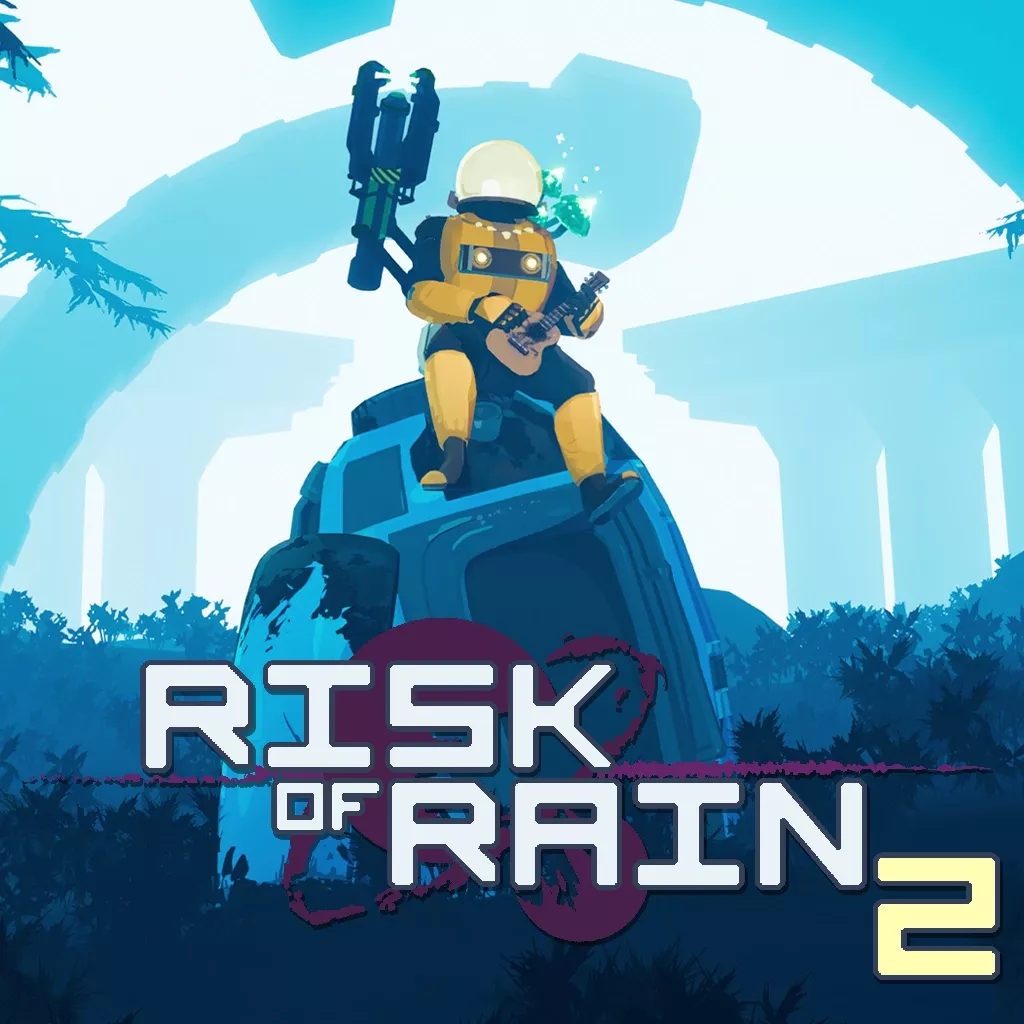
I want to compare two video games. The first one is Risk of Rain 2:
The second one is League of Legends:
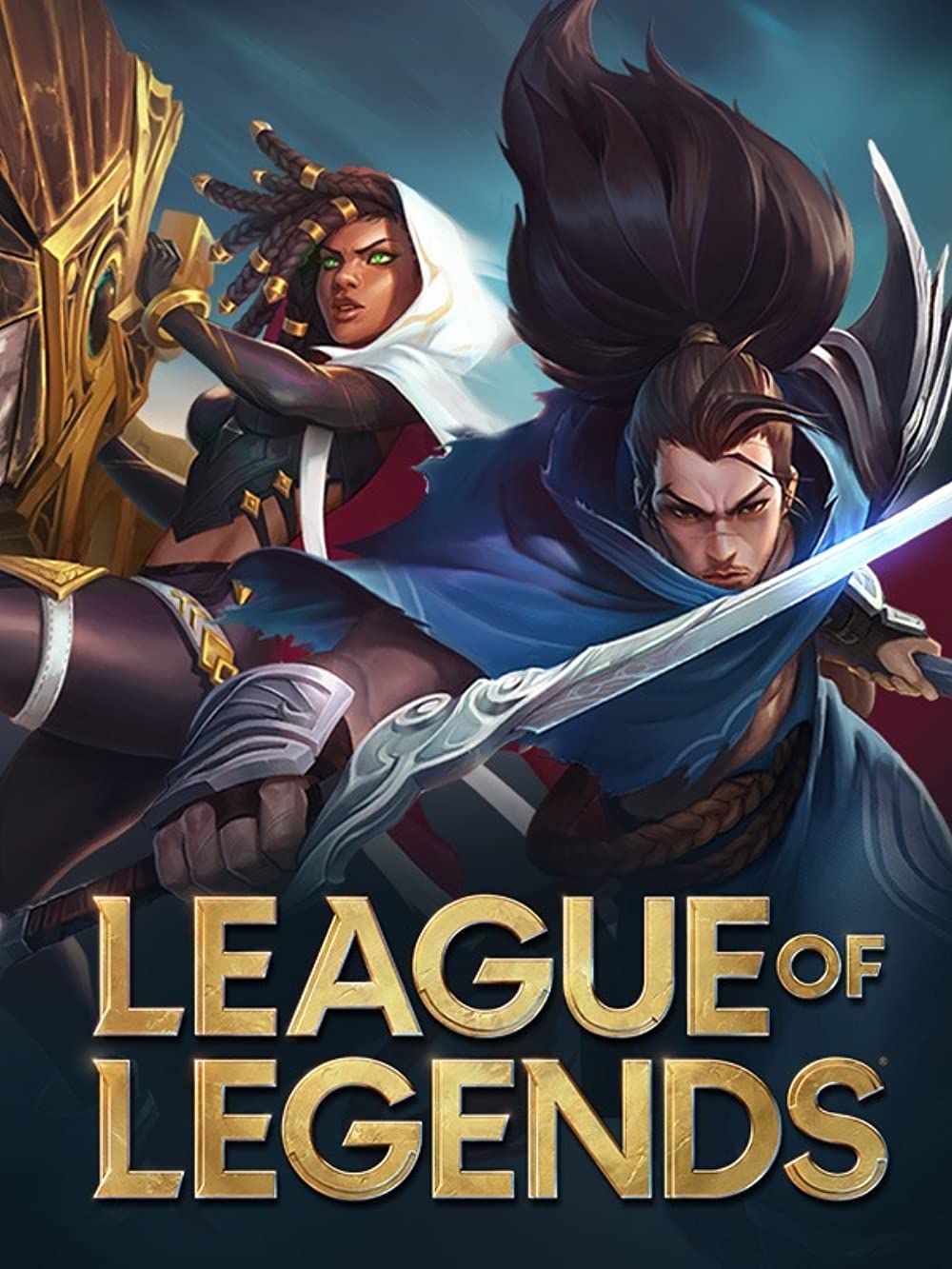
Let’s be honest; you can probably tell just by these posters that one of these games is more chill than the others. The general edginess, vibe, colour scheme, posture, and use of props (i.e. ukeleles and sparkly mushrooms vs swords) says it all. If you ascertained that RoR is the chill option here, you are correct! Good job on proving that you can, and should, judge a book by its cover.
I want to talk about these two games in terms of my experience with them, because I find it an interesting case study in the sociology of video games. While awareness of this phenomenon is rapidly rising, I think real understanding of the communities that arise around video games and how they affect the psychology of young people (particularly men) remains lacking. While ignored, these communities often have defined political ideologies and are increasingly socially impactful and relevant.
I won’t talk about that much in this post, but I think comparing these two games can give some insight into why video games produce different types of communities.
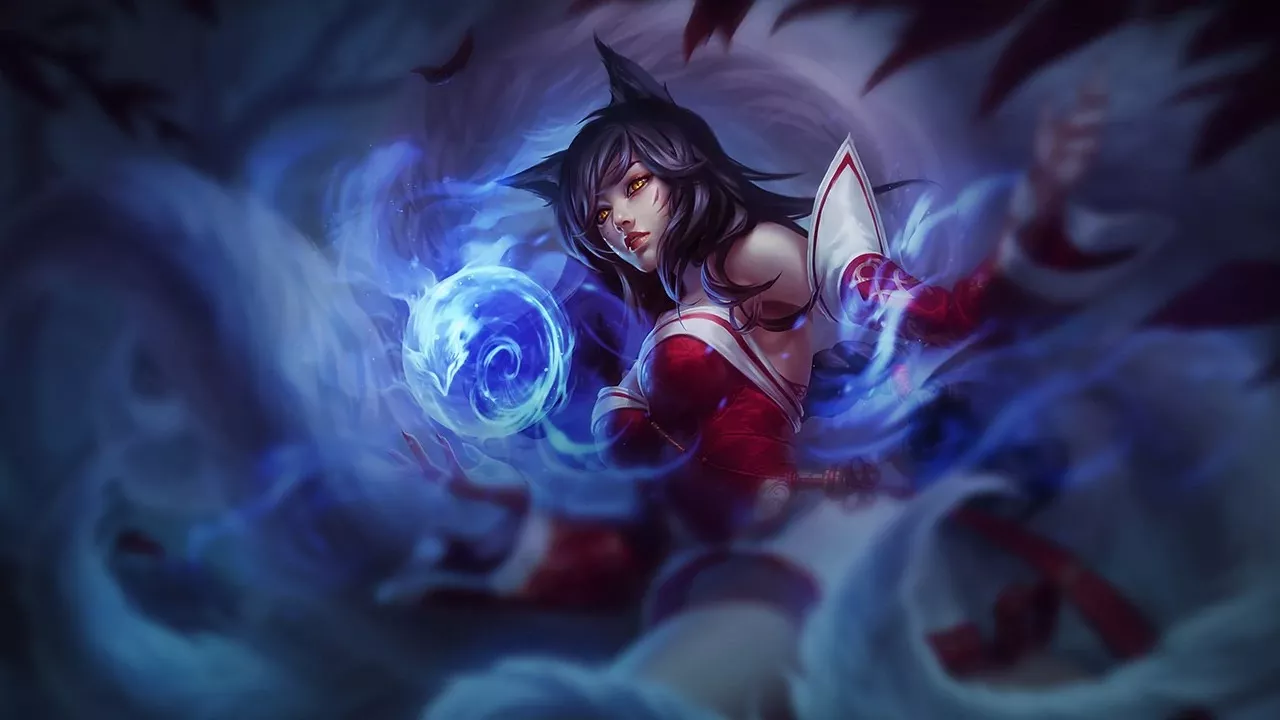
Let’s start with League. It’s easy to write off games like this, given that it is near completely inaccessible if you aren’t already familiar with it, as the domain of a particular type of nerd. The aesthetics of edgy ninja dudes and exaggerated anime women (e.g. below) might further encourage you to think this game is just for a subculture that ultimately isn’t that important to you.
In fact, League is one of the most played video games in the world, with players logging over 1 billion hours per month as early as 2012. A cursory Google doesn’t provide me an updated statistic for this, but if hours have grown in line with players it would suggest that number is now greater than 3 billion. There is actually a website, Wasted on LOL, that tells players how many hours they have spent on the game. I think it only ranks people who have actually requested their number, obviously a biased dataset, but it asserts that the average hours per player is about 850.
That’s not a useless number - it’s probably fair to assume most of the people checking their hours on League are doing so knowing it’s a fair few. Wasted on LOL also provides this interesting calculation for a median player:
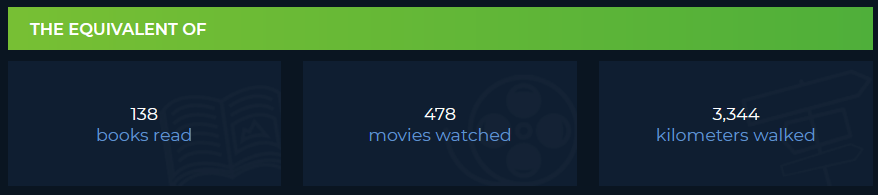
If someone had read 138 books on one topic, they would be a near PhD in the field. 478 movies would probably be as many as most people have watched in their life, and would be enough to thoroughly imbibe popular culture. 3,344 kilometres would walk you most of the way across Australia. The person whose profile I took this from, however, is only in about the top third of players. Statistics suggest there is a fair chance they also watch League on Youtube or Twitch and read the subreddit. There is a whole industry of coaching them to be better at the game, selling them solutions and strategies, or even just logging onto their account and winning games on their behalf, which is a bizarre thing to pay for when you think about it.
In the first draft of this post, I spent some time here summarising how League of Legends works, but honestly, it took 6 paragraphs, and you just don’t need to know. So trust me: it’s more complicated than you think. It is devilishly complicated, both in terms of skill (reaction time, accuracy, etc) and strategic depth. Moreover, as our friend above might indicate, in the grand scheme of the game the vast majority of people who play it are not actually “good” at the game at all. Most people who play it achieve only a tiny, tiny portion of the overall skill potential of the game, or else play it completely astrategically. There are nine tiers in the game’s ranking system, and in general if players differ in rank by a tier or more the higher rank will reliably beat the lower one by a wide margin.
I can now get to the point, and the point is this: a lot of the time, League of Legends is objectively not fun. The game has an inherently snowballing dynamic, both internally to each game and to the amount of skill players have, which means a relatively minor edge in terms of either skill or in-game advantage (e.g. by getting an early, lucky kill on an enemy) can give you a growing advantage through the entire game. That’s not universal, but it is relatively robust, and if you’re on the wrong side of it, you could be seven minutes into a forty minute game knowing that you’re about to spend the next thirty-three minutes playing a game that has a massive bias to fisting you (you are penalised for leaving a game early).
The other reason League is often not fun, and perhaps even a more important one, is that it is renowned for an incredibly toxic community. If you are that person that has given up the lead seven minutes in, there are even odds that someone on your own team will take the opportunity to bully you for the rest of the game. This dynamic has other effects, too; I guarantee you that literally everyone has experienced what I described above, spending forty minutes unable to play the game because of a mistake three minutes in, and everybody knows that it’s just not fun. However, when this is raised, for instance, on the subreddit, the most common response will be to highlight all the ways you can come back from behind and, essentially, say “just get better at the game”.
As is often the case when the reflexive response to someone’s problem is to blame it entirely on them, that doesn’t really stand. First of all, snowballing can and does happen between players of equal skill, even if the skill level is extremely high. Secondly, in your average game, there will always be a relatively wide distribution of skill levels, so even if you actually improve by a tier, you will still get matched with players a tier higher and have the same experience. Thirdly, of course, even if you ameliorate that by climbing to the highest tier, or being the best player in the world, other people will still have to play against you; not everyone can be the best.
It’s not a skill level thing at all. Whether a game has as one of its possible states “be prohibited from playing the game for the better part of an hour, unable to leave” is a matter of game design, and whether that is accompanied by hate speech is exacerbated and enabled by game design also.
Let’s digress for a second to Risk of Rain 2. Summarising this game takes a few sentences: you pick one of about a dozen characters, then get dropped on a semi-randomly generated planet surrounded by hostile aliens. You kill the aliens, find the exit, fight a boss, move to the next level and repeat. Items are randomly dropped around the map and bought using gold rewards from killing aliens.
This game is still diabolically hard, still has practically unlimited opportunities for skill expression, and still has a multiplayer community. It is well known for having extremely fun gameplay and just being an excellently designed game, with an ethereal aesthetic that personally I love:
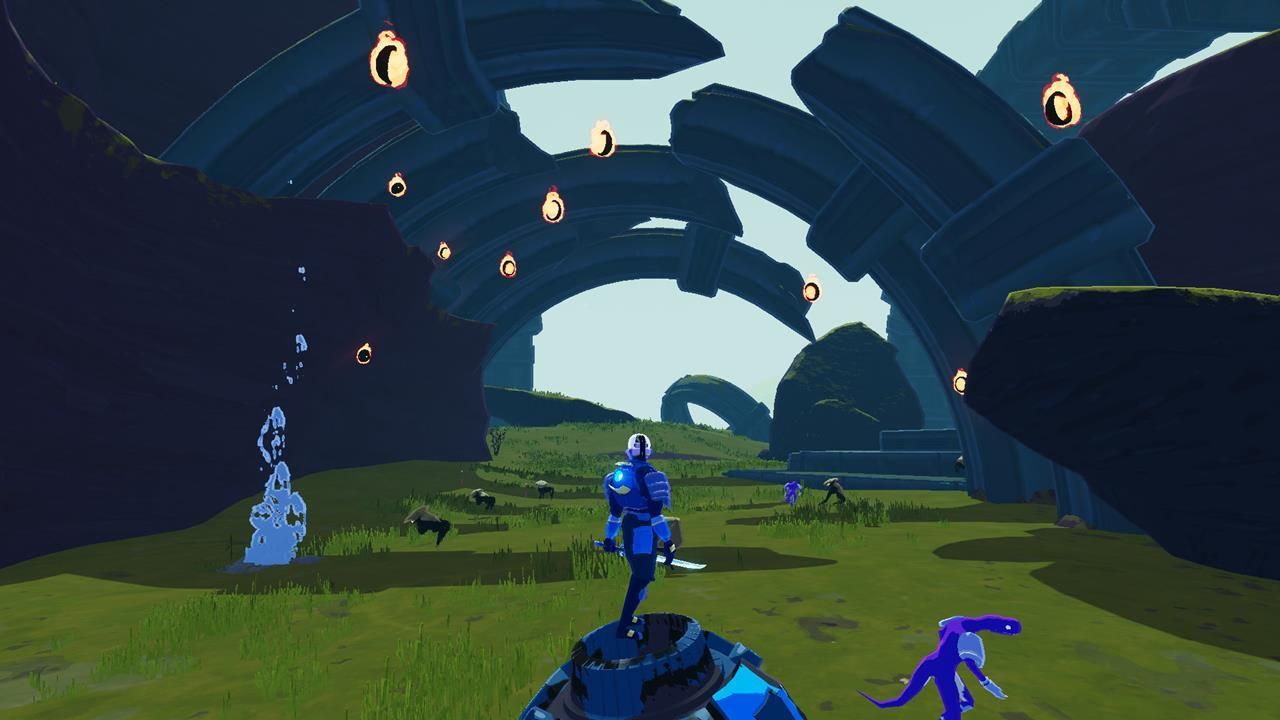
“Spend forty minutes getting abused instead of playing” is not a possible state of this game. Why? Here’s a quick, non-exhaustive list that highlights contrasts with League:
- There is effectively zero time ramping up and getting started in the game; you can be impactful and have fun from second one. RoR can do this because you‘re against computer aliens. In League, this would be difficult to implement because you’re against other players so impact is always zero sum.
- Games take practically no time to start (in League, the process of getting into a game alone can take upwards of five minutes).
- When you die, the game is over. You don’t come back and have to play on even harder difficulty for an amount of time you have no control over.
- When you play multiplayer, you are all on the same team.
- You can leave a game at any time with no penalty.
- There is no penalty for losing, nor really any reward for winning.
- There are no player rankings.
If you don’t play video games, you probably think of game design as somewhere on the spectrum from “boring and for nerds” to “okay it’s art but still not for me”. If you have read a bit more about it, you might be somewhere on a different spectrum, from “it’s disturbing that games are designed to be addictive to children” to “mum can I borrow your credit card for loot boxes please”. The addictiveness is certainly relevant, but not only because kids spend too much time on the game. What I want to highlight from the above is that toxic bullying is practically coded into the game’s design and works with addictiveness. As an aside, if you feel it needs to be said, obviously not all League players are addicted or toxic. Of course this is still of note, firstly because it probably has one of the largest cohorts of addicts of any game, secondly because addiction exists on a broad spectrum and not being definitively addicted doesn’t mean a player’s relationship with the game is healthy or this article is irrelevant to them, and finally because addicts drive the community and the game’s business model.
In a game of League you have to invest a minimum of five minutes getting into the game, then once you’re in the game, maybe ten minutes with no serious mistakes to actually get started, and then whatever happens you’ll be in the game for most likely at least another twenty minutes. You’re stuck with the same four teammates, who are essentially anonymous and can expect never to see you again. You’re unable to leave without a penalty, and whether your team wins or loses directly affects everyone’s player rank regardless of how well they personally do. League has free text chat enabled by default.
Any normal person who has heard of the internet could predict that throwing ten dudes from ages 12-24 into this environment is going to prompt disgusting behaviour, and without gratuitous use of imagery I want to stress how toxic League chat can be. Whatever you think the worst thing you can say to someone is, it has been said. Even though communication is completely integral to the game, practically every guide to ranking up starts with “mute all the other players” (although they can still seriously disrupt your gameplay even if you do).
And yet the same cohort can play Risk of Rain and these problems are nowhere near as bad. This is not to say there are no awful people, every community has those people. It’s also not to say League has the only community like this, plenty of video games have truly foul communities. The reason I’m highlighting League of Legends is because, if you watch someone play Counter Strike or Call of Duty, you could see them playing through the toxicity and assume that it’s because the game is addictive; in spite of the toxicity, the gameplay is the same and it’s still fun to play. The characteristics of the game that keep them playing and make it addictive are fundamentally based on it being enjoyable.
League of Legends, the cauldron of hate speech with no escape, shows this to be false. Consider that the game designers actually punish you for leaving a situation where you are being grotesquely verbally assaulted. For most players, the fact that I am italicising this as though it’s an obviously bad thing we should be shocked by the existence of would prompt the same types of reactions I mentioned above: toughen up, get more resilient, just mute them, learn to deal with it. The reason they have learned this reaction, remember, is that the time they have spent enduring this is equivalent to 478 movies.
The game has been around for 12 years and the issues are essentially the same; while superficially addressing some of these issues, the developers have never really considered a real change to the game’s format to address any of them. Somehow this game laughs in the face of the idea that a game should just be, at its heart, a fun experience, and yet it is one of the most played games in the world. One of the games that is, at its worst, easily the least fun, is somehow the most addictive. This should surely force a troubling reassessment of what is actually going on with video game addiction.
For instance, there is a lot of emphasis on attractive graphics, flashing lights and etc that trigger dopamine releases, or how overstimulating games are, both of which are particularly impactful for young people. There is also a lot of emphasis on lootboxes and other gambling-like (or just gambling) elements in popular video games. I don’t think there is nothing to these observations, but flashing lights in and of themselves mean nothing; they still have to represent something meaningful in order to have an impact. Gambling, and all the other predatory and obnoxious ways developers are monetising these addictions, require someone to already have an investment in the game to work.
There are plenty of games that are addictive because of fun gameplay, attractive graphics, or, let’s be honest, because games are fun and cool and school is just terrible for lots of kids and nobody will acknowledge it. But I think most multiplayer online games actually foster addiction not just to the game itself, but to competition, and specifically to beating other people. Risk of Rain, for instance, could fall in the first category but not the second. League does, and this is why while its asymmetrical game design straightforwardly makes it less fun, being less fun does not make it less addictive. The game’s uneven payoffs, with some deeply unenjoyable games, many neutral games, and a small number of amazing games where you get to be the one dominating everyone else, act exactly like gambling.
Unlike gambling, though, if someone comfortably beats you in League of Legends, they can always claim it’s due to skill. Yet often it is difficult to even understand why they are a better player, let alone imitate them and improve. Instead, you watch them do it again and again for the entire game, wondering why you can’t do it. But sometimes you can! Sometimes you dominate! That’s the player you REALLY are, if your teammates would stop holding you back. Ultimately you’re not that player, you’re probably just not that good at the game. We know as a point of statistical fact that most people aren’t. Players usually know this about themselves too, but they are desperate not to admit it. As John Steinbeck once said, League of Legends is addictive because bad players see themselves not as an exploited proletariat but as temporarily embarrassed champions with bad teammates.
This point cannot be made without mentioning who plays these video games, and when. I and everyone I know who played the game with me started playing League when we were seriously depressed, and played it the most when we were the most depressed. That it preys on feelings of inferiority and frustration is obviously not a coincidence. It weaponises these feelings against the young people having them. They not only play a video game, but they join a community. It is a community where no level of abuse is off limits if someone “ruins your game”, the only activity of value is beating someone else, all opinions are validated or invalidated by your skill level, players in the top 5% are regularly described as “bad” (I have done that here to illustrate a point about how complicated League is, obviously in real life if you are better than 95% of people at something you are good at it and, more importantly, your percentile really shouldn’t dictate whether you can have fun doing it), and top players are lionised to the point of receiving hundreds of thousands in donations a year from their fans (yes, literally donations, unless you count getting access to special emojis in Twitch chat as a service streamers are providing to watchers).
As an indication of how hard Riot Games is trying to combat this, note that several well known, well-paid streamers have repeatedly abused strangers on stream (i.e. with video evidence) without receiving a ban. Only one streamer, a self-declared ”alpha” who built his entire reputation on being toxic and intentionally ruining games for his entire team, eventually received a lifetime ban after multiple warnings. The lifetime ban was reversed a year later, and he ran a comeback tournament with a ton of sponsorships and support from other popular streamers which made him, at a conservative estimate, easily six figures.
This is not just compellingly bright lights or gambling. This is concentrated, weaponised toxic masculinity, targeting teens who are most vulnerable to it, and often already most negatively impacted by it. It tantalises them with a way to “win” at masculinity that is always just out of reach. It produces a community where no opinion is valid; you’re not good enough to speak. It tells you if you can’t handle the intense, constant abuse, you’re just not good enough at the game, you need to learn to ignore it. It ridicules any alternative suggestions brutally (if this post made it to the top of the League subreddit I guarantee the majority response would be mockery plus abuse). This discourse doesn’t always need to be explicit, and the people promoting it don’t need to dominate the community in numbers. I don’t think players like this are a numerical majority at all, but they are numerous enough that everyone has to deal with them, and the behaviour is normalised enough that any player could become a part of it. It is part of the fabric of the game’s culture that everyone who plays it deals with in one way or another.
The fairly basic question of “why isn’t this game just always fun?” needs to be viscerally rejected, because people in the community are aware of how terrible it is and how much they hate what it does to them. It is bizarre to me how widely League of Legends players acknowledge that they don’t know why they even play it. It targets them when they are most depressed. It draws them in when they need validation the most, then when it refuses to give it to them it has the community to remind them that’s just because they don’t deserve it. Obviously, when toxic online gaming communities become part of the pipeline to radicalisation in other toxic online communities, exemplified by events like Gamergate, that’s nothing to do with the developers (just a coincidence that they face repeated allegations of workplace discrimination).
Preventing abuse in video games is not, as Riot Games say, too difficult to possibly be implemented. The abuse is a core part of the business model that retains their most loyal and profitable. Not just in the sense that assholes spend money too; victims spend money too, and victims keep coming back. Whether they are aware of it or not, they have effectively established, and closely maintain, a machine that takes vulnerable children and preys on their vulnerability with mathematical precision to turn them, at the same time, into abusers, victims - and income streams.