I recently saw this movie for the first time:
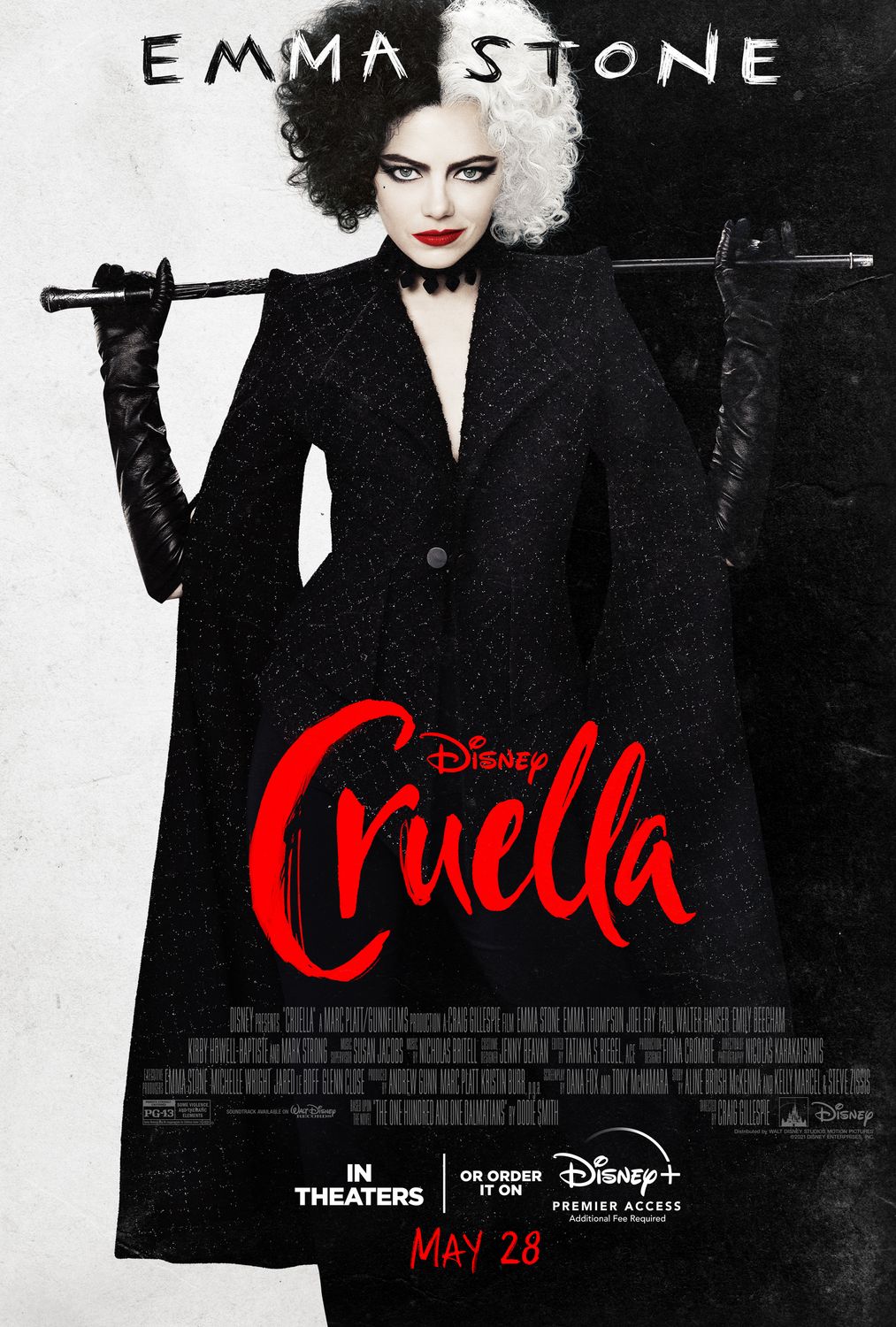
It’s a prequel to the Disney classic 101 Dalmatians, which means Emma Stone is playing this character:
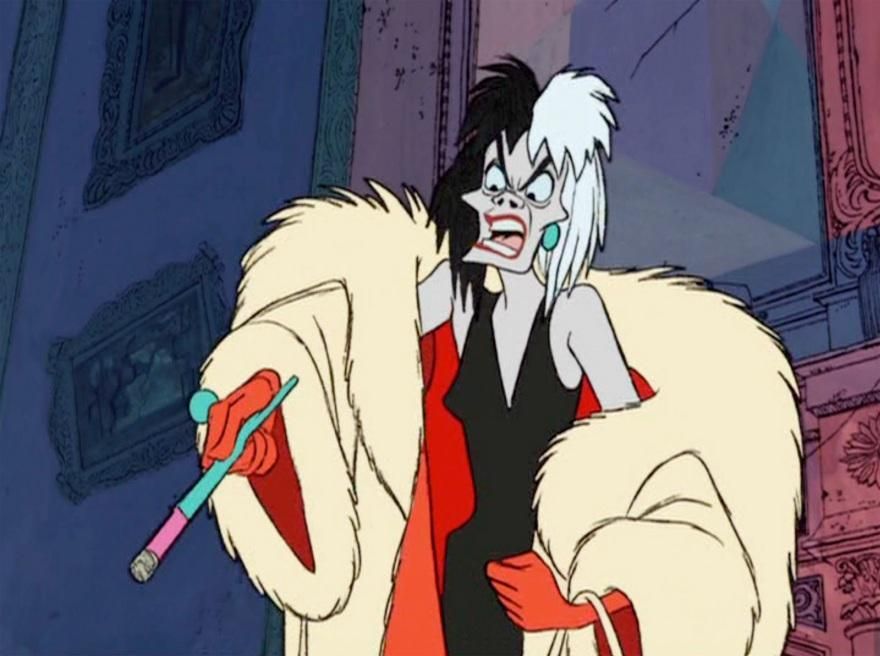
This movie was truly bizarre in a way that I think says a lot, and to look at why for a moment I want to look at Cruella de Vil from the original 101 Dalmatians. Here are some excerpts from the Wikipedia summary of Cruella in the original 1956 book:
She is married to a furrier, whose first name is never mentioned, even by Cruella, and it appears she married him solely due to his occupation rather than because she loved him. When Mrs. Dearly asks Cruella what her married name is, Cruella retorts that—in contrast to the usual patriarchal custom—she has made her husband adopt her surname as his own, in an effort to carry on her family name. She and her husband have no children. Cruella is portrayed as the tyrannical figure in the marriage, and her husband as a meek, subservient man who seldom speaks and obeys his wife entirely.
When Mr. Dearly comments she might find her mink cloak too warm for a summer's evening, Cruella laughs that she never finds anything too warm; she constantly stokes a roaring fire and complains of being cold despite the unbearable heat. The flat is portrayed as a luxurious version of Hell, with all the rooms being made of marble and colored garishly in green, red or black. Her guests also meet her abused white Persian cat whom Cruella admits she detests and only keeps because of the cat's value.
At their first meeting, Cruella expresses her sinister interest in the Dalmatians, remarking how she and her henpecked husband have never thought of making clothing from dog pelt before. Upon seeing the spotless skins of the newborn puppies, she is revolted and offers to have them drowned at once; her way of getting rid of animals she views as worthless, as she has drowned dozens of her own cat's kittens.
This may shock you, but the character named “Cruella de Vil” was not actually designed to have a ton of depth or ambiguity. Note the first quote there: Dodie Smith, somewhat in line with the period, thought it was important to illustrate that Cruella was really evil by showing that she emasculated her husband and had no maternal instinct. Regardless: Cruella was evil. There is nothing else going on here. She is a caricature of an evil rich person, so comically awful that she sees puppies and kittens as a coin toss between skinning or drowning.
Is it bad for a villain to have no depth? Not at all, either in kids’ media or in general. Avatar: The Last Airbender was one of the best TV shows ever - I will die on that hill - and Fire Lord Ozai was just generically evil. He barely had a speaking line or a face prior to season three, and while there were a few references to his childhood, they were not exonerative. In fact, his entire family was used as an example of how imperialist warmongering produces a ruling class of cruel sociopaths (his son getting exiled highlighted that, by showing someone who was not a cruel sociopath could not remain in that environment).
The presentation of Ozai as an unmitigated, evil-in-every-way, all rounder asshole doesn’t make the show weaker, it allows him to fulfil his role in sending one of the show’s core messages: genocidal, colonialist imperialism is bad. Obsession with power is bad. The disregard his family had for nature, balance and culture were all terrible for the world. The people of his nation were not all seen as inherently bad, and in season three the main characters spent plenty of time meeting them and realising they were victims of an immense nationalist propaganda machine. His children were both main characters with powerful growth throughout the show, and his wife was portrayed as a survivor of his abuse.
The fact is that in real life, real human beings do terrible things. Some of those people really are morally grey and have reasonable motivations or their own traumas, not that that necessarily justifies anything. Some of them are cartoonishly evil and have no moral compunction about what they do or justification whatsoever, but have nominally human characteristics, like a cute dog. And some of them are like Cruella or Ozai. The cultural conflict playing out in media like this is over which people, and activities, get to be presented as “pure” evil, and who gets a pass because you can comb through their entire life and eventually find a golden retriever or a shitty dad.
For example, consider that there is a whole series of movies, bankrolled by the Pentagon, where an American arms dealer, born a billionaire, is the good guy. He is shown in the movies personally illegally invading Middle Eastern countries, literally above the law. His personal struggle to realise that war profiteering might not be ideal takes three movies, is pretty mild, and is only ever painted in a positive light (this is Iron Man, in case you haven’t seen them). The unidentified brown men he blows to oblivion do not get a spinoff series; the fact that he is the hero makes it implicit that they had it coming, even after he changes his mind.
The presentation of these no-shades-of-grey evil characters is important because particularly for kids, but depressingly often for adults as well, they are highly effective symbols to mainline a moral position straight into your veins. Choosing how to present people and their behaviour fits directly into the cultural discourse about what is good and evil, but also into the discourse about what behaviour makes a person irredeemably evil versus when doing evil things can be justified, and by extension those things aren’t necessarily that evil after all.
And so we return to Cruella, because that’s what Cruella is. Nearly seventy years on from when the original book was published, we no longer have consensus that Cruella de Vil is objectively evil, or this movie would not have been made. The movie is not an exploration of the character Cruella de Vil, because, by intention of the original author, there is nothing to explore. It instead manufactures its story whole cloth with the goal of making someone who thinks skinning puppies is a personality trait relatable.
The fact that it does this says a lot about our perception of the original Cruella de Vil character. You would think the defining characteristic that made Cruella so widely hated was the whole kidnapping and murdering puppies en masse thing, but this movie proves that, at least for Disney, it was actually that she didn’t have kids. We know this because attitudes towards puppy murder haven’t changed, but attitudes towards women having traditionally masculine types of power have (I mean... for some people). This change alone has apparently changed Cruella from an archetypal example of pure evil to a potentially sympathetic character worthy of movie-length moral exploration and humanisation. Yes, she murders puppies; but she’s a girlboss in a man’s world!
So many things are just mind-boggling about this, illustrated by the types of narrative backflips they had to do to convert Cruella into a remotely relatable character. Here are just a few examples:
- Cruella is, explicitly, an heiress. The whole “let’s drown the puppies because they wouldn’t make a good coat” thing was a pretty unsubtle way to show that her spoiled upbringing taught her to value money over life and that is bad. The movie is so unable to contend with the badness of this that it fabricates a truly ridiculous seperated-at-birth, long-lost-mother plotline so Cruella can have an orphan upbringing that’s roughly Oliver Twist meets the Queen’s Gambit.
- The point of Cruella having such a ridiculous hairstyle was to emphasise the type of let-them-eat-cake, Hunger-Games-capitol style rich person she was (see Effie Trinket below and tell me she couldn’t be Cruella). In the movie, they try and paint her hair as a deformity she was born with and bullied for. That’s how little they understand this character: they take the most iconic symbol of her overprivileged narcissism and equate it with the experience of a disabled orphan.
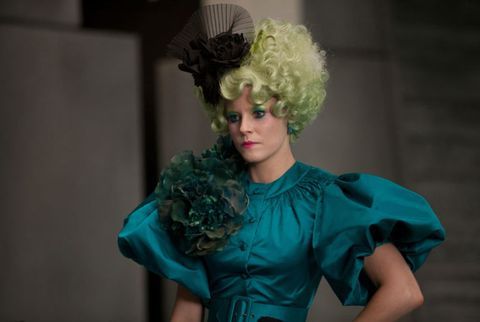
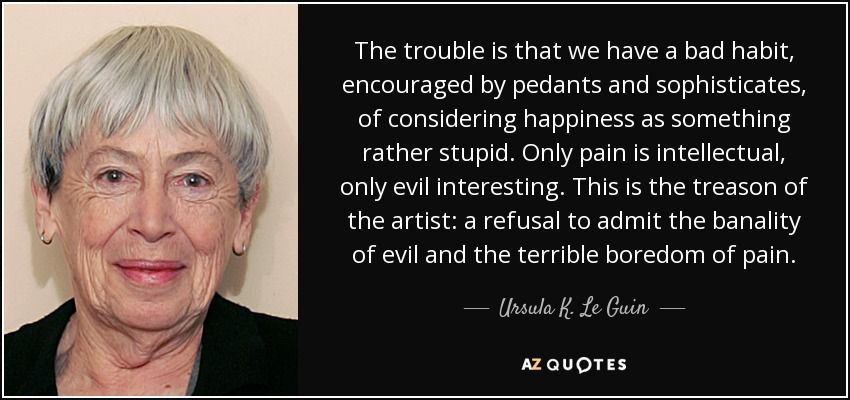
- Cruella was idle old money and married into even more wealth. She was not a girlboss at all. The 1996 live action version of 101 Dalmatians also made her a fashion designer, but at least actually portrayed her negatively. In line with her new backstory, this movie not only made her a plucky, started-from-the-bottom entrepreneur, but repeatedly stressed that she is brilliantly creative. Again, the whole point of the fur obsession and conspicuous consumption of the original character, going into debt and blowing her inherited fortune to fund her lifestyle, was that she was vacuous, shallow and dependent on showy status symbols for validation. This character who brags about her car having the loudest horn in London is not a creative genius, and making her one is proving Ursula K le Guin right yet again:
- Cruella wanted to skin the puppies to make a fur coat; there is no debate on this. In the movie, however, her elaborately contrived fake mother is killed by dalmatians. The puppy-skinning plotline is not featured in this movie, but yes, subtle and deniable as it is, they went out of their way to lay the groundwork for justifying puppy massacre by at least briefly making dalmatians the bad guys. This is a good example of why their efforts to justify such an evil character make the movie so weird. I mean, I guess dalmatians being involved in a formative traumatic event might make you happy to see them die, but why in the fuck would you then want to wear their skin as a coat? Wouldn’t you prefer not to see dalmatians? The only answer offered to the disconnect between this movie’s Cruella and the actual character is the insanity she inherited from the Baroness, which begs the question of why this movie even exists.
- Speaking of the Baroness, one of the most confusing things about this movie is that it has its own Cruella de Vil. The Baroness, played by Emma Thompson, is a self-centred homicidal maniac with apparently no justification whatsoever. If this woman simply was Cruella de Vil, she would be an excellent portrayal (she is not that dissimilar from Glenn Close’s version... but she’s Emma Thompson). So this movie, the whole premise of which is that the big bad wolf depiction is unfair and needs nuance, is totally reliant on its own bigger, badder, even less nuanced wolf.
The result of the above is that Cruella’s behaviour in this movie is just garbled. The events that apparently explain her descent into being a terrible person are nonsensical. The attempts described above to acquit such an explicitly evil character are so disjointed that the only narratives that actually survive are hereditary madness and “she has to be this awful, because Cruella gets shit done”. This is one of the most transparent attempts to straightforwardly vindicate Cruella’s behaviour because it is so verifiably untrue: if Cruella got shit done she’d be wearing a spotty parka.
What the points above should really highlight is their willingness to absolutely mangle the story in service to playing deVil’s advocate for Cruella. This movie is so desperate to be clever and subversive, to make you feel like an idiot for judging Cruella as being evil when she was literally intentionally written that way, that the backstory, aside from not making sense and being totally inconsistent with the character, also barely makes sense internally to the film.
The obvious response to this is that I’m being unfair because the movie is not trying to justify Cruella’s behaviour. That’s bullshit and I’ll explain why, but to briefly be fair to this movie, its general aesthetic, which is pretty cool, does indicate that the majority of people working on it saw it as a work of visual art and cinematography rather than some big moral statement. To those people: nice job. To the screenwriters: fuck you. Look at these posters:
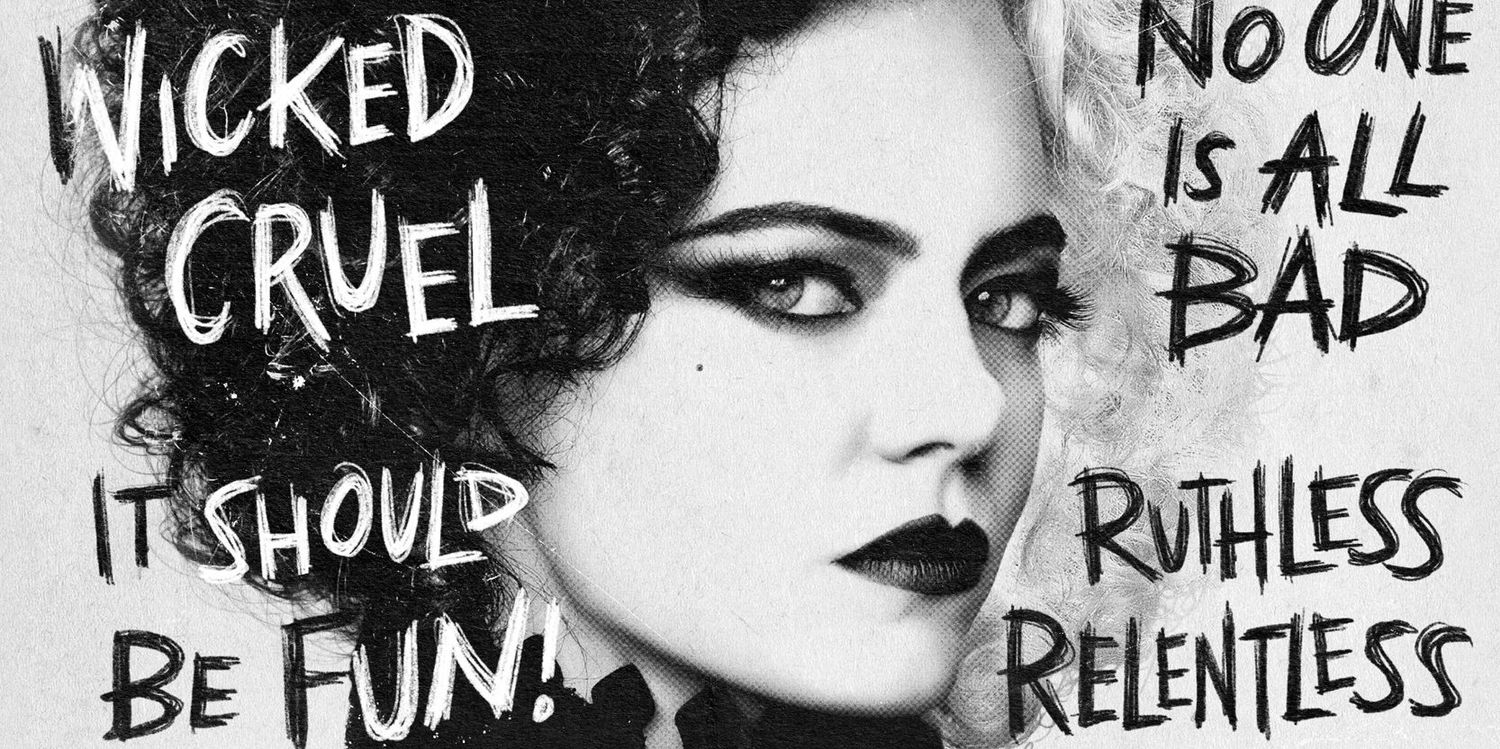
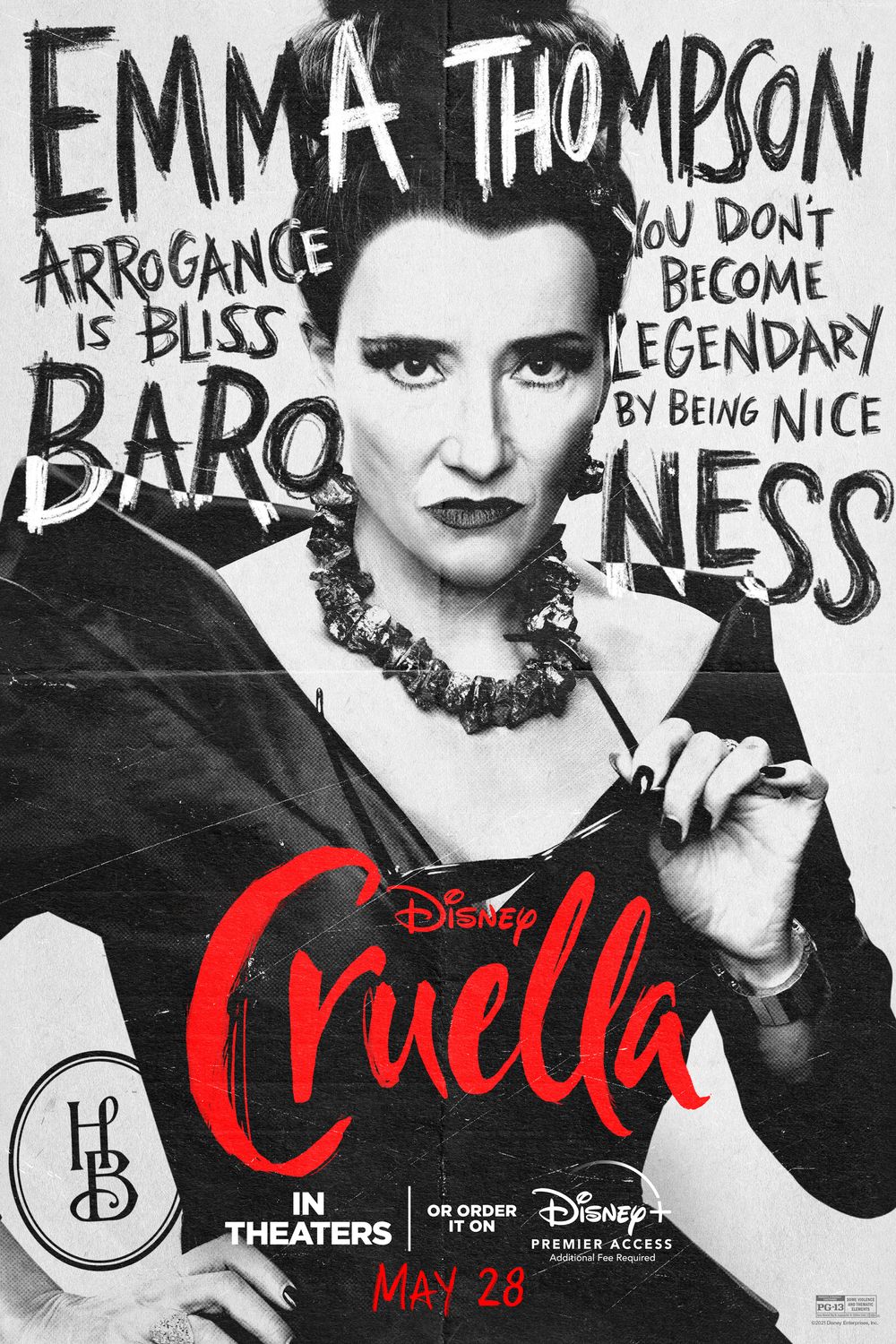
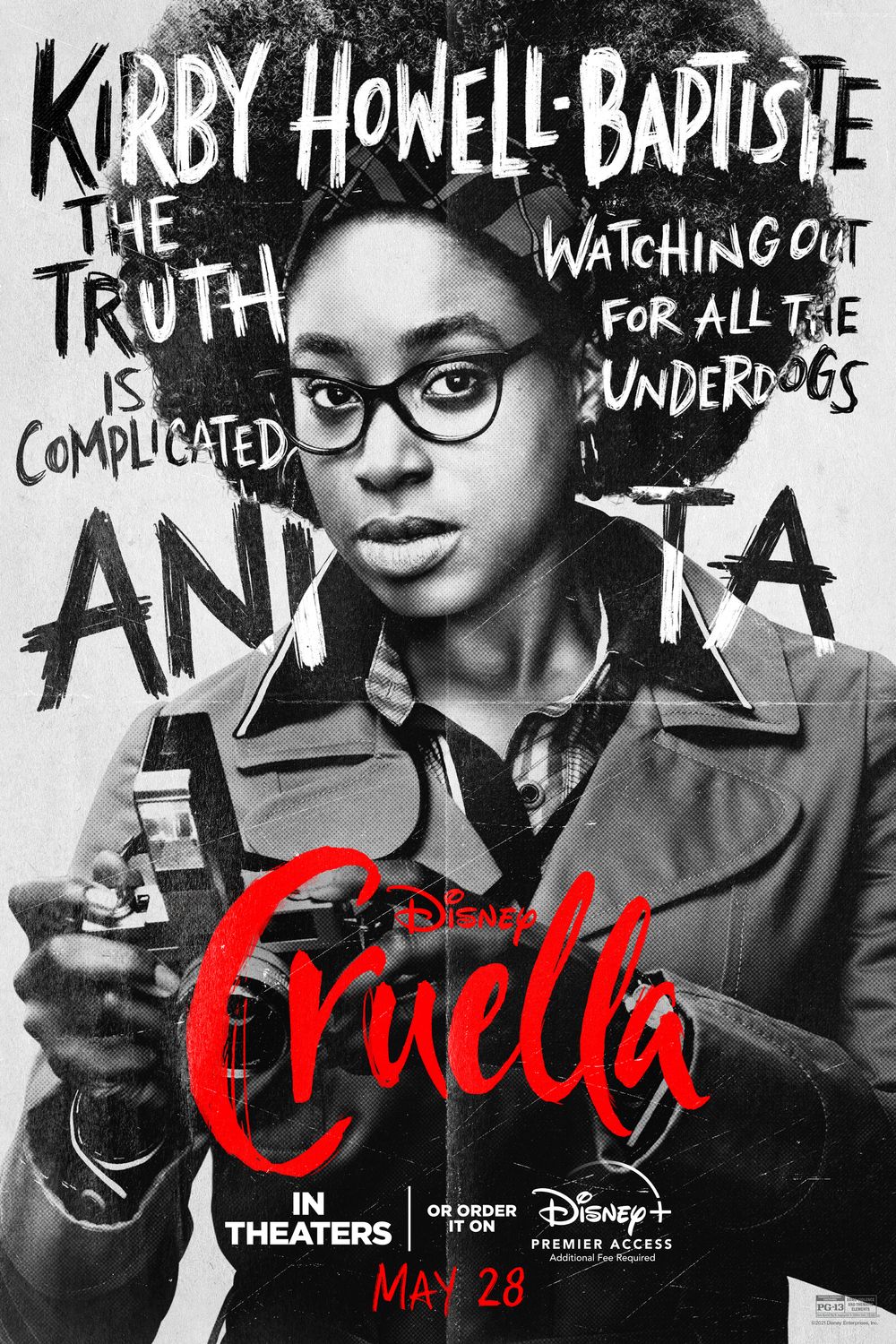
True, “the truth is complicated” and ”no one is all bad” is really the take we need on puppy mass murder. It’s just patently self-evident this movie exists to justify Cruella’s behaviour: firstly in its bizarre perversion of every core aspect of her character with its contrived “struggle“ backstory, even down to the dalmatian symbolism; secondly in the total lack of consequences she faces for her terrible behaviour; but also just in its existence. A two hour movie about someone’s backstory exists to humanise them, and in this case it exists to humanise an intentionally inhuman figure, which is presumably why it gets so weird.
However, it’s also important to highlight how disingenuous that idea is. The claim that this movie just “shows both sides” or “adds nuance” or is in any way superior because it’s not “black and white” and “it’s easy to portray people as monsters” absolves the writers of any responsibility for their moral claims they make about Cruella’s behaviour. Cruella isn’t a historical figure they faithfully biographed the traumatic history of; she is a fictional character and everything about the way she was presented in this movie was an intentional choice. They didn’t say ”let’s present Cruella fairly based on what happened in her life”; they took a character who was explicitly written to give kids an example of what evil is and essentially said “how can we reverse engineer her a life story that balances that out”.
Even if she actually was a historical figure, 101 Dalmatians is 79 minutes long and Cruella is 134 minutes long. If a documentary about Countess Elizabeth Bathory spent nearly two thirds of the runtime on her troubled school days, going to pains to show her being bullied by servants for her ugly blood, before getting to the part about her bathing in the blood of 650 servant girls she murdered, you would have to wonder what the fuck they were trying to say. The fact that Elizabeth “the blood countess” Bathory actually was a girlboss who got things done has apparently not rehabilitated her image (yet).
The concept of presenting a nuanced view of someone is not illegitimate, because obviously it can go either way: some characters, both fictional and historical, were unfairly vilified and deserve fair representation. Others deserve condemnation. Some people were fairly vilified, and can be fairly called monsters, but it can still be instructive to hear about their life as long as the topic is treated with sensitivity, the message is present and clear, and care is taken to show that their actions were bad and nothing justifies that (this is the category Cruella would be in, except she’s fictional and the writers have nothing to say so the instructive value is zero). Presenting a character and their actions a certain way is a moral statement, and so it needs to be judged by the message it sends.
Sometimes these messages are powerful truths, told through the experiences of misunderstood victims of cultural vilification, all the more powerful for making us question our pre-existing ideas. Other times they use bullshit false equivalency to disguise moral relativism as intellectual superiority by asserting objective judgements are so complex that it’s impossible to give whatever random cunt a fair go if they ever stubbed their toe. It is on us to have the critical thinking to tell the difference. Cruella is just an example, so obvious it’s barely credible, of Disney failing to have that critical thinking, and as such a reminder of why you need to. Disney’s moral black hole is not without context, and this movie is also a pretty jaw-dropping example of the macabre outlandishness of late capitalism and girlboss feminism.
All that said, I said this would be a review, so: banger soundtrack, some pretty cool aesthetics. Arthouse vibe undercut by fucked plot and fact that Disney is a $327 billion company. Had Emma Thompson; 4 stars.