If you invest in mother of pearl inlaid furniture, proper care is the key to keeping it beautiful for decades. The natural shell inlay and handcrafted details deserve thoughtful maintenance, but the good news is that preserving their elegance doesn't require complicated routines. With regular dusting, gentle cleaning, protection from excessive moisture and sunlight, and careful everyday use, your mother of pearl inlaid furniture can continue to showcase its timeless craftsmanship for years. A few simple habits are often all it takes to protect the intricate inlay while maintaining the furniture's original charm.
Unlike mass-produced furniture, handcrafted mother of pearl pieces combine natural materials with skilled artisan techniques. Every shell fragment is individually placed to create unique patterns that make each piece one of a kind. Because of this craftsmanship, it's worth understanding how to care for the furniture correctly rather than relying on generic cleaning methods that may not be suitable for delicate inlay work.
In this guide, you'll learn practical maintenance tips, common mistakes to avoid, and expert recommendations that help preserve the beauty, durability, and value of your handcrafted furniture for the long term.
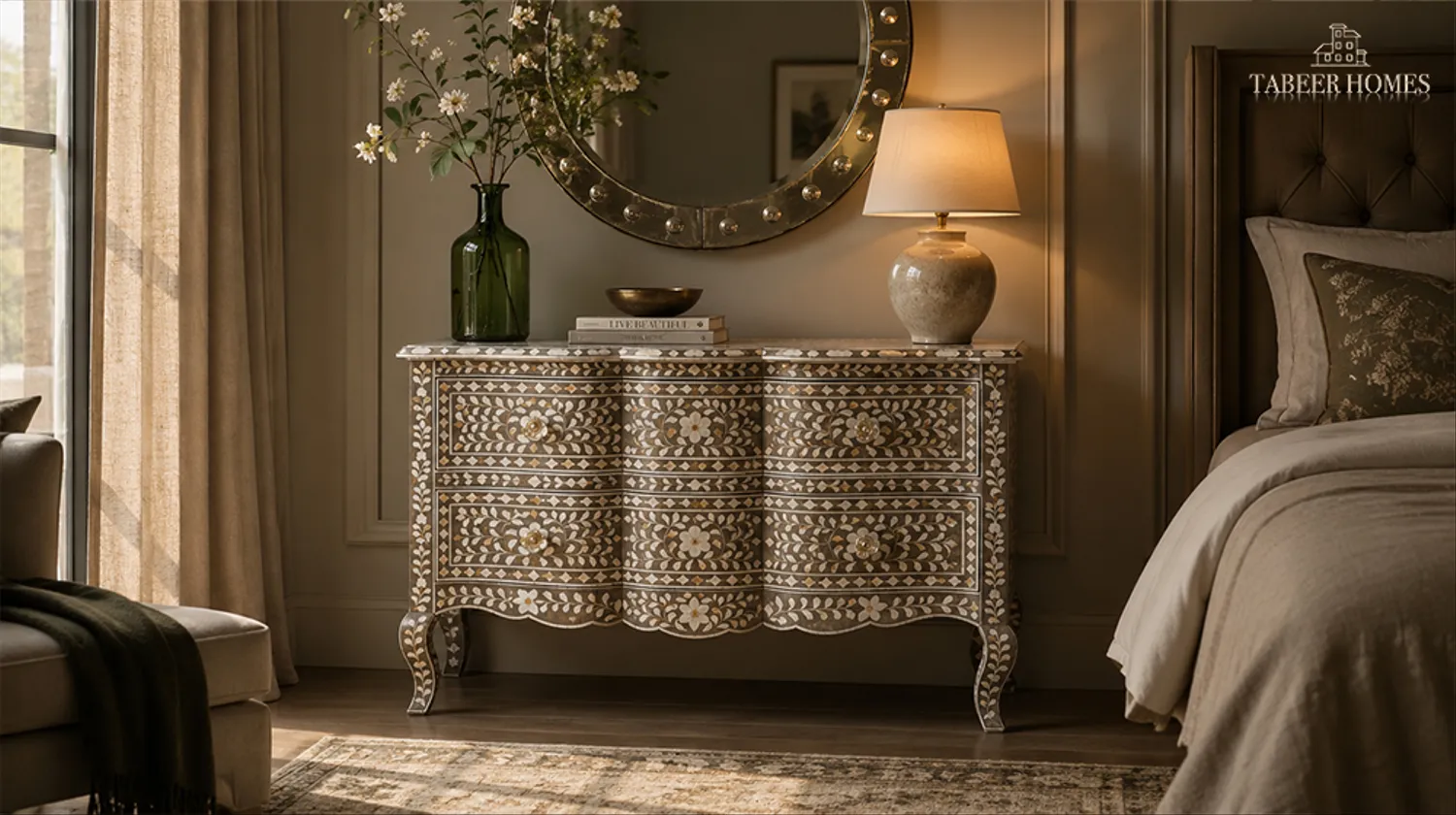
Why Mother of Pearl Furniture Deserves Special Care
Mother of pearl is admired for its soft iridescence and elegant appearance. Unlike synthetic decorative surfaces, it is a natural material formed inside certain shells, giving every piece its own distinctive colour and shimmer.
When incorporated into handcrafted furniture, the shell is carefully cut into small shapes and set into a wooden surface before being polished to create intricate decorative patterns.
Although mother of pearl is durable enough for everyday furniture, it still benefits from gentle handling and routine care.
Looking after it properly helps preserve:
- The natural shine of the shell
- The smooth finish
- The intricate handcrafted patterns
- The wooden frame
- The overall appearance of the furniture
Consistent care prevents unnecessary wear while allowing the craftsmanship to remain the centre of attention.
Understand the Materials Before Cleaning
One of the biggest mistakes people make is treating handcrafted furniture like any other wooden surface.
A mother of pearl inlaid table, cabinet, or chest combines multiple materials, including:
- Natural shell
- Solid wood
- Resin
- Protective finishes
Each material responds differently to moisture, heat, and cleaning products.
Understanding these materials helps you choose cleaning methods that protect rather than damage the furniture.
Read More - Sideboard Buffet vs Console Table – Which Suits Your Living Room Best?
Dust Regularly to Prevent Build-Up
Dust may seem harmless, but over time it can dull the appearance of handcrafted furniture.
Regular dusting keeps the surface clean while preventing fine particles from accumulating around the intricate inlay.
For best results:
- Use a clean microfiber cloth.
- Dust gently rather than applying pressure.
- Reach decorative grooves carefully.
- Avoid rough cloths that could scratch the finish.
Making dusting part of your weekly routine helps preserve the furniture's natural beauty.
Clean Spills Immediately
Accidents happen in every home.
Whether it's water, coffee, perfume, or another liquid, prompt cleaning is one of the simplest ways to protect handcrafted furniture.
If a spill occurs:
- Blot it gently using a soft cloth.
- Avoid rubbing aggressively.
- Dry the area thoroughly.
- Never allow moisture to remain on the surface.
Quick action helps protect both the shell inlay and the surrounding wood.
Choose Gentle Cleaning Products
Strong household cleaners often contain chemicals that aren't suitable for delicate handcrafted surfaces.
Instead, use:
- Mild soap diluted with water
- A soft damp cloth
- Dry microfiber cloths for polishing
Avoid products containing:
- Bleach
- Ammonia
- Abrasive powders
- Strong solvents
Gentle cleaning helps preserve both the protective finish and the shell's natural shine.
Protect the Surface During Everyday Use
Beautiful furniture is designed to be enjoyed, but a few protective habits can make a significant difference over time.
Consider using:
- Coasters beneath drinks
- Felt pads under decorative objects
- Soft placemats
- Decorative trays
For example, a handcrafted bone inlay tray is an attractive way to organise perfumes, candles, jewellery, or small accessories while helping protect the surface of your furniture from scratches and spills. It combines everyday practicality with artisan craftsmanship, making it both functional and decorative.
Small protective measures like these reduce unnecessary wear while preserving the intricate inlay beneath.
Keep Furniture Away from Excessive Sunlight
Natural light beautifully highlights the shimmer of mother of pearl.
However, prolonged exposure to strong direct sunlight may gradually affect the finish of both the wood and the inlay.
Whenever possible:
- Position furniture away from harsh afternoon sun.
- Use curtains or blinds during the brightest hours.
- Rotate decorative accessories occasionally for even exposure.
Balanced lighting allows you to enjoy the shell's natural iridescence while helping maintain its long-term appearance.
Maintain a Stable Indoor Environment
Extreme fluctuations in temperature or humidity can affect natural materials over time.
To help preserve handcrafted furniture:
- Avoid placing it directly beside radiators.
- Keep it away from fireplaces.
- Avoid positioning it immediately next to air-conditioning vents.
- Maintain consistent indoor humidity where possible.
A stable environment supports the long-term durability of both the wood and the inlay.
Why Routine Care Is Better Than Occasional Deep Cleaning
Many homeowners only clean decorative furniture when it begins to look dusty.
In reality, gentle routine maintenance is much more effective than infrequent intensive cleaning.
Regular care helps:
- Prevent dirt accumulation
- Reduce surface wear
- Maintain the furniture's natural shine
- Protect intricate handcrafted details
- Extend the life of protective finishes
A few minutes each week often provide better long-term results than occasional heavy cleaning.
Common Cleaning Mistakes to Avoid
Even with the best intentions, a few everyday habits can reduce the beauty of handcrafted furniture over time. Fortunately, these mistakes are easy to avoid once you know what to look for.
Using Harsh Chemical Cleaners
Many all-purpose household cleaners contain ingredients that are too strong for delicate handcrafted surfaces.
Products containing bleach, ammonia, or abrasive compounds may gradually affect the protective finish and reduce the natural lustre of the shell inlay.
Instead, stick to gentle cleaning methods designed for fine furniture.
Scrubbing the Surface
When removing stains or sticky marks, avoid applying excessive pressure.
Aggressive scrubbing can create unnecessary wear on the finish.
A soft microfiber cloth with a small amount of mild soap solution is usually enough for routine cleaning.
Patience always works better than force.
Leaving Moisture on the Furniture
Water itself isn't usually the problem.
The issue arises when moisture remains on the surface for long periods.
Always dry the furniture immediately after cleaning to help protect both the wood and the inlay.
Ignoring Dust in Decorative Details
The intricate patterns that make handcrafted furniture so beautiful can also collect fine dust over time.
Rather than allowing dust to build up, gently clean these detailed areas during your regular maintenance routine.
This keeps the furniture looking fresh while highlighting its craftsmanship.
Caring for Different Types of Mother of Pearl Furniture
Although the basic care principles remain the same, different furniture pieces may require slightly different attention depending on how they're used.
For example:
Tables
Tables often experience the most daily activity.
Use coasters beneath drinks, avoid placing hot cookware directly on the surface, and clean spills promptly.
Cabinets
Cabinets generally require less frequent surface cleaning but benefit from regular dusting and occasional inspection of hinges and handles.
Dressers
Keep perfumes, cosmetics, and liquids on protective trays to reduce the risk of accidental spills.
Decorative Pieces
Smaller accent furniture should still be dusted regularly to preserve the shell's natural shimmer.
Consistent care keeps every handcrafted piece looking its best.
Protecting Furniture During Everyday Living
Handcrafted furniture is made to be enjoyed, not hidden away.
Simple daily habits help preserve its appearance without making maintenance feel like a chore.
Some useful practices include:
- Lift decorative objects instead of dragging them.
- Avoid placing sharp items directly on the surface.
- Use felt pads beneath lamps and vases.
- Keep heavy objects evenly distributed.
- Wipe fingerprints occasionally with a soft cloth.
These small actions significantly reduce unnecessary wear.
Why Quality Craftsmanship Lasts Longer
One of the greatest strengths of handcrafted mother of pearl inlay furniture is the level of care that goes into its creation. Skilled artisans spend countless hours shaping shell pieces, assembling intricate patterns, and finishing every surface by hand. Because of this attention to detail, high-quality furniture not only looks beautiful but is also designed to withstand everyday use when maintained properly.
Understanding the craftsmanship behind each piece often encourages more thoughtful care, helping preserve its elegance for generations rather than just years.
Seasonal Care Tips
Your furniture experiences different environmental conditions throughout the year.
Making small seasonal adjustments helps maintain its condition.
During Summer
- Limit prolonged exposure to strong sunlight.
- Keep the room well ventilated.
- Wipe away moisture promptly.
During Winter
- Avoid placing furniture directly beside heaters.
- Maintain moderate indoor humidity where possible.
- Dust regularly, as indoor heating can increase airborne particles.
During Rainy Seasons
- Ensure good airflow around the furniture.
- Prevent standing moisture.
- Check surfaces periodically for condensation.
These simple precautions help protect natural materials throughout changing seasons.
How to Preserve the Natural Shine
One of the most admired qualities of mother of pearl is its soft iridescent glow.
Rather than trying to create an artificial shine with commercial polishes, focus on keeping the surface clean and protected.
The shell's natural beauty becomes most noticeable when:
- The surface remains dust free.
- Lighting is balanced.
- Decorative accessories are kept minimal.
- The furniture is maintained consistently.
Natural elegance rarely requires excessive polishing.
Styling While Protecting the Surface
It's entirely possible to decorate your furniture while still protecting it.
Some practical styling ideas include:
- Decorative trays
- Linen runners
- Ceramic bowls
- Glass candle holders with protective bases
- Small indoor plants in waterproof pots
These additions enhance the appearance of your furniture while reducing direct contact with the inlaid surface.
Why Preventive Care Saves Time
Many people think furniture maintenance requires hours of work.
In reality, preventive care is often quicker than repairing avoidable damage later.
Five minutes of weekly maintenance can help prevent:
- Dust build-up
- Water marks
- Minor scratches
- Surface dullness
- Unnecessary wear
Small routines consistently produce the best long-term results.
Build Habits That Protect Your Furniture
Instead of waiting until the furniture looks dirty, incorporate simple habits into your regular cleaning routine.
For example:
- Dust once each week.
- Clean spills immediately.
- Use protective accessories.
- Check for loose hardware occasionally.
- Avoid placing hot objects directly on the surface.
These habits require very little effort but make a noticeable difference over time.
Caring for Larger Handcrafted Furniture
Larger pieces of handcrafted furniture often become the focal point of a room. Whether it's a cabinet, sideboard, dresser, or display unit, these statement pieces deserve the same level of attention as smaller accent furniture.
The advantage of larger furniture is that it usually experiences less direct contact than coffee tables or bedside tables. However, because it occupies a prominent place in your home, regular maintenance helps it retain its visual appeal.
A simple routine includes:
- Dusting exposed surfaces every week.
- Cleaning handles and hardware occasionally.
- Wiping fingerprints from frequently touched areas.
- Checking for any loose fittings.
- Keeping decorative items organised rather than overcrowded.
These habits help preserve both the craftsmanship and the functionality of the furniture.
Protect Furniture from Scratches
Minor scratches often happen during everyday living, but most are preventable.
Be mindful when placing decorative objects on the surface.
Instead of sliding items across the furniture, lift them gently before repositioning.
You can also reduce the risk of scratches by using:
- Felt pads beneath lamps
- Soft bases under ceramic pots
- Fabric runners
- Protective mats beneath heavier décor
Taking a few extra seconds when moving objects helps maintain the furniture's finish for years.
Avoid Overloading Shelves and Drawers
Handcrafted furniture is designed for practical use, but it's still important to distribute weight evenly.
Avoid placing excessive weight inside drawers or on shelves.
Heavy objects should be spread out rather than concentrated in one area.
This helps preserve:
- Smooth drawer operation
- Stable hinges
- Structural integrity
- Overall balance of the furniture
Good organisation supports both functionality and longevity.
Give Your Furniture Room to Breathe
Furniture often looks best when it has enough surrounding space.
Pushing handcrafted pieces tightly against other furniture or walls can limit airflow and increase the likelihood of accidental bumps or scratches.
Instead:
- Leave small gaps where appropriate.
- Avoid overcrowding decorative surfaces.
- Allow statement pieces to stand out naturally.
A little breathing room enhances both the appearance and the practicality of your interiors.
Caring for Display Cabinets and Storage Furniture
If your home includes a handcrafted bone inlay cabinet, regular maintenance helps preserve both its decorative appeal and everyday functionality. Dust the exterior with a soft microfiber cloth, organise shelves thoughtfully, and avoid storing damp items inside. Periodically checking hinges, handles, and drawer runners also helps keep the cabinet operating smoothly while protecting the craftsmanship that makes handcrafted furniture so distinctive.
By treating storage furniture as both functional and decorative, you help maintain its beauty for the long term.
Should You Polish Mother of Pearl Furniture?
Many people assume that frequent polishing is necessary to keep handcrafted furniture looking luxurious.
In reality, excessive polishing isn't recommended.
Mother of pearl already possesses a natural iridescent shine.
Instead of relying on commercial polishing products, focus on:
- Keeping the surface clean.
- Removing dust regularly.
- Protecting it from scratches.
- Avoiding harsh cleaning chemicals.
The furniture's natural beauty is best preserved through gentle maintenance rather than frequent polishing.
Moving Your Furniture Safely
Occasionally, you may want to rearrange your room or move to a new home.
Whenever relocating handcrafted furniture:
- Empty drawers before lifting.
- Never drag the furniture across the floor.
- Lift from the base rather than decorative edges.
- Protect corners during transportation.
- Wrap surfaces carefully if moving long distances.
Proper handling helps prevent unnecessary stress on the frame and decorative inlay.
Read More - 5 Chest of Drawers That Work Perfectly in Small Bedrooms
Can Minor Damage Be Repaired?
One of the advantages of handcrafted furniture is that many small issues can often be professionally restored.
If you notice:
- Minor surface scratches
- Loose hardware
- Small finish imperfections
Addressing them early generally prevents larger problems from developing.
Avoid attempting complex repairs yourself, especially on intricate shell inlay, as specialist craftsmanship is often required to maintain the original appearance.
Long-Term Care Is About Consistency
Looking after handcrafted furniture isn't about following complicated maintenance schedules.
It's about consistency.
Simple weekly care, prompt attention to spills, thoughtful placement, and gentle cleaning all contribute to preserving your furniture for many years.
Over time, these small habits become routine while helping your furniture continue to look elegant.
A Quick Maintenance Checklist
To make caring for your mother of pearl furniture even easier, keep this checklist in mind:
- Dust with a soft microfiber cloth every week.
- Wipe spills immediately.
- Use coasters and protective trays.
- Avoid harsh cleaning chemicals.
- Keep furniture away from prolonged direct sunlight.
- Maintain stable indoor humidity.
- Lift decorative objects instead of dragging them.
- Inspect hardware periodically.
- Avoid overloading drawers and shelves.
These simple practices protect both the craftsmanship and the everyday functionality of your furniture.
Why Proper Care Protects More Than Appearance
Routine maintenance isn't only about keeping furniture attractive.
It also helps preserve:
- Structural stability
- Smooth drawer operation
- Protective finishes
- Natural shell inlay
- Long-term usability
A well-maintained handcrafted piece continues to provide practical value while remaining one of the most admired features of your home.
Preserving Beauty Through Thoughtful Styling
Maintenance doesn't stop with cleaning. The way you style your furniture also contributes to its long-term condition.
For example, if you own a handcrafted buffet cabinet dubai piece, avoid overcrowding its surface with heavy decorative objects. Instead, display a few carefully chosen accessories such as ceramic vases, framed artwork, candles, or fresh flowers. This approach not only protects the handcrafted finish but also allows the intricate mother of pearl inlay to remain the visual highlight.
Thoughtful styling and regular maintenance work together to preserve both the appearance and functionality of handcrafted furniture.
Final Thoughts
Caring for mother of pearl inlaid furniture doesn't require expensive products or complicated techniques. What makes the biggest difference is consistency. Simple habits such as regular dusting, gentle cleaning, protecting the surface from spills, avoiding prolonged direct sunlight, and using protective accessories all help preserve the intricate craftsmanship that makes these pieces so special.
Because every handcrafted item reflects the skill and dedication of experienced artisans, thoughtful care helps ensure that its beauty lasts for many years. Whether it's a coffee table, cabinet, dresser, sideboard, or decorative accent, maintaining the furniture properly allows its natural shell inlay and elegant finish to continue enhancing your home.
It's equally important to remember that handcrafted furniture is meant to be lived with and enjoyed. Using coasters, trays, felt pads, and careful placement doesn't take away from its functionality—it simply helps reduce everyday wear while protecting the fine details that make each piece unique.
When you combine gentle maintenance with mindful styling, you're doing more than preserving furniture. You're protecting a handcrafted work of art that brings warmth, character, and timeless elegance into your living space. With the right care, mother of pearl inlaid furniture can remain a cherished part of your home for generations, continuing to reflect the beauty of traditional craftsmanship every day.
Frequently Asked Questions
1. How often should you clean mother of pearl inlaid furniture?
Light dusting once a week is generally enough for everyday maintenance. If the furniture is used frequently, wipe the surface with a soft, slightly damp microfiber cloth when needed and dry it immediately to prevent moisture from remaining on the surface.
2. Can you use regular furniture polish on mother of pearl inlaid furniture?
It's best to avoid strong commercial polishes unless they are specifically suitable for delicate handcrafted furniture. In most cases, gentle cleaning with a soft cloth and mild soap solution is sufficient to maintain the furniture's natural shine.
3. Does sunlight damage mother of pearl furniture?
Natural light enhances the beauty of mother of pearl, but prolonged exposure to direct sunlight may gradually affect the finish of both the shell inlay and the wooden frame. Positioning the furniture away from harsh afternoon sunlight helps preserve its appearance.
4. What is the safest way to remove dust?
Use a clean microfiber cloth and wipe gently across the surface. Avoid abrasive cloths or brushes that could scratch the finish or catch on intricate inlay patterns.
5. Can mother of pearl furniture be used every day?
Yes. High-quality handcrafted furniture is designed for everyday use. Simple precautions such as using coasters, wiping spills promptly, and avoiding excessive weight help maintain its beauty over time.
6. How do you protect the surface from scratches?
Use felt pads beneath decorative accessories, avoid dragging objects across the surface, and place coasters or trays under drinks, candles, and other frequently used items.
7. Is professional restoration possible if the furniture is damaged?
Minor issues such as loose hardware or light surface wear can often be repaired by experienced furniture restoration specialists. For intricate shell inlay repairs, it's always advisable to seek professional assistance rather than attempting repairs yourself.
8. Why is routine maintenance better than occasional deep cleaning?
Regular care prevents dust, stains, and unnecessary wear from building up over time. A few minutes of weekly maintenance is often more effective than intensive cleaning performed only a few times each year.