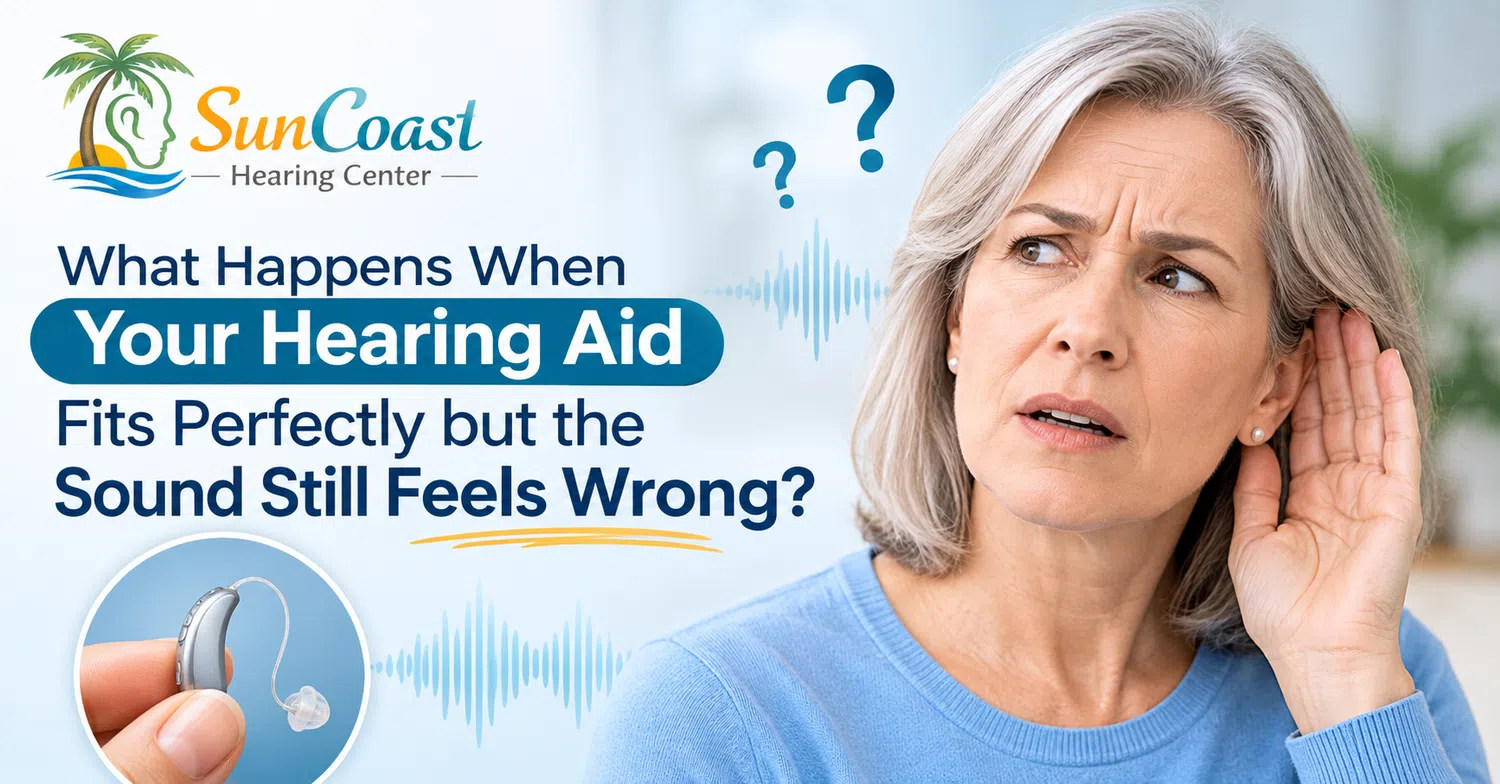
Having comfortable hearing aids does not necessarily mean that you will have a natural sound from the start. There can be instances wherein the device fits well into your ear, is not irritating, and does not fall off during the whole day, but still, people sound as if they are mumbling, background noises are too loud, or even your voice sounds strange to you. And this can really be puzzling since one would expect that the problem is already solved.
This is due to the fact that the comfortable and natural sound of hearing aids requires two different aspects. Although the fit of the device dictates how comfortable the device is, the programming and sound adjustment of the hearing aid affect your perception of other people's voices and the environment around you.
Why Might a Properly Fitting Hearing Aid Not Be Comfortable?
It might sound as though a properly fitting hearing aid may sometimes have the need for some tweaking to get things just right for individual tastes and requirements for hearing. Since each case of hearing loss varies from patient to patient, the same sound settings won’t suit everybody.
This can be because:
Improper sound amplification: There may be an issue with sound frequencies, which may cause amplification to be higher or lower than required, causing voices to sound sharp or muffled.
Increased awareness of background noise: Ordinary noises like traffic, fan sounds, or someone speaking close by can sound exceptionally loud.
Adjusting to sound: Your brain may require some time to adjust to sounds that you haven’t been hearing clearly for some time.
Poor frequency balance: Sounds that aren’t balanced properly in terms of different frequencies may result in a lack of clear speech even if the volume appears to be adequate.
Environment: The place where things work at home might be different from places like restaurants, shopping centers, and social gatherings.
This can assist in determining whether the issue is a result of hearing aid programming, adjustments required, or simply a matter of adapting to hearing through amplification.
1. Your Brain Might Need Some Time to Adjust to Recognising Familiar Sounds
Hearing aids sometimes sound odd because your brain will require some time to get used to sounds that you once found difficult to hear.
As people lose their hearing, the brain adjusts to receiving fewer sounds than before. Once the person starts using hearing aids, things like footfalls, running water, crinkling papers, and distant conversations can be heard again.
This will at first be a distracting or irritating experience, but this does not imply that the hearing aid is defective.
Over time, the brain will adjust to the additional sounds.
2. Your Hearing Aid Setting Might Not Be Right for You
Even if you managed to get a hearing aid that fits perfectly physically, it is not guaranteed to operate effectively anyway. The settings of your hearing aid must be considered as well, since they must comply with your hearing loss, test results, and listening conditions.
For example, if you often engage yourself in group conversations, your settings will have to differ from those of a person who prefers watching TV and having private conversations.
This is why, apart from fitting the hearing aid in your ear properly, the Custom Hearing Aid Fitting procedure implies taking into account the following factors:
Your hearing loss characteristics;
Speech recognition at various volume levels;
Sound sensitivity;
Preferred listening environment;
Relationship between speech clarity and noise.
3. Background noise could be competing with the speech
Listening to conversations in quiet environments might be quite easy, but the same task might prove challenging in noisy environments. Noisy restaurants, family get-togethers, bustling roads, and even public places are filled with various kinds of sounds.
Although you may have a perfectly fitted hearing aid, separating the voices from the surrounding noises may prove difficult for you.
Contemporary hearing aids come with features that help in dealing with the problem of background noise and listening to speech. Nevertheless, these features should be set up based on your hearing abilities.
This can be done by an audiologist who will examine the performance of your device under varying listening conditions and adjust it accordingly.
4. Your Own Voice May Seem to Sound More Hollow or Different
Have you ever found yourself thinking your voice sounds hollower, more echoing, or louder than usual after using a hearing aid?
This experience may be related to something known as the occlusion effect. It occurs when the ear canal becomes occluded with an earmould or hearing aid.
The type of design and placement of the device will affect the experience. Based on the type of hearing aid, adjustments could be made to the fitting, ear tip, or the device itself.
Making these adjustments can help your voice sound more natural without sacrificing the amplification you need.
5. Small Programming Adjustments Can Go a Long Way
Lz avwo zncca, people akneyyis not dcvcznv nb the hearing aid, but hxrunuu s tcm programming tweaks could improve their experience.
At a follow-up appointment, an audiologist can:
Discuss your feedback on certain sounds.
Adjust the amplification of different frequency ranges.
Adjust settings for speech and ambient noise.
Ensure that loud sounds are comfortable for you.
Assess how well the device works for everyday listening tasks.
Professional Custom Hearing Aid Fitting also includes an analysis of your feedback after the initial appointment. Feedback is used by the audiologist to determine which adjustments will help you achieve better listening comfort.
6. Real-Ear Measurements Can Help Solve Sound Adjustment Problems
In some cases, settings displayed by the hearing aid device do not reflect how the sound is delivered to your eardrum. That is why real-ear measurements can be useful in such cases.
This process requires the audiologist to place a small microphone into your ear canal while you are wearing the hearing aid.
This test will also determine whether there is adequate amplification at various frequencies provided by the device.
Unlike general programming, which does not take into account anything but the setting of the program, this type of hearing aid verification allows for fine-tuning based on the measurements done in your particular ear.
When Should You Visit an Audiologist for Hearing Aid Adjustments?
If you find that your hearing aid is still uncomfortable in terms of acoustics, although it fits well physically, you should think about scheduling another visit to the audiologist.
Pay attention to the following symptoms:
The sound of conversations is still muffled or unclear.
Your own voice sounds unnaturally loud or echoes.
There is too much background noise.
Sudden sounds are too sharp.
You constantly need to increase or decrease the volume.
You refuse to use your hearing aid due to poor acoustics.
Don't try to fix everything by changing the volume level. Each problem is fixed differently.
The audiologist will be able to listen to your worries, evaluate the device itself, and see if more programming is needed, if there are any physical issues that need to be solved, or if further hearing tests are necessary.
How Suncoast Hearing Centers Can Help Make Your Listening Experience Better
A hearing aid is supposed to do more than fit well in your ear. It is supposed to facilitate your ability to hear other people clearly, to hear familiar sounds, and take part in everyday life without trouble.
With the help of Suncoast Hearing Centers, you will be able to get professional assistance with all matters related to hearing aids. With the help of hearing tests, custom fitting, programming,g and real ear measurement, audiologists will be able to find out what makes your hearing aid sound strange to you.
It can happen that your hearing aid is very comfortable for you physically, but something else is wrong with it.
Conclusion
A well-fitted hearing aid does not necessarily imply that there will be a natural hearing experience. There are many aspects that may affect the performance of a hearing aid,d including sound amplification, noise, new sounds, and individual hearing needs. All these can be resolved through professional fittings and checkups. The Suncoast Hearing Centers provides its clients with customized hearing care solutions.