For pharmaceutical companies developing delayed-release formulations, understanding enteric-coated pellet technology is essential for achieving consistent product performance. Esomeprazole pellets manufacturers India use specialized formulation and coating techniques to produce multiparticulate systems designed to protect esomeprazole from acidic conditions and support its intended release profile. Esomeprazole EC pellets combine drug layering, protective coating, and enteric coating technologies to create ready-to-fill pharmaceutical intermediates suitable for capsule formulations.
What Are Esomeprazole EC Pellets?
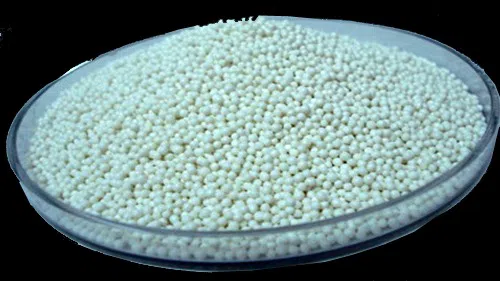
Esomeprazole EC pellets are small multiparticulate units containing esomeprazole and an enteric coating system. “EC” refers to enteric coated, meaning the outer polymeric layer is designed to resist acidic conditions and allow drug release under appropriate intestinal conditions.
Esomeprazole belongs to the proton pump inhibitor class and is commonly formulated as a delayed-release dosage form. The target product page from Spansules Pharmatech identifies its Esomeprazole Pellets as a delayed-release product and lists several concentrations and mesh-size specifications.
The multiparticulate approach can offer formulation flexibility because individual pellets are distributed throughout the dosage form rather than relying on a single large drug-containing unit.
Why Is Enteric Coating Important?
Esomeprazole is sensitive to acidic environments, making protection from gastric conditions an important consideration during formulation development. Enteric coating provides a functional barrier around the drug-containing pellets.
The basic concept is straightforward: the coating should remain sufficiently resistant in the acidic environment and then permit drug release when the pellets encounter a more suitable pH environment. This characteristic is the foundation of gastro-resistant, delayed-release pellet technology.
Research on esomeprazole delayed-release formulations has demonstrated the importance of the enteric layer in achieving gastro-resistance and appropriate dissolution behavior. Published studies have evaluated coating processes involving drug coating, sub-seal coating, and enteric coating using fluid-bed equipment.
The Main Layers of an Esomeprazole Pellet
A typical enteric-coated pellet system can contain several functional layers. The exact composition varies according to formulation design and manufacturing requirements.
1. Core Pellet
The manufacturing process begins with a suitable pellet core. Depending on the formulation approach, this can be an inert starter core or a core produced through pelletization technology.
Core characteristics such as size, shape, surface properties, and mechanical strength can influence subsequent coating performance. A uniform core provides a consistent surface for the drug-containing layer.
2. Drug Layer
The active pharmaceutical ingredient is applied to the pellet core together with selected excipients. Drug layering may involve a binder and other formulation components that help achieve appropriate adhesion and uniform distribution.
Maintaining a consistent drug layer is important because variations in drug loading can affect assay, content uniformity, pellet weight, and ultimately the performance of the finished dosage form.
3. Seal or Sub-Coating
A protective seal or sub-coating can be placed between the drug layer and the outer enteric film. This intermediate layer can help separate the drug-containing material from the enteric polymer and contribute to formulation stability.
The composition and thickness of the sub-coating are selected according to the formulation requirements. Proper application can also help improve the physical integrity of the pellet before the final enteric coating is applied.
4. Enteric Coating
The final functional layer is the enteric coating. It generally consists of a pH-dependent polymer system and associated excipients selected during formulation development.
The coating must provide sufficient resistance under acidic conditions while allowing the intended release after the pellets move into a higher-pH environment. This makes coating composition, thickness, uniformity, and process control important considerations.
How Are Esomeprazole EC Pellets Manufactured?
Manufacturing technology can vary between formulations, but a typical process includes several controlled stages.
First, pharmaceutical-grade raw materials are selected and tested according to established specifications. The formulation is then prepared using the appropriate API, excipients, binders, and coating materials.
Next, the drug-containing formulation is applied to the pellet cores. Fluid-bed equipment is commonly used for coating multiparticulate systems because pellets can be suspended in an airflow while coating material is sprayed onto their surfaces.
After drug layering, a seal or sub-coating may be applied. The pellets then undergo enteric coating using a suitable polymer dispersion or solution.
After coating, controlled drying and, where applicable, curing help establish the desired film characteristics. The finished pellets can then be screened and evaluated for particle-size distribution and other quality attributes.
Why Particle Size and Coating Uniformity Matter
Particle size is an important consideration in pellet manufacturing. Uniform pellets can support consistent coating and downstream capsule filling, while excessive variation may complicate processing.
Coating uniformity is equally important. If the enteric film is inconsistent, the acid-resistance and release characteristics of individual pellets may vary.
Starting pellet size can also affect processing behavior. Very small starting spheres, for example, may contribute to pellet agglomeration during processing if manufacturing conditions are not properly controlled.
Consequently, manufacturers need to balance core size, coating conditions, formulation composition, and equipment parameters when developing an EC pellet system.
Quality Evaluation of Esomeprazole EC Pellets
Quality testing is an essential part of pharmaceutical pellet production. Depending on the product specification and applicable requirements, evaluation may include:
Appearance and physical characteristics
Particle-size distribution
Assay and drug content
Content uniformity
Moisture or residual solvent levels
Related substances and impurities
Acid resistance
Dissolution or drug-release profile
Coating integrity and stability
For enteric-coated products, dissolution testing is particularly important because it helps demonstrate whether the coating provides the intended resistance and subsequent release behavior.
A properly developed dissolution profile can help demonstrate that the pellets remain resistant under acidic conditions and subsequently release the active ingredient under appropriate buffer conditions.
Benefits of Ready-to-Fill Esomeprazole Pellets
Ready-to-fill pellets can provide pharmaceutical companies with a convenient intermediate for capsule manufacturing. Instead of developing every pellet-processing stage internally, manufacturers can source pre-finished pellets that meet predefined specifications.
Spansules Pharmatech states that it manufactures ready-to-fill pharmaceutical pellets and specializes in sustained- and delayed-release pellet technology. Its website also describes contract formulation development and manufacturing capabilities.
The company's Esomeprazole pellet page lists concentrations including 8.5%, 10%, 15%, 20%, and 22.5%, along with several mesh-size options, providing formulation flexibility for pharmaceutical buyers.
For companies evaluating Esomeprazole pellets manufacturers India, factors such as manufacturing capabilities, technical support, product specifications, quality systems, documentation, and supply consistency should be considered alongside price.
Choosing the Right Esomeprazole Pellet Manufacturer
A capable manufacturer should have appropriate expertise in multiparticulate formulation, coating technology, quality control, and pharmaceutical documentation. Buyers can evaluate whether the manufacturer offers the required concentration, particle size, release characteristics, and intended dosage-form compatibility.
Spansules Pharmatech describes itself as a WHO-GMP-certified pharmaceutical pellet manufacturer with manufacturing and R&D facilities in Hyderabad. Its website also states that it provides ready-to-fill pellets and documentation intended to support product registration.
When comparing Esomeprazole pellets manufacturers India, pharmaceutical companies should look beyond the product name and assess the complete technical package, including specifications, quality controls, regulatory documentation, development support, and manufacturing consistency.
Conclusion
Esomeprazole EC pellets are sophisticated multiparticulate systems in which formulation, drug layering, sub-coating, enteric coating, drying, sizing, and quality testing work together to produce a delayed-release pharmaceutical intermediate. Enteric coating is particularly important because it helps protect the drug-containing pellets under acidic conditions and supports the intended release profile.
For pharmaceutical companies sourcing these products, experienced Esomeprazole pellets manufacturers India can provide ready-to-fill pellets with defined concentrations, particle-size specifications, and technical documentation. Selecting a manufacturer with appropriate formulation expertise and quality systems can help support consistent downstream capsule manufacturing and product development.
Other Recommendations: Lansoprazole Pellets Manufacturers