WHY LEVELS EXIST AND WHY THEY MATTER IN SOFTWARE ENGINEERING
Software engineering roles can vary even if the titles seem the same. To fix this, companies use levels to explain who does what and why. These levels define skills, tasks, and pay so teams stay fair and clear. When you know your level, it’s easier to see what to work on next. That way, both you and your company can grow together.
HOW SOFTWARE ENGINEER LEVELS SHOW YOUR PATH FOR GROWTH
Each level tells a story—from writing code to leading whole tech teams. It helps you focus, improve, and plan your next move with purpose. A clear path through software engineer levels lets you track your wins and build real skills over time. It also helps your manager support you better in reviews and raises.
JUNIOR ENGINEERS FOCUS ON LEARNING WHILE FIXING SIMPLE BUGS
This is where most software engineers begin their career journey. Junior engineers help teams with tasks like testing or writing basic code. They ask questions, watch how others solve problems, and gain confidence. Most of the learning comes from real work and regular team feedback. Growth here is all about habits and learning fast without fear.
.MID-LEVEL ENGINEERS TAKE OWNERSHIP AND DRIVE SMALLER FEATURES
At this level, engineers start leading parts of projects more often. They’re expected to write clean, well-tested code with fewer mistakes. They also support others and give reviews that improve the team’s work. You become a go-to person for fixes, ideas, or solid advice. It’s a great time to grow leadership while still writing code.
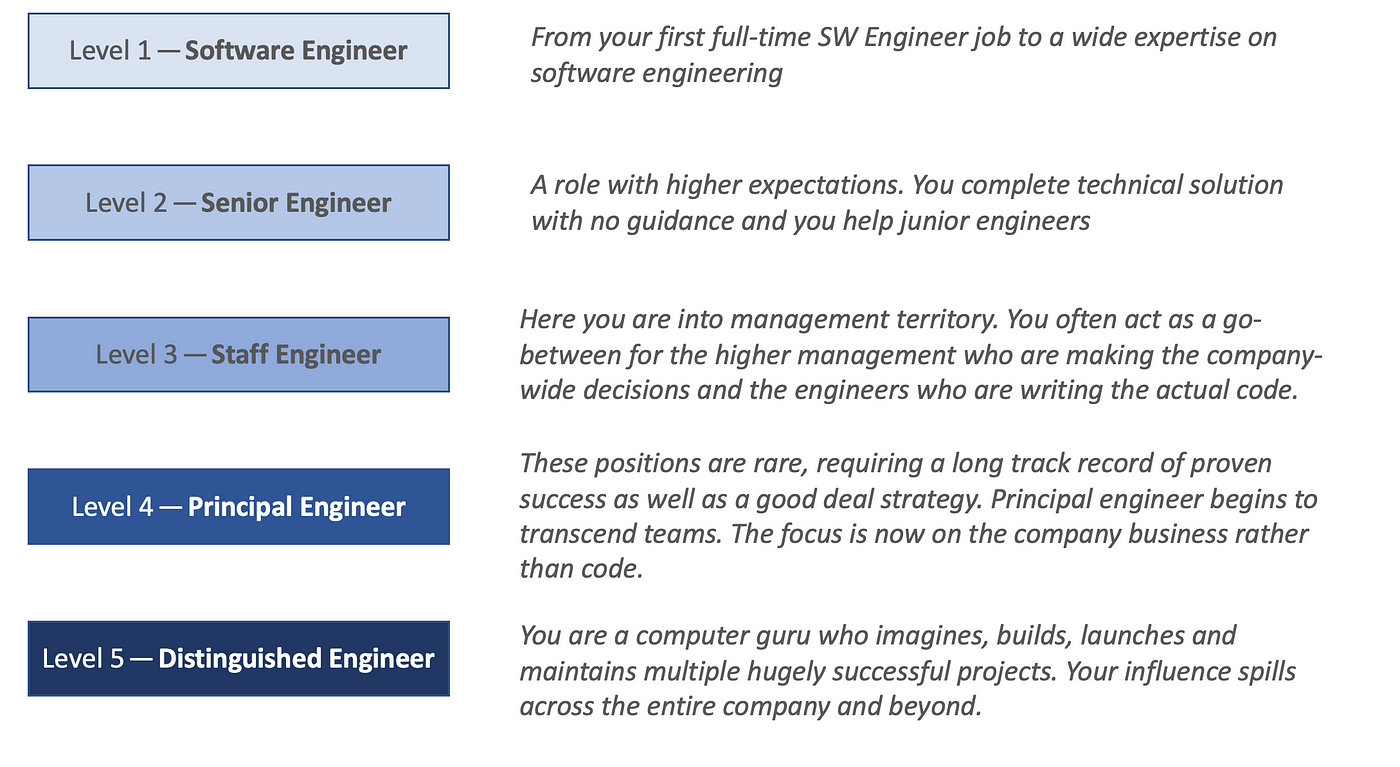
SENIOR ENGINEERS MENTOR TEAMS AND SOLVE DEEPER TECH CHALLENGES
Senior engineers focus on long-term value, not just today’s work. They design systems, review hard code, and guide younger teammates. They find risks early and help the team build stronger, safer software. Their work is trusted because it blends deep skill and wise judgment. Seniors are key to helping projects succeed and teams stay strong.
STAFF AND PRINCIPAL ENGINEERS WORK ACROSS MULTIPLE TEAMS
These roles require not just skill but also high trust and big-picture vision. They solve system-wide issues that affect many teams and users. They often create standards, set direction, and remove blockers for others. Their impact is broad, and they rarely need close management. These engineers focus on lasting results, not just fast fixes.
MANAGERS FOLLOW A DIFFERENT PATH, BUT STILL USE TECH SKILLS
Engineers don’t have to manage to grow—but some choose that path. Engineering managers help people grow, plan team work, and give feedback. They hire, coach, and guide while working with other leads to set goals. Great managers use their past tech skills to lead smarter each day. It’s just one of two equal growth paths in tech.
WHY KNOWING SOFTWARE ENGINEER LEVELS MATTERS AT EVERY CAREER STAGE
When you know your level, you can ask for better feedback and help. You know what to aim for and what to avoid as you move up. This keeps your learning on track and helps you earn more over time. Many engineers say learning about software engineer levels helped them feel more focused and less lost.
HOW TO LEVEL UP USING SMALL STEPS AND DAILY WINS
You don’t need to wait for a big break to grow in your role. Try writing better comments, helping with reviews, or fixing edge cases. You can also lead a small feature or teach a new hire one skill. These steps show leadership, even before your title says so. Keep learning, showing up, and tracking progress—it works.
LEVELS HELP MAKE PAY, PROMOTIONS, AND GROWTH MORE FAIR
Without levels, it’s hard to know why some people grow faster than others. Clear levels remove guesswork and help teams talk about skills and value. They also guide hiring and give fair goals for raises or promotions. When levels are used well, teams feel more calm, clear, and supported. That’s why more companies now use them as a core system.
USE SOFTWARE ENGINEER LEVELS TO BUILD A LONG, STRONG CAREER
If you take time to study software engineer levels, you’ll grow faster and with more purpose. Each level helps you learn, lead, and earn better than before. It’s not about racing—it’s about smart, steady steps over time. Understanding the ladder makes your career plan real, not just a wish.