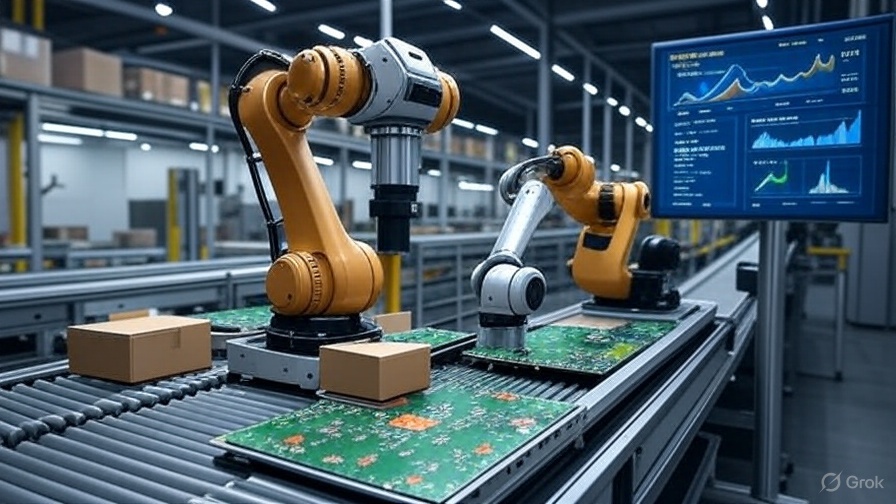
Ensuring high product quality has always been a top priority for manufacturers. But with increasing demand for precision and speed, traditional inspection methods are no longer sufficient. Manual quality checks are prone to human error, fatigue, and inconsistency—factors that directly affect production outcomes. That’s where AI and computer vision come into play, offering a smarter, faster, and more reliable alternative.
Artificial Intelligence, when combined with high-resolution cameras and machine learning algorithms, enables real-time defect detection and process monitoring. This approach ensures each product is examined thoroughly, without interrupting production flow. One standout application of this technology is AI-powered machine vision in manufacturing, which is rapidly transforming how industries manage quality control.
These vision systems are trained to recognize defects such as cracks, missing components, discoloration, or shape inconsistencies—far beyond what a manual inspector might detect. By continuously learning from new data, the system becomes more accurate over time, even in challenging environments like low lighting or high-speed production lines.
What makes AI-powered machine vision in manufacturing especially valuable is its scalability and adaptability. Whether it’s a large automotive plant or a small electronics unit, the technology can be tailored to fit different inspection needs. For example, in electronics assembly, machine vision can verify correct component placement, while in food packaging, it ensures labeling accuracy and seal integrity.
Another key benefit lies in data-driven insights. These systems don’t just identify defects—they also collect valuable metrics that can be analyzed to improve manufacturing processes. Over time, this data helps teams identify recurring issues, reduce waste, and fine-tune machinery settings to prevent future errors. It shifts quality control from a reactive task to a proactive, strategic function.
Implementing machine vision also supports faster decision-making. If an anomaly is detected, operators are instantly alerted, allowing them to take corrective action before more defective products are made. This real-time feedback loop significantly reduces downtime and minimizes the cost of rework or recalls.
Furthermore, as manufacturers face growing pressure to meet sustainability goals, AI-powered inspection systems offer an added advantage. By minimizing material waste and ensuring only high-quality products reach consumers, these technologies contribute to more sustainable production practices.
As the manufacturing sector continues to evolve, businesses that embrace intelligent automation will stay ahead of the curve. AI-powered machine vision in manufacturing is not just about catching defects—it's about creating a more efficient, transparent, and resilient production system.
Studies have shown that AI-driven visual inspection systems can increase defect detection rates by over 90% and reduce manual inspection costs by nearly 50%, making them a critical investment for manufacturers focused on long-term quality and efficiency.