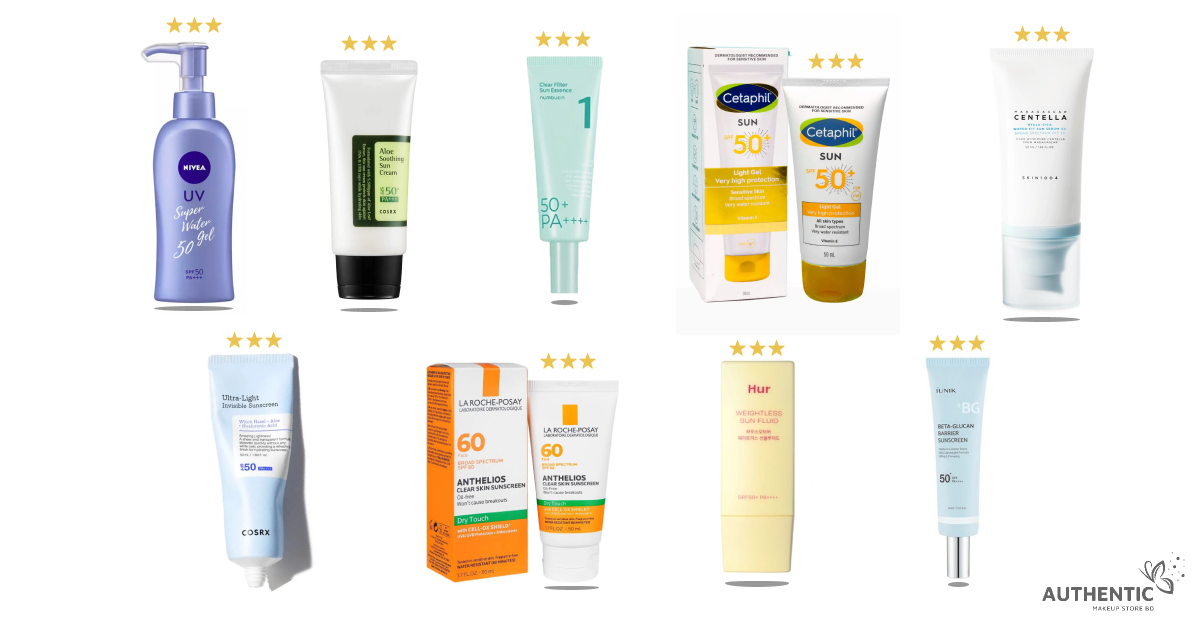
Why Sunscreen is No Longer Optional in Bangladesh
Step outside in Bangladesh for even 10 minutes, and your skin is already under stress.
The heat feels normal. The sun feels familiar. But what most people don’t realize is that UV radiation in Bangladesh remains consistently high throughout the year, especially during midday hours. This leads to gradual skin damage—tanning, pigmentation, premature aging, and even long-term skin issues.
According to global health recommendations, sunscreen should be used whenever the UV index crosses 3, which happens frequently in tropical regions like Bangladesh.
Yet, many people still skip sunscreen daily.
Why?
- It feels sticky
- It causes sweating
- It leaves a white cast
- It breaks them out
But here’s the reality:
Modern sunscreens have evolved.
Today’s formulas are lighter, breathable, and specifically designed for humid climates like Bangladesh.
What Actually Happens to Your Skin Without Sunscreen
Let’s simplify this.
Every time you step outside without sunscreen:
- UVA rays penetrate deep → cause aging & pigmentation
- UVB rays hit the surface → cause sunburn & tanning
- Heat + pollution → worsen skin damage
Over time, this leads to:
- Uneven skin tone
- Dark spots (melasma)
- Loss of skin elasticity
- Dull, tired-looking skin
And the worst part?
Damage is cumulative. You don’t notice it daily, but it builds up.
The Real Problem: Why Most Sunscreens Fail in Bangladesh
Not all sunscreens work the same—especially in a country like Bangladesh.
Here’s why many fail:
1. Climate Mismatch
Heavy creams don’t survive humidity.
They:
- Melt with sweat
- Feel greasy
- Clog pores
2. Wrong Formula for Skin Type
What works for dry skin can destroy oily skin.
3. Poor Reapplication Habits
Most people apply once and forget.
In reality, sunscreen loses effectiveness after a few hours, especially in heat and sweat.
What Makes a Sunscreen Perfect for Bangladesh?
If you want real results, your sunscreen must check these boxes:
✔ Lightweight Texture
Gel, fluid, or serum-based works best
✔ Broad-Spectrum Protection
Must protect against both UVA + UVB
✔ Sweat-Friendly Formula
Should not break down easily in humidity
✔ No White Cast
Important for medium to deeper skin tones
✔ Skin-Type Compatibility
- Oily → gel or water-based
- Dry → hydrating cream
- Sensitive → soothing ingredients
Best Sunscreen Types Based on Skin Type
Choosing the wrong sunscreen is the biggest mistake people make.
Let’s break it down:
🔹 Best Sunscreen for Oily Skin
If you have oily skin, your goal is simple:
Control shine without clogging pores
Look for:
- Gel-based sunscreens
- Oil-free formulas
- Matte finish
Products like water gels and ultra-light sunscreens perform best because they don’t sit on top of the skin.
🔹 Best Sunscreen for Dry Skin
Dry skin needs protection + hydration.
Look for:
- Cream-based sunscreens
- Ingredients like Hyaluronic Acid & Panthenol
These prevent that tight, uncomfortable feeling after sun exposure.
🔹 Best Sunscreen for Sensitive Skin
Sensitive skin reacts easily—especially in heat.
Look for:
- Minimal ingredients
- Soothing agents like Centella Asiatica
- Fragrance-free formulas
Most Important Ingredients You Should Look For
Not all sunscreens are equal. Ingredients matter more than SPF alone.
Here are the key ones:
UV Filters
- Zinc Oxide → gentle, good for sensitive skin
- Titanium Dioxide → lighter mineral filter
- Avobenzone → protects against UVA
- Tinosorb S → stable under sunlight
Skin Support Ingredients
- Niacinamide → controls oil + improves tone
- Hyaluronic Acid → hydration without heaviness
- Centella Asiatica → reduces irritation
- Panthenol (Vitamin B5) → strengthens skin barrier
These ingredients directly impact how your sunscreen performs in Bangladesh weather.
Common Sunscreen Mistakes (That Ruin Your Results)
Most people think sunscreen doesn’t work.
In reality, they’re using it wrong.
❌ Using Too Little
A thin layer = weak protection
❌ Not Reapplying
After 2–3 hours, protection drops significantly
❌ Skipping Indoor Days
UV rays still penetrate windows
❌ Only Using in Summer
Damage happens all year round
Real User Insights (From Bangladesh)
Here’s something interesting from real discussions:
“Cheap sunscreens often feel heavy, leave white cast, and cause breakouts.”
Another user shared:
“Nivea water gel doesn’t make me sweat like others.”
And one more insight:
“Japanese and Korean sunscreens work better in humidity.”
👉 This aligns perfectly with real-world performance trends.
Where to Find the Best Sunscreens in Bangladesh
Finding authentic products is a major challenge.
Fake products are everywhere.
That’s why it’s important to rely on trusted curated lists and verified stores.
If you’re looking for a complete breakdown of tested, climate-friendly options, this detailed guide is worth checking out:
👉 Top 10 Best Sunscreen in Bangladesh (2026)
This resource covers:
- Real performance in Bangladesh weather
- Skin-type recommendations
- Price breakdowns
- Ingredient insights
- Pros & cons
Instead of guessing, you can directly choose what fits your skin.
How to Build a Simple Sunscreen Routine (That Actually Works)
Let’s make it practical.
Morning Routine:
- Cleanser
- Moisturizer
- Sunscreen (last step)
Reapplication:
- Every 2–3 hours
- After sweating or washing face
Pro Tip:
Use two-finger rule for proper amount.
The Future of Sunscreen in Bangladesh
The skincare industry is evolving fast.
We’re seeing:
- More Korean & Japanese sunscreens
- Lightweight, serum-based formulas
- Better compatibility with humid climates
This is a big shift from older, heavy sunscreens that people avoided.
Final Thoughts: What You Should Do Next
If you’ve been skipping sunscreen, here’s the truth:
👉 It’s the single most important skincare product you can use.
Not serums.
Not moisturizers.
Not treatments.
Sunscreen.
Start simple:
- Choose based on your skin type
- Use it daily
- Reapply consistently
And most importantly—
👉 Use a sunscreen that actually works in Bangladesh weather.
If you want a shortcut, use this curated list:
👉 Best Sunscreen Options in Bangladesh (Full Guide)