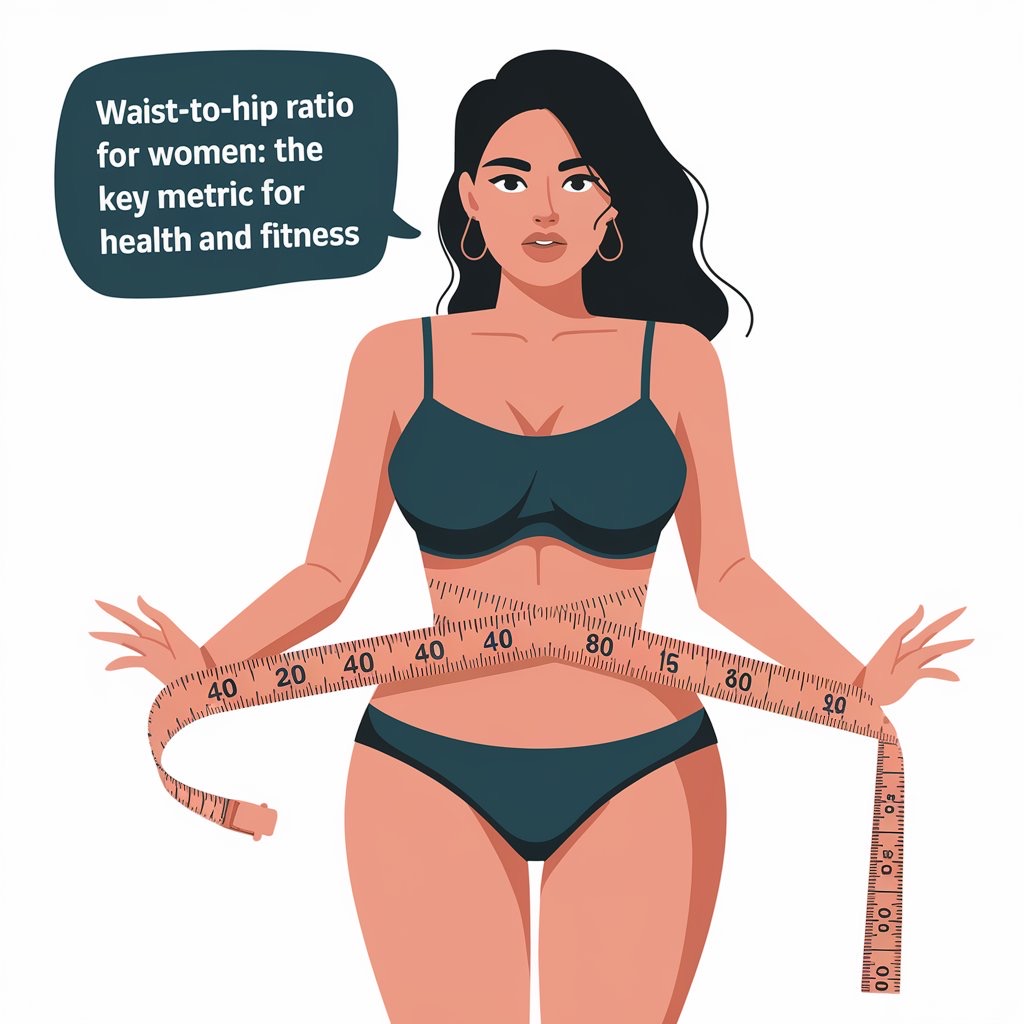
When it comes to health, fitness, and even aesthetics, one metric stands out: waist-to-hip ratio (WHR).
It’s simple. It’s powerful. It’s science-backed.
But most women don’t fully understand it—or how it can change the way they approach their health.
If you’re here, you’re ready to learn. Let’s break it down in plain, no-fluff language.
What Is Waist-to-Hip Ratio (WHR)?
WHR is a measurement of your body’s fat distribution.
It’s calculated by dividing the circumference of your waist by the circumference of your hips.
Simple enough, right?
Here’s the formula:
Waist circumference ÷ Hip circumference = WHR
For example:
- If your waist is 28 inches and your hips are 36 inches, your WHR is 0.78.
Why Does Waist to Hip Ratio Matter?
Here’s the deal: WHR isn’t just about looks. It’s a powerful indicator of health.
Research shows that women with a healthy WHR tend to have:
- Lower risk of heart disease
- Better hormonal balance
- Reduced risk of diabetes
But that’s not all. WHR also gives you insights into your body type, metabolism, and overall fitness level.
What’s a Healthy Waist to Hip Ratio for Women?
So, what’s the magic number?
According to health experts:
- A healthy WHR for women is 0.8 or lower.
Let’s break that down:
- 0.8 or lower: Low risk of health issues
- 0.81–0.85: Moderate risk
- 0.86 or higher: High risk of health problems
Pro Tip: Don’t panic if your WHR isn’t ideal yet. It’s just a benchmark to guide you.
How to Measure Your Waist to Hip Ratio Correctly
Here’s where most people mess up: They don’t measure their waist or hips correctly.
To get accurate results, follow these steps:
- Find Your Natural Waist: Bend to one side.
The crease is your natural waistline. - Measure Your Waist: Wrap a tape measure around your waist at this spot.
Don’t suck in or pull the tape too tight. - Measure Your Hips: Locate the widest part of your hips (usually around the buttocks).
Wrap the tape snugly, but not tightly. - Do the Math: Divide your waist measurement by your hip measurement.
That’s it. Easy, right?
Want to know your Waist-to-Hip Ratio instantly? Use this free, easy calculator to find out now!
https://solvemyday.com/waist-to-hip-ratio-for-women/
Waist to hip ratio vs BMI
You’ve probably heard of Body Mass Index (BMI) before. It’s a common tool for measuring health.
But here’s the truth: BMI has limits.
Why?
- BMI only considers height and weight.
- It doesn’t account for fat distribution or muscle mass.
WHR, on the other hand, shows where your fat is stored.
Why does this matter?
Because fat stored around the waist (visceral fat) is more dangerous than fat stored around the hips.
So, if you want a clearer picture of your health, WHR is the way to go.
How Waist to Hip Ratio Impacts Women Health
Let’s get real.
Your WHR isn’t just a number. It’s a window into your health.
1. Heart Health
Women with higher WHR levels are at a greater risk of heart disease.
Why?
Because visceral fat (belly fat) releases hormones that can spike inflammation and blood pressure.
2. Hormonal Balance
Your WHR can even give clues about your hormones.
- A lower WHR often indicates better hormonal balance.
- A higher WHR might suggest hormonal imbalances like PCOS or thyroid issues.
3. Metabolic Health
WHR is linked to conditions like diabetes and metabolic syndrome.
If your WHR is on the higher side, it’s a wake-up call to make changes.
How to Improve Your Waist to Hip Ratio
Good news: WHR isn’t set in stone.
With the right strategies, you can improve your ratio—and your health.
1. Focus on Core Workouts
Targeted exercises can help tone your waist and reduce belly fat.
- Planks
- Russian twists
- Bicycle crunches
These moves don’t just trim inches—they strengthen your core too.
2. Adopt a Balanced Diet
You can’t out-train a bad diet.
To reduce your waist size:
- Cut back on refined carbs and sugars.
- Load up on lean protein, veggies, and healthy fats.
- Stay hydrated.
Remember: Consistency beats perfection.
3. Incorporate Cardio
Want results faster? Add cardio to your routine.
- Brisk walking
- Running
- Cycling
Aim for at least 150 minutes of moderate exercise per week.
4. Manage Stress
Stress causes your body to store more fat around the waist.
Combat stress with:
- Meditation
- Deep breathing
- Yoga
Small changes make a big difference.
The Psychology of Waist to Hip Ratio
Here’s an interesting twist: WHR isn’t just about health—it’s also tied to perception and confidence.
Studies show that a lower WHR is often perceived as more attractive.
But don’t get stuck on societal standards.
A healthy WHR is about feeling good in your own skin. When you prioritize health, confidence follows.
Common Waist to Hip Ratio Myths
Let’s clear up some confusion.
Myth 1: "I can spot-reduce fat on my waist."
Nope.
You can’t choose where your body loses fat.
But with a mix of diet and exercise, you’ll eventually see results.
Myth 2: "WHR doesn’t matter if I’m skinny."
False.
Even slim women can have a high WHR if they carry fat around their waist.
Myth 3: "My WHR is genetic. I can’t change it."
While genetics play a role, lifestyle changes can significantly improve your WHR.
Quick Recap: WHR in a Nutshell
- What It Is: A ratio of your waist to your hips.
- Why It Matters: It’s a strong indicator of health and fitness.
- How to Improve It: Focus on diet, exercise, and stress management.
Take Control of Your WHR Today
Here’s the truth: WHR is one of the simplest, most effective tools you can use to measure your health.
No fancy gadgets. No guesswork.
Just a tape measure and the willingness to take action.
So, grab that tape, measure your WHR, and start making changes today. Your future self will thank you.