In the world of professional photography, choosing between a 24mm and a 35mm prime lens is often a decision that defines a creator's entire visual style. Both focal lengths are legendary in the Sigma Art lineup, known for their "prime-level" sharpness and wide f/1.4 apertures. With the introduction of the DG DN versions—designed specifically for mirrorless systems—Sigma has refined these classics to be smaller, faster, and optically superior. Deciding which one is "better" is less about technical specs and more about understanding the specific storytelling needs of your photography. Whether you are capturing expansive landscapes or intimate street scenes, both the 24mm and 35mm Art lenses offer distinct advantages that can elevate your professional portfolio.
The 24mm Perspective: Immersive Wide-Angle Storytelling
The 24mm focal length is a favorite among landscape, architectural, and environmental portrait photographers. It offers a wide field of view that feels immersive, pulling the viewer into the scene. Unlike ultra-wide lenses that can feel overly distorted, 24mm maintains a sense of realism while still being wide enough to capture the grandeur of a mountain range or the complex interior of a historic building. The Sigma 24mm f/1.4 DG DN Art is particularly impressive because it manages to deliver corner-to-corner sharpness even at its widest aperture, a feat that was once thought impossible for wide-angle primes.
For creators who work in tight spaces or want to include significant environmental context around their subjects, the 24mm is an essential tool. It allows you to tell a story not just about the person in the frame, but about where they are and how they interact with their surroundings. While this wide perspective is powerful, many professionals find that they need to balance their kit with a high-performance telephoto lens to handle distant subjects or tighter headshots, ensuring they have a complete range of perspectives for any assignment.
The 35mm Perspective: The Natural Human Eye
If the 24mm is about the environment, the 35mm is about the moment. Often cited as the most versatile focal length ever created, 35mm closely mimics the field of view of the human eye. It is wide enough to capture a scene but narrow enough to keep the viewer’s focus squarely on the subject. This makes the Sigma 35mm f/1.4 DG DN Art the gold standard for documentary, wedding, and street photography. It provides a natural sense of depth and perspective that feels honest and unforced.
The 35mm f/1.4 is often the "one-lens solution" for many professional photographers. It is tight enough for flattering portraits with beautiful background separation, yet wide enough for group shots and street photography. The bokeh produced by the 35mm Art is particularly creamy and smooth, allowing for a three-dimensional "pop" that separates the subject from the background with surgical precision. It is a lens that encourages the photographer to move with the subject, creating a more dynamic and interactive shooting experience.
Optical Performance: A Battle of the Art Series
Both lenses represent the pinnacle of Sigma’s optical engineering. The 24mm f/1.4 DG DN Art features 17 elements in 14 groups, including two FLD elements, one SLD element, and four aspherical elements. This complex arrangement is designed to virtually eliminate sagittal coma flare, making it a dream lens for astrophotographers who need pin-sharp stars at the edges of the frame. The level of detail it resolves is staggering, ensuring that it remains relevant even as camera sensor resolutions continue to climb.
The 35mm f/1.4 DG DN Art is equally impressive, utilizing two SLD elements and one ELD element to maintain color accuracy and high contrast. Its primary strength is its consistent performance across all aperture settings. While many lenses need to be "stopped down" to reach peak sharpness, the 35mm Art is bitingly sharp from f/1.4. This allows photographers to work in extremely low light while still maintaining professional-grade resolution. For APS-C users in Pakistan looking for a similarly bright and sharp wide-angle experience, checking the sigma 16mm 1.4 price in pakistan provides an excellent entry point into the world of high-speed Sigma primes.
Handling and Ergonomics in the Field
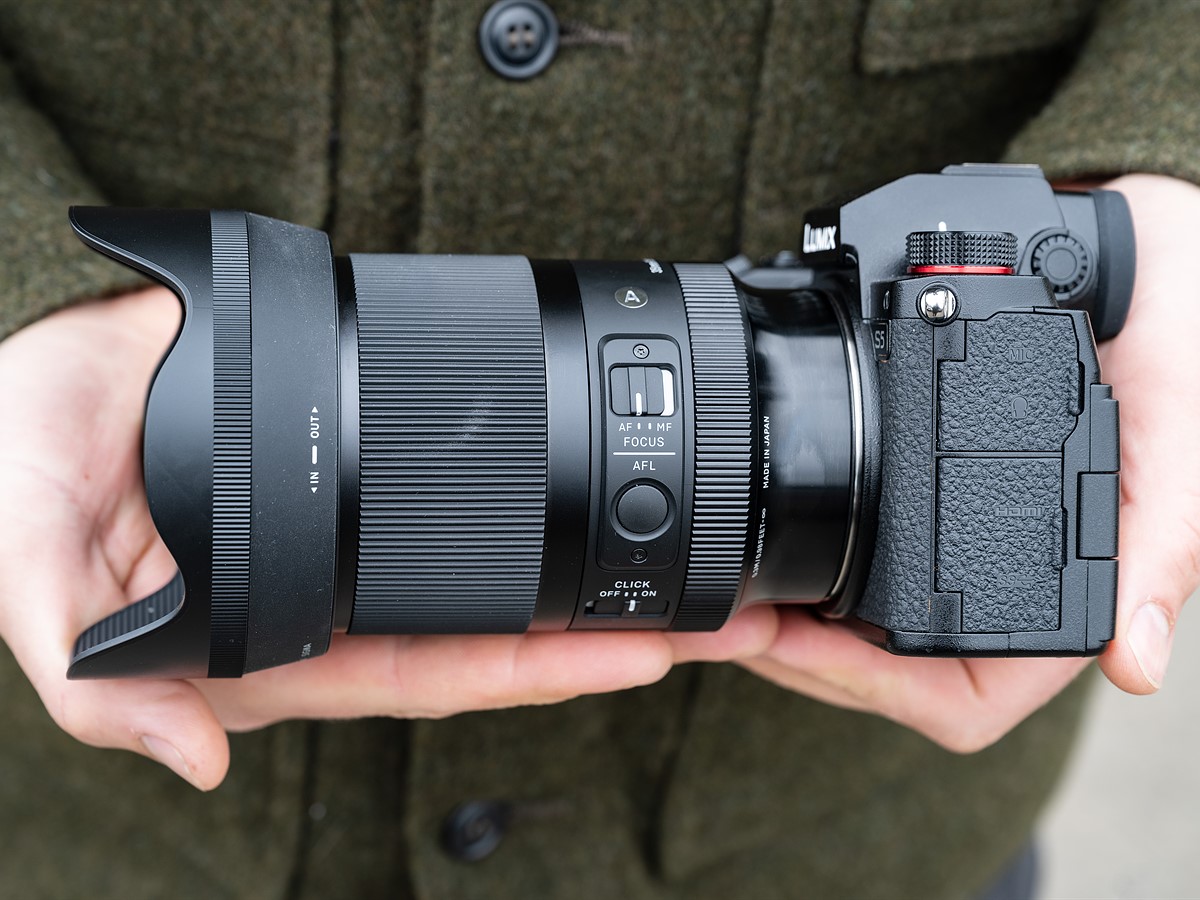
Sigma has paid close attention to the physical design of both DG DN lenses. They are significantly smaller and lighter than their DSLR predecessors, making them much more comfortable for long days of shooting. Both lenses feature a dedicated aperture ring with a click/de-click switch, which is a major benefit for videographers who need to adjust exposure silently during a take. They also include a customizable AFL button and a focus mode switch, providing instant access to critical functions without having to dive into camera menus.
The build quality is robust, featuring a mixture of aluminum and Thermally Stable Composite (TSC). Both lenses are dust and splash-resistant, with a water- and oil-repellent coating on the front element. This level of durability is essential for professional photographers in Pakistan, who may find themselves shooting in the dusty plains of Punjab or the humid coastal air of Karachi. These lenses are built to be tools of the trade, capable of withstanding the rigors of professional use day in and day out.
Autofocus Speed and Video Versatility
The autofocus systems in both the 24mm and 35mm Art lenses are powered by a stepping motor, ensuring that focus is not only fast but also incredibly quiet. This is vital for modern hybrid creators who switch between stills and video. The 24mm is particularly well-suited for gimbal work, as its wide field of view is forgiving for movement, and its compact size doesn't strain the motors of smaller gimbal units.
The 35mm, with its natural perspective, is a favorite for narrative filmmaking and interviews. It provides enough background blur to eliminate distractions while keeping enough of the environment visible to give the scene context. Both lenses exhibit minimal focus breathing, ensuring that the composition remains stable when pulling focus between subjects. This cinematic quality, combined with the de-clickable aperture ring, makes the Sigma Art primes a top choice for independent filmmakers and professional production houses alike.
Choosing Your Focal Length: 24mm or 35mm?
Ultimately, the choice between these two masterpieces comes down to how you see the world. If you find yourself constantly backing up to fit more into the frame, or if your passion lies in capturing the grandeur of nature and architecture, the Sigma 24mm f/1.4 DG DN Art is your perfect match. It offers a dramatic, immersive perspective that is hard to beat.
However, if you are a storyteller who thrives on human connection, weddings, and the candid moments of life, the Sigma 35mm f/1.4 DG DN Art will likely be the lens that stays on your camera 90% of the time. It is the quintessential professional prime, offering a balance of perspective and performance that has made it a legend in the industry.
- The 24mm is superior for landscapes, astrophotography, and tight environmental spaces.
- The 35mm offers a more natural perspective for portraits, weddings, and street photography.
- Both lenses feature professional weather-sealing and de-clickable aperture rings.
- Sigma's DG DN technology ensures these lenses are optimized for the latest mirrorless bodies.
Regardless of which lens you choose, investing in Sigma Art glass means you are choosing optical perfection. For photographers in Pakistan, these lenses represent a gateway to a world of professional imaging where quality is never compromised. Both the 24mm and 35mm are tools that don't just record images; they help you create a signature style that will stand the test of time.