The renewable energy sector is attracting growing interest from businesses looking to invest in solar power, wind energy, biomass, and other sustainable energy projects. However, developing a renewable energy plant requires more than choosing the right technology or securing suitable land. Investors and financial institutions need reliable information about project costs, technical performance, financial returns, and potential risks.
A Tev report for Renewable Energy helps project developers understand whether their proposed investment is technically practical and financially sustainable. It provides a structured evaluation of the project before major financial commitments are made.
Shreekari Consulting offers techno-economic assessment services that help businesses, project promoters, and lending institutions make informed decisions about renewable energy investments.
Why Renewable Energy Projects Need Proper Feasibility Assessment
Renewable energy projects involve significant capital investment, specialised equipment, regulatory requirements, and long-term operational planning. Even a project with promising energy generation potential may face financial difficulties if its costs, timelines, or revenue estimates are unrealistic.
For example, a company planning to establish a solar power plant must examine land suitability, solar irradiation, equipment efficiency, grid connectivity, installation costs, and electricity sales arrangements.
Similarly, a wind energy project requires reliable wind resource data, suitable turbine technology, access infrastructure, and realistic energy generation estimates.
A professional TEV study examines these factors before the project moves into full-scale implementation.
The assessment helps businesses answer several important questions:
Is the proposed technology suitable for the project?
Can the plant achieve its expected energy generation capacity?
Are the estimated construction and operating costs realistic?
Will the project generate sufficient revenue to meet financial obligations?
What risks could affect implementation or long-term profitability?
These answers provide a stronger foundation for investment planning and discussions with financial institutions.
What Is a TEV Report for Renewable Energy?
A Techno-Economic Viability (TEV) report is a comprehensive assessment of a project's technical feasibility and economic performance.
For renewable energy developments, the report examines the proposed technology, project location, estimated energy generation, capital requirements, operating expenses, revenue assumptions, and financial sustainability.
The purpose is to determine whether the project can operate efficiently and generate sufficient financial returns under realistic conditions.
Technical Evaluation
Technical evaluation focuses on the practical requirements of establishing and operating the proposed energy facility.
For solar projects, the assessment may examine photovoltaic module specifications, inverter technology, land availability, site conditions, and expected electricity generation.
For wind projects, it may consider turbine selection, wind availability, site accessibility, and equipment performance.
The evaluation also reviews construction schedules, infrastructure requirements, and potential technical limitations.
Economic and Financial Evaluation
Financial assessment examines whether the expected revenue can justify the proposed investment.
It includes capital expenditure, operating expenses, funding requirements, projected income, cash flow, and repayment capacity.
Financial indicators such as Internal Rate of Return (IRR), Net Present Value (NPV), and Debt Service Coverage Ratio (DSCR) help evaluate commercial viability.
These calculations are especially useful when businesses approach banks or investors for project financing.
Renewable Energy Projects That Benefit from TEV Assessments
Different renewable energy technologies have different technical and financial requirements. A project-specific assessment helps identify these differences.
Solar Power Projects
Solar energy developments require careful planning around site selection, irradiation levels, installed capacity, equipment performance, and grid connectivity.
The financial evaluation considers equipment costs, maintenance expenses, expected electricity generation, and potential revenue from electricity sales.
A feasibility assessment can also examine the effect of reduced generation or higher installation costs on project returns.
Wind Energy Projects
Wind power projects depend heavily on location-specific wind resources and turbine performance.
A technical assessment reviews available wind data, turbine suitability, infrastructure costs, and expected energy output.
Financial analysis considers installation expenses, maintenance requirements, financing arrangements, and long-term revenue projections.
Bio-CNG and Biomass Projects
Bio-CNG and biomass facilities depend on the consistent availability of suitable raw materials.
The assessment examines feedstock supply, transportation costs, processing technology, plant capacity, and demand for the final output.
Special attention is given to operating costs because feedstock prices and supply interruptions can significantly affect profitability.
Waste-to-Energy Projects
Waste-to-energy facilities convert suitable waste materials into useful energy products.
Their feasibility depends on waste availability, composition, processing technology, environmental requirements, and commercial arrangements.
An independent assessment can identify technical challenges and help businesses evaluate whether the proposed facility has a sustainable operating model.
How a Detailed Project Report Supports Renewable Energy Development
Before arranging finance or beginning construction, project promoters generally need a clear document describing the proposed development.
This is where detailed project report consultants provide valuable assistance.
A Detailed Project Report (DPR) presents the project's technical specifications, infrastructure requirements, implementation schedule, financial estimates, and operational strategy.
For a renewable energy project, a DPR may contain information about:
Project objectives and proposed installed capacity
Site location, land requirements, and infrastructure
Technology selection and equipment specifications
Estimated capital and operating expenditure
Funding arrangements and projected cash flow
Implementation timelines and required approvals
Expected energy production and revenue assumptions
Risk factors and proposed mitigation measures
A well-prepared DPR helps project promoters present their business plans clearly to investors, banks, and other stakeholders.
While the DPR describes how the proposed project will be developed, the TEV assessment independently examines whether its assumptions are technically and financially reasonable.
Both documents can support better project planning and funding discussions.
Why Financial Institutions Review TEV Reports
Renewable energy projects often require substantial investment before electricity generation or commercial production begins.
Banks and financial institutions must therefore assess whether the project can generate sufficient cash flow to repay borrowed funds.
A Tev report for Renewable Energy provides supporting information for this assessment.
Lenders may examine the proposed project cost, promoter contribution, repayment schedule, expected revenue, operating expenses, and financial risks.
The report also helps identify uncertainties that may affect the project's repayment capacity.
Importance of DSCR and Cash Flow Analysis
The Debt Service Coverage Ratio measures the relationship between cash available for debt servicing and scheduled debt repayment obligations.
A financial assessment examines projected DSCR across the loan repayment period.
Cash flow projections are equally important because renewable energy businesses may experience changes in generation, payment collection, maintenance expenditure, and financing costs.
A detailed financial model helps lenders understand how the project could perform under different operating conditions.
A favourable assessment can support financing discussions, although the final lending decision depends on the financial institution's own policies and due diligence.
The Importance of Risk Assessment in Green Energy Investments
Every renewable energy project faces certain risks, even when the proposed technology is commercially established.
For solar projects, generation may differ from initial projections because of weather conditions, equipment degradation, or technical losses.
Wind projects may experience fluctuations in wind availability and energy production.
Biomass and Bio-CNG facilities can face changes in feedstock availability, quality, and procurement costs.
A professional feasibility assessment evaluates these concerns through risk identification and sensitivity analysis.
Sensitivity analysis examines how changes in important assumptions affect project profitability and repayment capacity.
For example, consultants may evaluate the financial impact of reduced electricity generation, higher equipment costs, construction delays, or increased operating expenses.
This process helps project developers understand potential weaknesses and consider practical measures before committing additional capital.
Renewable Energy Project Planning in Maharashtra
Maharashtra offers opportunities for different forms of renewable energy development, including solar, wind, biomass, and Bio-CNG projects.
Businesses planning investments in the state need to consider location-specific technical requirements, infrastructure availability, applicable permissions, and commercial conditions.
Working with an experienced DPR consultant in Maharashtra can help project promoters organise technical information, prepare financial projections, and develop structured project documentation.
For example, an industrial business planning a captive solar installation may need to evaluate its electricity consumption, generation requirements, installation costs, and applicable grid arrangements.
A Bio-CNG developer may need to evaluate feedstock supply agreements, processing capacity, transportation costs, and offtake arrangements.
Because each technology has different requirements, project documentation should be based on the actual business model rather than generic financial assumptions.
How Shreekari Consulting Supports Renewable Energy Projects
Shreekari Consulting provides techno-economic assessment services for businesses, lenders, and project promoters across multiple industries, including renewable energy.
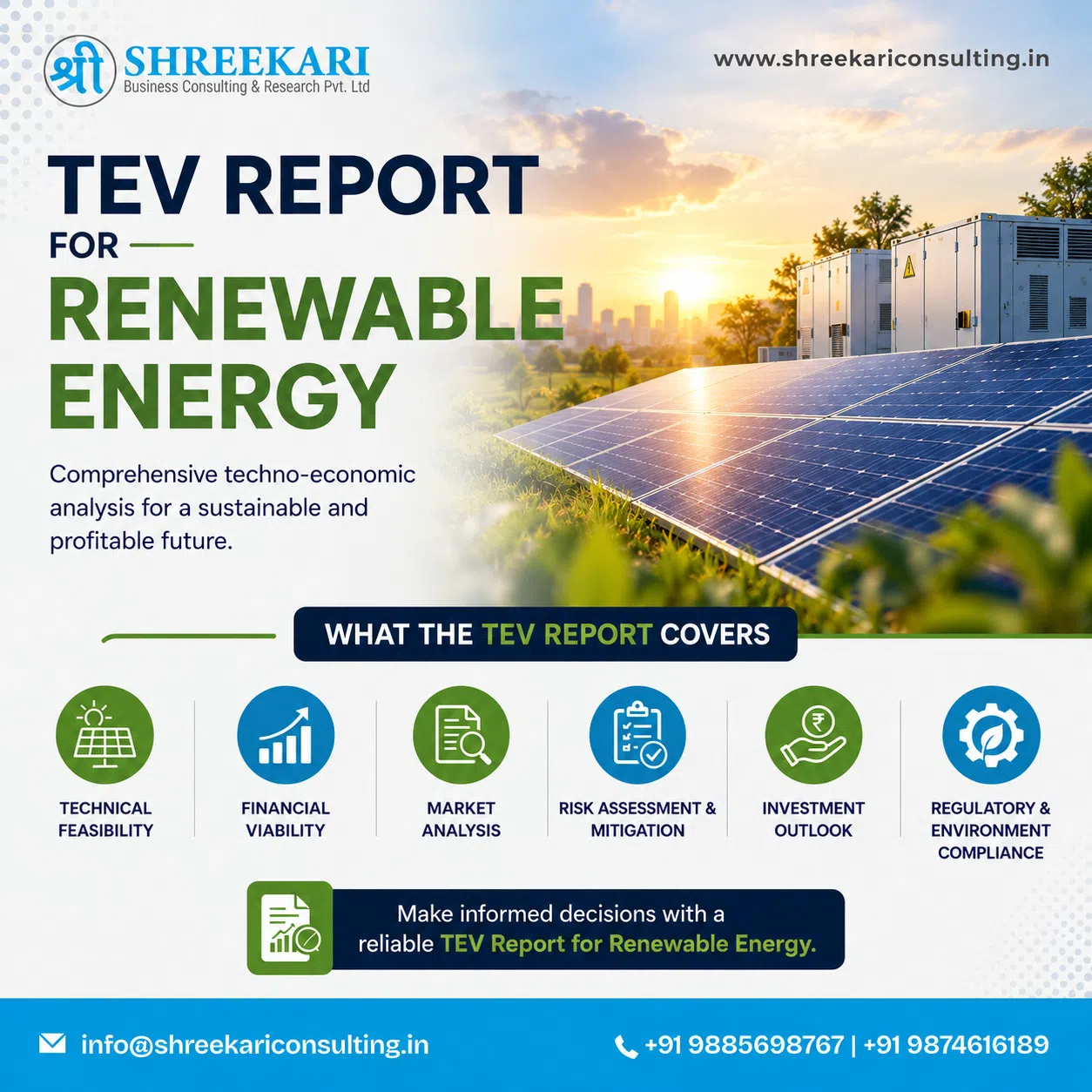
Its services cover technical feasibility, financial analysis, market assessment, project risks, and regulatory considerations.
For renewable energy developments, the consulting process can involve reviewing technology selection, project capacity, capital expenditure, operating expenses, projected revenue, and long-term financial viability.
Shreekari Consulting also assists with financial modelling and the evaluation of indicators such as IRR, NPV, DSCR, and cash flow.
The objective is to help stakeholders understand the project's strengths, financial requirements, and potential limitations through structured, evidence-based analysis.
Choosing the Right Consulting Support
When selecting a consulting firm, renewable energy developers should consider its experience with similar technologies, understanding of financial modelling, and ability to assess project-specific risks.
The consultant should also be able to examine the assumptions used in project documentation and communicate findings clearly.
Reliable assessment is particularly important for projects involving large capital commitments, multiple funding sources, or complex operational requirements.
Conclusion
Renewable energy investments require careful planning to balance technical performance, financial sustainability, and commercial risks.
A comprehensive Tev report for Renewable Energy helps project promoters and financial institutions evaluate these factors before making major decisions.
From solar and wind power to Bio-CNG and waste-to-energy developments, accurate feasibility assessment can help identify potential problems, improve financial planning, and support informed investment decisions.
Shreekari Consulting assists businesses with techno-economic evaluations and project-specific financial analysis, helping renewable energy developers move forward with greater clarity about their proposed investments.