Explosion Proof Flashlight for Saudi Refinery Turnarounds: Portable Lighting for Confined-Space Inspection
A turnaround schedule can run to thousands of work permits in a matter of weeks, and a striking number of them involve someone climbing into a vessel with nothing but a handheld light to see by. During shutdowns, plant turnarounds, maintenance outages and emergency repairs, portable lighting stops being a convenience item and becomes part of the inspection process itself. Get it wrong, and you're not just risking a missed defect — you're introducing an ignition source into exactly the kind of confined, gas-tested space where one shouldn't exist.
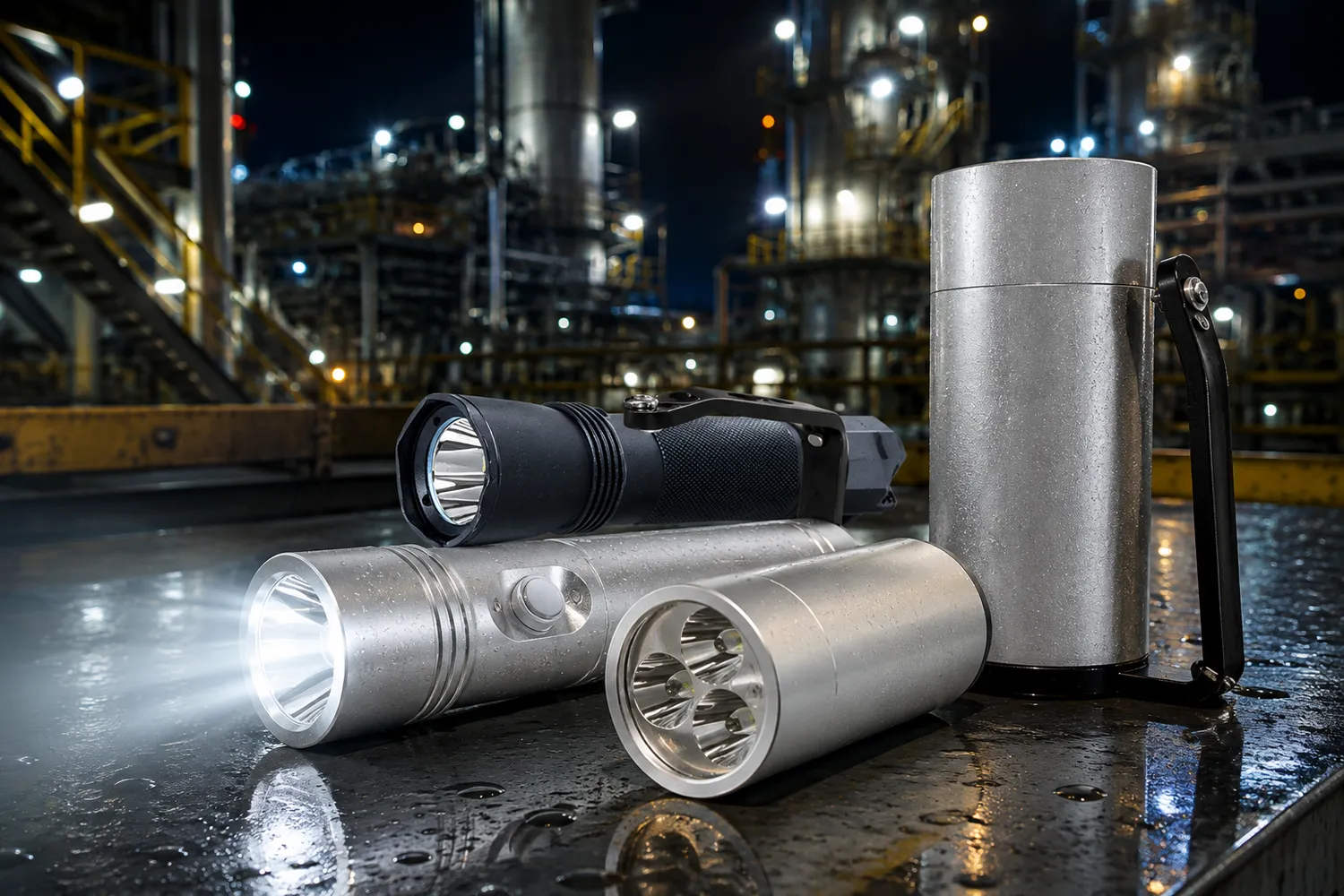
Where Turnaround Lighting Actually Gets Used
Confined-space and vessel entry work during a shutdown covers tanks, pressure vessels, pumps, separators, pipe racks, compressors, manifolds and process skids — each with its own access challenges and residual hazard profile even after isolation and cleaning. A technician working inside a separator needs light that reaches every weld seam and internal fitting, while someone checking a manifold in a crowded pipe rack needs a light that won't snag on surrounding equipment. Standard site lighting rarely reaches either of these spaces adequately.
Why Confined Spaces Need Careful Lighting Selection
Confined spaces and temporary work areas set up during a turnaround often carry different hazard classifications than the permanent process area around them, particularly once purging, cleaning or hot work is underway nearby. An explosion proof flashlight supports the visual inspection this work demands without becoming the ignition source that gas testing and isolation procedures were specifically designed to eliminate.
How Lighting Fits Into the Permit System
Portable lighting choice isn't separate from your gas testing and permit-to-work process — it's part of it. Ventilation status, current gas readings and the permit's stated hazard classification should all inform which lighting is authorised for that specific entry, not a blanket assumption that any certified torch will do. Certified portable electrical equipment belongs on the permit documentation alongside breathing apparatus and gas monitors, reviewed with the same seriousness.
Matching the Light to the Task
A handheld flashlight suits general inspection and mobile work. A headlamp frees both hands for climbing or tool use inside a vessel. An area light illuminates a wider workspace for a multi-person crew. A portable floodlight covers larger open areas like a pipe rack section during night shift work. Standardising on the wrong single form factor for every task slows inspection work down and pushes technicians toward improvised alternatives.
Features That Actually Improve Productivity
Beyond certification, a handful of practical features separate a genuinely useful turnaround light from one that just sits in a toolbox:
- Narrow-beam focus for reaching into deep vessel or pipe interiors
- High colour rendering that makes corrosion and defects easier to spot accurately
- Glove-friendly switches operable without removing PPE
- Anti-roll bodies that stay put on sloped or curved surfaces
- Clips and magnets for hands-free positioning during two-handed tasks
- Reliable one-handed operation for technicians working in restricted postures
Managing Batteries Across Large Contractor Teams
Turnarounds often bring hundreds of contractor personnel onto site simultaneously, each needing reliable, charged equipment across rotating shifts. Centralised charging stations, a clear spare-battery allocation system, and a defined handover process between shifts prevent the last-minute scramble that leads crews to reach for whatever uncertified light is closest.
Verifying Certification Before Equipment Enters Site
Every unit entering a refinery or petrochemical site should have its certification checked against the actual work area classification before it's issued — not assumed from a supplier catalogue description. An explosion proof LED flashlight without traceable documentation shouldn't clear the gate, regardless of how urgent the turnaround schedule feels.
A Practical Inspection Checklist for Fleet Managers
Before any unit is reissued for a new shift, check for housing damage, lens clarity, battery compartment integrity, switch function, seal condition, and legible certification markings, and confirm the unit has been properly cleaned since its last use. A unit failing any one of these checks should be pulled from service immediately, not returned to the pool for convenience.
Standardising to Reduce Downtime
Running a mix of flashlight brands and models across contractors slows down verification, complicates spare parts, and makes fleet-wide inspection harder to manage consistently. Procurement teams that standardise on one atex certified industrial flashlight Saudi projects can rely on across every contractor scope cut both administrative burden and the risk of an uncertified substitute slipping onto site during a busy shutdown.
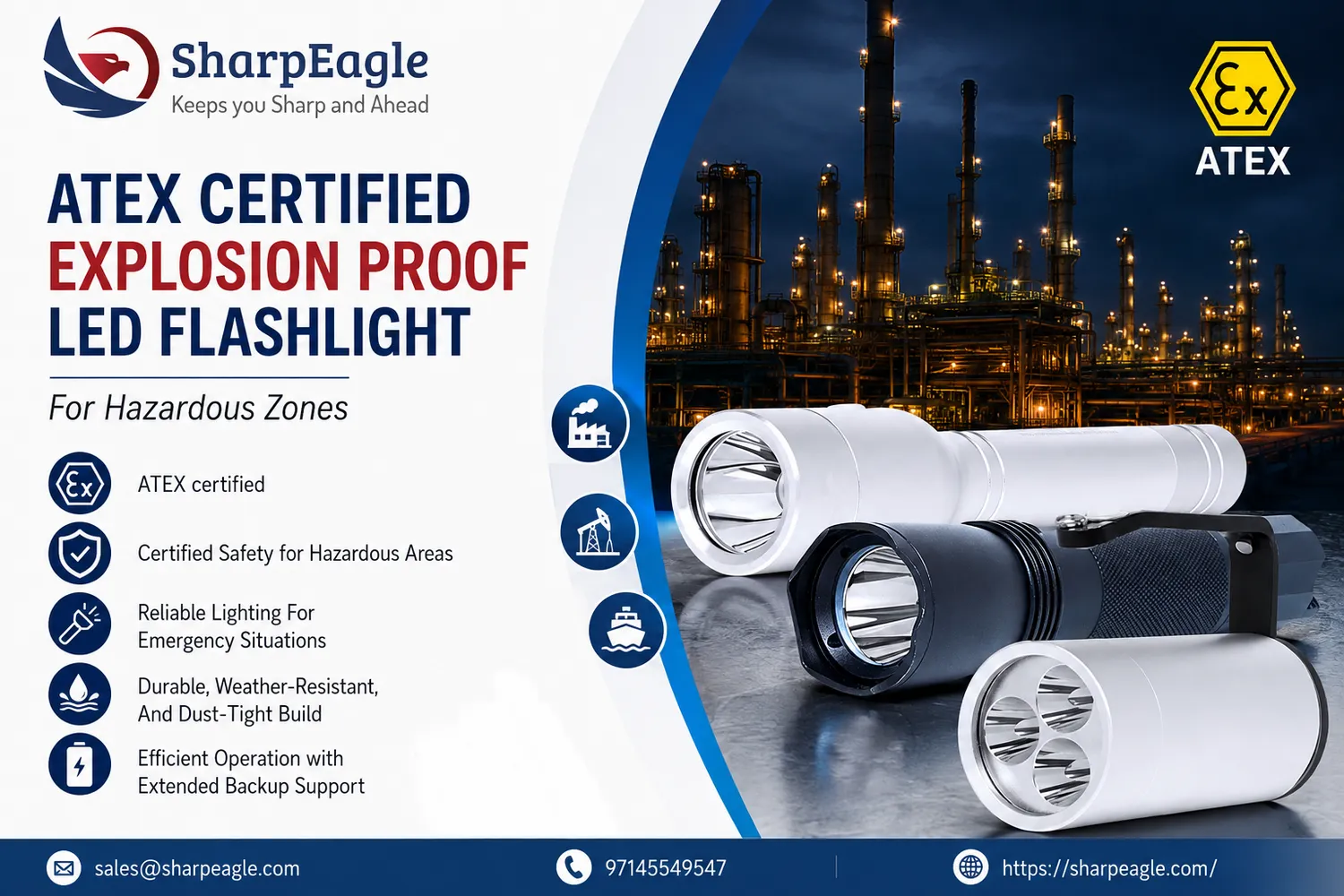
SharpEagle Explosion Proof Flashlight
Ask any turnaround manager what slows inspection work down, and equipment inconsistency is near the top of the list — which is the exact problem SharpEagle Technology's range was designed to solve. Narrow-beam focus, glove-compatible switching and anti-roll housings suit confined-space and vessel entry work directly, while sealed, drop-tested construction holds up across long contractor shifts. The range qualifies as an ATEX approved hazardous area flashlight Saudi turnaround teams can standardise across every contractor scope, backed by fast local spare parts availability and technical documentation ready for gate verification.
Conclusion
As turnaround schedules across Saudi refineries and petrochemical facilities continue to compress, the equipment that keeps inspection work moving safely — and that clears verification quickly at the gate — will matter more than ever. Standardise your flashlight fleet before your next shutdown, not during it. To equip your turnaround teams with certified, field-ready lighting, speak to SharpEagle Technology about your project's requirements.